



Antique Majolica Pots
These antique majolica pots bring vivid tin-glazed colour and sculptural botanical forms directly to your interior.
Antique Majolica Pots
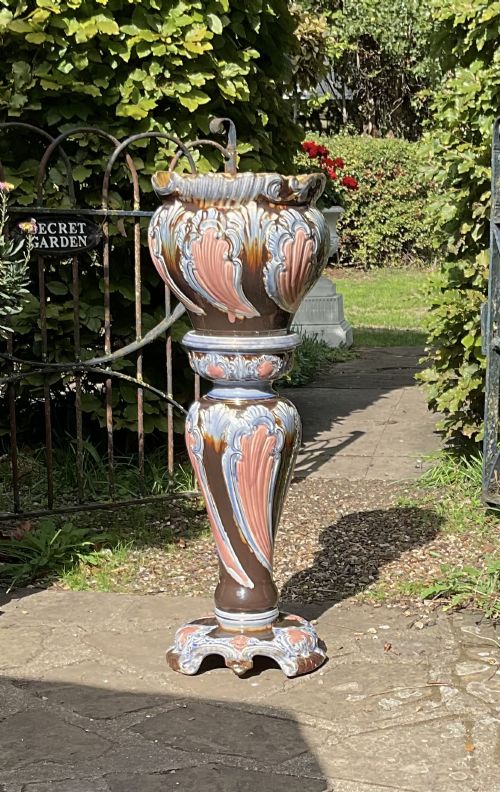
When you search for antique majolica pots, you encounter a diverse gathering of glazed earthenware vessels designed primarily for display or practical containment. The selection spans grand Victorian jardinières, architectural pedestals, and early Italian apothecary jars.
You are most likely to meet substantial Victorian planters and Italian drug jars on this page. These pieces showcase rich botanical themes, naturalistic animal figures, and classic drug jar forms from various European centres.
The objects range from English Minton and George Jones productions to eighteenth-century Italian faience albarelos. Each piece combines functional utility with decorative ambition, originating from periods spanning the eighteenth century to the Edwardian era.
How they were made
Makers shaped these vessels from earthenware, terracotta, and ceramic bodies before applying opaque tin or specialised majolica glazes. The raw clay formed the foundation for complex moulded plant forms and classical turned profiles.
Craftsmen utilised vibrant polychrome and blue-and-white pigments over the porous ceramic surfaces. Kiln firing fused these metal oxide colours into the glossy glaze, producing deep hues and lustrous finishes.
Antique Majolica Pots Retail Price Guide 2026
Typical asking prices for majolica pots among the pieces listed under this phrase on Sellingantiques today, from the lower quarter to the upper quarter. They describe what is for sale here now, not the wider market.
Listings feature Victorian earthenware and eighteenth-century tin-glazed ceramic forms.
What varies in quality
Quality rests upon the crispness of the moulded relief and the control of the colourful glaze application. Superior examples retain fine botanical details and even, brilliant colouration without pooling or dull patches.
The distinction between standard commercial wares and top-tier studio or factory pieces lies in the precision of the modelling and the artistic ambition of the hand-painted decoration.
Minton·Burmantofts·Royal Worcester·Joseph Holdcroft·George Jones
The Antique Majolica Pots Glossary
- Majolica glaze
- An opaque tin-glaze applied to earthenware, decorated with metallic oxide colours before firing. This technique produces vibrant polychrome surfaces with a characteristic glossy sheen.
- Albarello
- A cylindrical earthenware jar used by apothecaries to store drugs and ointments. Originating in the Middle East, this form became a staple of Italian pharmacy pottery.
- Jardiniere
- A large ornamental pot or planter designed to hold growing plants or floral arrangements. These pieces frequently rest upon matching pedestals or stands.
- Faience
- Tin-glazed earthenware produced in Europe, particularly associated with French and Italian traditions. The method involves coating a buff clay body with a white glaze before painting.
- Naturalism
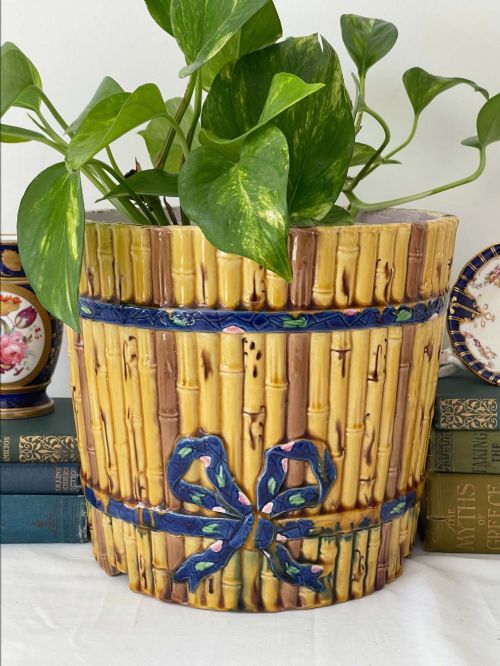
- An artistic style celebrating organic forms, foliage, and animal subjects. Victorian majolica makers utilised this aesthetic to render bamboo, swans, and melons in high relief.
Antique Majolica Pots: Frequently Asked Questions
What are antique majolica pots used for?
These vessels serve primarily as decorative planters, jardinières, or containers for floral displays within grand interiors. Historical examples also include pharmacy jars used for storing dry or wet medical drugs.
Today, collectors utilise them as striking centrepieces or planters for houseplants, bringing rich Victorian and European colour into modern rooms.
How do I identify a Victorian majolica jardinière?
Victorian majolica pieces typically display heavy earthenware bodies covered in thick, glossy tin glazes with vibrant polychrome colours. Look for naturalistic motifs such as bamboo, swans, or cascading leaves.
Many English factories stamped their wares with specific registry diamond marks or initials, helping to confirm nineteenth-century production dates.
What is the difference between majolica and faience?
Majolica generally refers to nineteenth-century lead-glazed or tin-glazed earthenwares featuring heavily moulded naturalistic designs, particularly popular during the Victorian era. Faience describes earlier tin-glazed pottery traditions, notably from Italy and France.
Both techniques rely on opaque glazes, but the stylistic execution and period context separate an eighteenth-century Italian albarello from a Victorian plant stand.
How should I care for antique ceramic planters?
Protect the porous earthenware and delicate glaze surfaces by placing a modern plastic liner inside the pot before adding water or soil. This prevents moisture from seeping through the historic ceramic body.
Dust the exterior gently with a dry cloth and avoid harsh chemical cleaners that might dull the antique glaze.