



Antique Mahogany Display Box
An antique mahogany display box brings order and visibility to small collections, sorting specimens, jewels and curiosities beneath glass.
Antique Mahogany Display Box
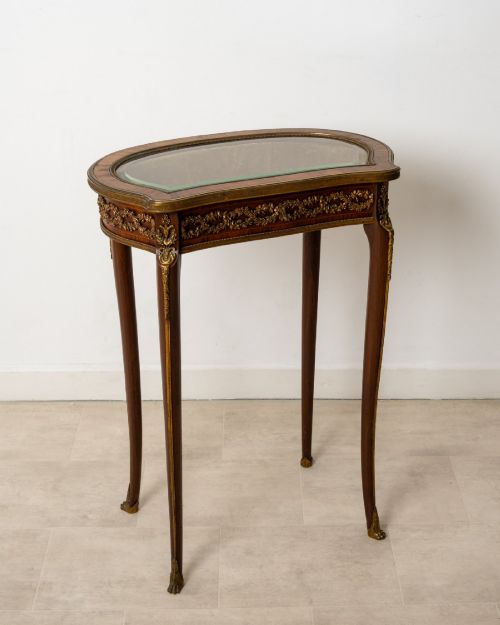
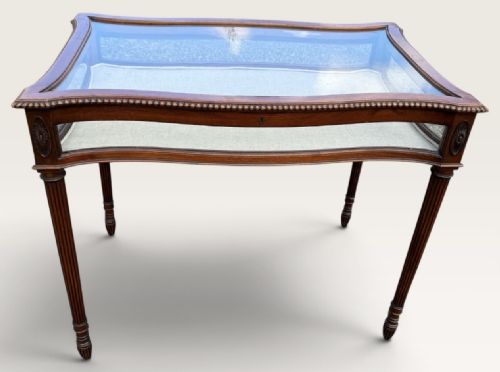
When you search for an antique mahogany display box, you encounter a specialised group of containers built to showcase objects rather than hide them away. These pieces range from tabletop bijouterie tables with glazed lids to multi-drawer specimen cabinets and countertop retail cases.
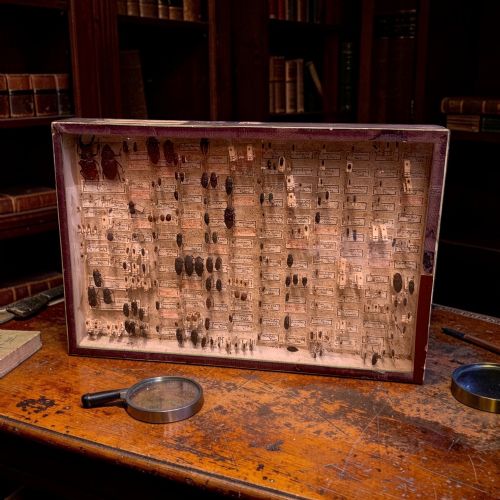
The Edwardian and Victorian periods dominate the selection, bringing refined proportions and rich timber frames designed for domestic collecting or commercial merchandising. You meet serpentine and kidney-shaped tables alongside upright apothecary boxes and entomology cases.
Origins span English workshops and French ateliers, occasionally bearing the lettering of confectioners or cotton merchants such as Rowntree's or Fry's. The primary function remains constant across forms: protecting delicate items behind glass while offering an unobstructed view.
Materials and construction
Makers relied on solid and veneered mahogany for structural integrity, frequently incorporating satinwood for delicate inlay work and contrasting stringing. Brass mounts, hinges and handles provide both structural reinforcement and decorative accents, particularly on French bijouterie tables.
Interiors rely on tactile linings such as velvet, fabric and satin to cushion specimens and jewellery, while paper labels often identify commercial contents. Glazed panels set into hinged lids or sliding doors require precise joinery to seal the display area from dust.
Antique Mahogany Display Box Retail Price Guide 2026
Typical asking prices for mahogany display box among the pieces listed under this phrase on Sellingantiques today, from the lower quarter to the upper quarter. They describe what is for sale here now, not the wider market.
A tiny clockwork diorama ticks away inside its wooden case, preserving a miniature world that outlived its maker.
Judgments of quality
Quality rests in the precision of the timber framing and the fluidity of any inlaid decoration, such as marquetry motifs or contrasting banding. Superior pieces feature well-balanced proportions, tight mitred joints, and original glass panes without excessive distortion.
The integrity of the interior lining and the smooth operation of drawers or hinged lids distinguish fine workshop production from utilitarian utility items. Ormolu mounts and cast brass details show crisp chasing rather than soft, mass-produced definition.
Walter Jones Sloane Street·Ermen and Roby
The Antique Mahogany Display Box Glossary
- Bijouterie table
- A glass-topped display table designed specifically for small ornaments, medals and jewellery. These pieces elevate collections to eye level in a drawing room.
- Specimen cabinet
- A multi-drawer storage unit built for natural history collections, fossils or insects. The shallow drawers protect delicate items in parallel rows.
- Ormolu
- Gilded bronze or brass mounts applied to furniture edges and corners. This decorative technique adds French neoclassical brilliance to mahogany surfaces.
- Marquetry
- Elaborate veneer patterns jigsawed from different coloured woods to create pictorial designs. Cabinet makers utilise this method to enrich plain tabletops.
- Entomology case
- A shallow glazed box constructed for mounting and preserving insect collections. These boxes seal tightly to prevent environmental damage to specimens.
Antique Mahogany Display Box: Frequently Asked Questions
What fits inside a bijouterie table?
These glass-topped tables suit small, flat or low-profile items like pocket watches, medals, coins and rings. The shallow depth keeps individual pieces visible without overcrowding the velvet base.
Collectors also use them for miniatures, small porcelain figures and pressed botanical specimens. The glazed lid protects delicate items from dust while keeping them accessible.
How do I care for the mahogany timber?
Keep mahogany display pieces away from direct sunlight and heat sources to prevent the wood from drying and warping. Dust the surface regularly with a dry, soft cloth.
Avoid silicone-based polishes, opting instead for traditional beeswax when the timber requires nourishment. Gentle care preserves the natural grain and deep colour of the polished surface.
Where were countertop cases used?
Merchants placed glazed countertop cabinets in late-Victorian and Edwardian shops to tempt customers with sewing cottons, chocolates and apothecary goods. The glass front kept goods clean while advertising brands directly to buyers.
Today, these retail cases transition easily into domestic settings for displaying small collections on sideboards or desks. Their commercial history often adds character through original painted lettering.
How do I distinguish Edwardian from Victorian pieces?
Victorian display pieces typically feature heavier timber framing, darker finishes and more robust proportions. Decoration leans towards rich carving and functional solidity.
Edwardian examples often display lighter satinwood inlay, marquetry, and slender cabriole legs influenced by French revival styles. The overall aesthetic shifts toward airiness and refined domestic elegance.