

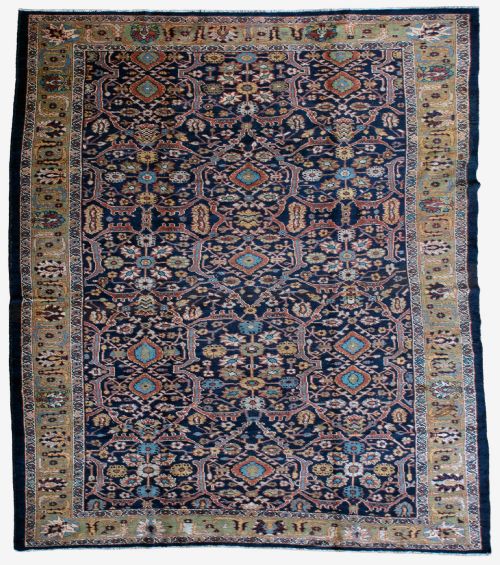
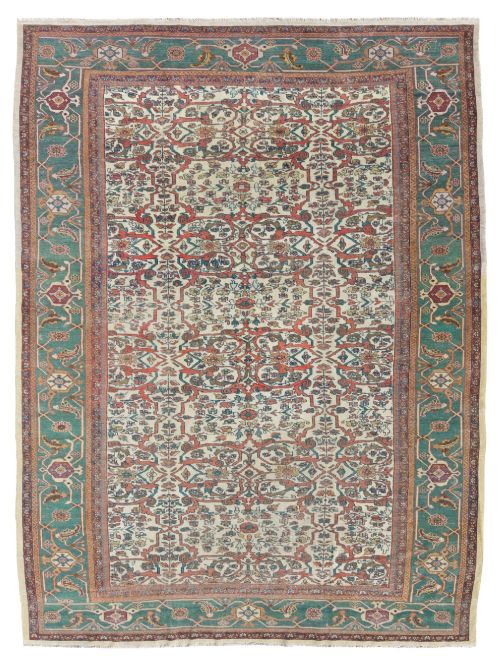
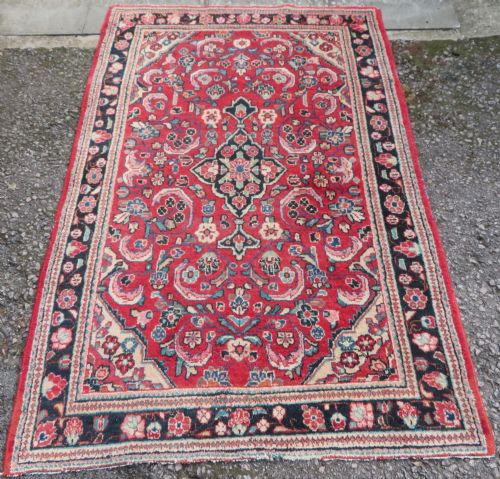
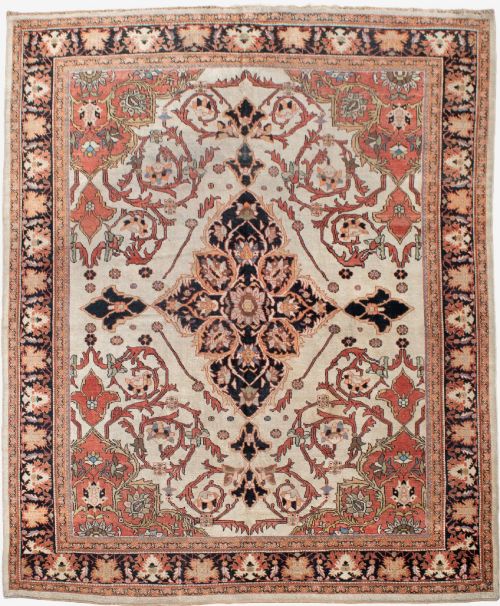
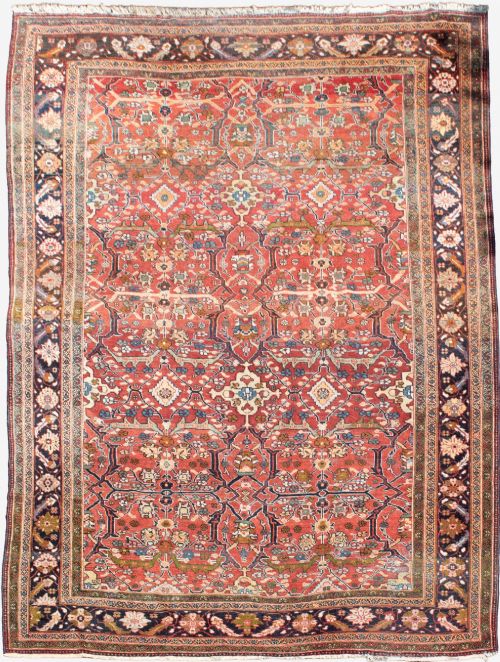


Antique Mahal Area Rug
An antique mahal area rug brings monumental Persian design and soft vegetable dyes into a room, offering generous scale and durable floor coverage.
Antique Mahal Area Rug
When you search for an antique mahal area rug, you are looking at substantial hand-knotted floor coverings originating from West Persia, often encompassing related village and regional types such as Sultanabad, Ziegler, and Fereghan. The pieces available here span from the late nineteenth century through to the early decades of the twentieth century, with many examples dating from the 1880s and 1890s. They range in format from smaller village rugs to room-sized carpets and oversize formats exceeding five metres in length.
Distinctions in quality
The upper tier of these rugs is defined by the integrity of the wool, the subtlety of the dye shading, and the balance of the overall composition. Finer examples display masterly proportion in their large-scale floral motifs and retain an even, dense pile across expansive room-sized formats.
Commercial or village productions lower in the scale often show simpler execution or heavier wear to the foundation, though this does not diminish their decorative presence in a country house setting. The overall visual impact depends greatly on the preservation of the original borders and the harmonious fading of natural vegetable colours.
Listings span from 1870 through to 1930, demonstrating the enduring production of large-scale Persian carpets across several decades.
The Antique Mahal Area Rug Glossary
- Mahal
- A type of Persian carpet originating from the district surrounding Sultanabad in West Persia, known for large-scale, open designs. These pieces were largely produced for the Western export market during the nineteenth and early twentieth centuries.
- Ziegler
- A commercial grade of Persian carpet produced by the Manchester firm Ziegler and Co., often associated with soft palettes and large-scale Mahal designs. They represent a high standard of nineteenth-century export production.
- Sultanabad
- The primary market town and weaving centre in West Persia associated with large decorative carpets created for European and American homes. The term often overlaps stylistically with Mahal and Ziegler productions.
- Fereghan
- A neighbouring Persian weaving region known for finely knotted rugs and carpets with dense floral Herati patterns. Pieces from this tradition demonstrate exceptional technical refinement.
- Warp
- The vertical cotton threads stretched tightly on the loom that form the skeletal foundation of the rug. The exposed fringe at either end of the carpet consists of these finished warp threads.
Antique Mahal Area Rug: Frequently Asked Questions
How do I place an antique mahal area rug?
These large floor coverings anchor sitting rooms, dining spaces, and libraries, pairing well with traditional or contemporary furniture.
Ensure the room dimensions allow the furniture to sit comfortably on or around the rug to showcase the central field and borders.
What is the difference between Mahal and Ziegler carpets?
Mahal is a regional designation for carpets woven in the district around Sultanabad, while Ziegler refers specifically to the firm that commissioned and standardised many of these export designs.
In practice, both terms describe grand Persian carpets with softened palettes and oversized floral patterns suited to Western interiors.
How do I care for an antique wool rug?
Vacuum gently without using a rotating brush roll to protect the wool pile and avoid catching the antique cotton fringes.
Professional cleaning by a specialist familiar with antique vegetable-dyed Persian textiles is recommended to preserve the dyes and fibres.
How can I tell the age of a West Persian carpet?
Dating relies on examining the natural dye palette, the handling of the wool, and structural characteristics such as the weave density and foundation materials.
Late nineteenth-century examples often feature deeper terracotta grounds and hand-spun wools that differ perceptibly from later twentieth-century productions.