



Antique Living Room Settee
An antique living room settee brings period seating into modern spaces, offering generous proportions and distinct craftsmanship from past centuries.
Antique Living Room Settee
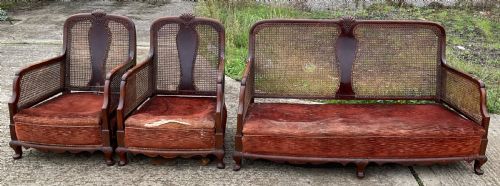
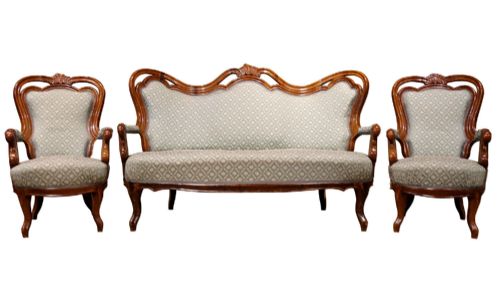
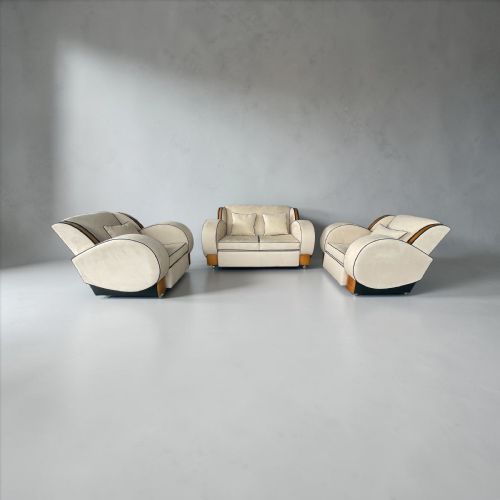
When you search for an antique living room settee, you are examining seating designed for formal or domestic gathering spaces across several historical periods. The pieces appearing here range from single sofas to multi-piece salon and parlour suites incorporating matching chairs.
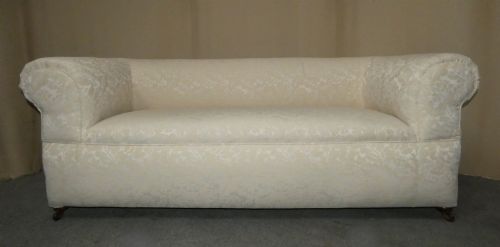
You are most likely to meet Edwardian and Victorian examples on this page, alongside specific regional interpretations like Biedermeier or French Empire designs. These items frequently take the form of larger sofas, Chesterfields, or complete three-piece and seven-piece suites intended for coordinated room layouts.
The materials and aesthetic treatments reflect the prevailing tastes of their respective eras, moving from heavily carved early Victorian mahogany to sleek Art Deco walnut veneers. Understanding these variations helps you place a specific settee within its proper historical context.
Materials and construction methods
Makers of these settees relied on solid hardwoods such as mahogany and walnut, occasionally utilising burr birch or walnut veneers over secondary timbers to create decorative surface patterns. Frames were joined using traditional cabinetmaking techniques to ensure structural stability under everyday use.
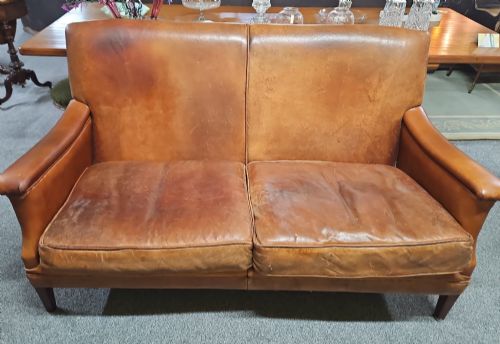
Upholstery formed a central part of the construction, employing traditional stuffing materials covered in fabrics, leather, velvet, or specialised upholstery fabric. Decorative elements often included carved wooden details, notably in Rococo Revival or Chinoiserie styles, which required skilled hand-carving.
Antique Living Room Settee Retail Price Guide 2026
Typical asking prices for living room settee among the pieces listed under this phrase on Sellingantiques today, from the lower quarter to the upper quarter. They describe what is for sale here now, not the wider market.
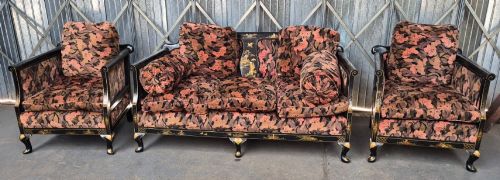
Early twentieth-century makers occasionally hid whimsical Chinoiserie figures within the lacquer work of otherwise formal parlour suites.
Judging quality in period seating
The distinction between standard examples and the finest work lies in the crispness of the timber carving and the selection of figured veneers. Superior pieces display harmonious proportions and seamless joinery that remains tight after decades of service.
Upholstery execution and the retention of original decorative framing also dictate the standing of a suite. Higher quality iterations exhibit meticulous attention to detail in both the concealed internal construction and the visible external surfaces.
ROBERT STRAHAN & CO
The Antique Living Room Settee Glossary
- Salon suite
- A coordinated set of upholstered seating comprising a settee and matching armchairs designed for a formal entertaining room. These groupings ensure a unified decorative scheme.
- Chinoiserie
- A European decorative style influenced by Chinese artistic traditions, often featuring hand-painted or lacquered motifs on the wooden frame. This style gained popularity during the Edwardian period.
- Walnut veneer
- A thin layer of highly figured walnut timber applied over a stable secondary wood base to provide visual richness. This technique highlights the natural grain without wasting scarce hardwood.
- Chesterfield sofa
- A distinctive deep-buttoned upholstered sofa traditionally featuring rolled arms of the same height as the back. It represents a durable form originating in the nineteenth century.
Antique Living Room Settee: Frequently Asked Questions
What is an antique living room settee?
An antique living room settee is a period upholstered bench or sofa designed for domestic seating, often appearing as part of a larger matching suite.
These pieces reflect the design movements of the nineteenth and early twentieth centuries, utilising woods like mahogany and walnut alongside diverse upholstery finishes.
How do I identify an Edwardian settee?
Edwardian settees often feature lighter wood frames, sometimes incorporating inlaid details or Chinoiserie decoration, reflecting the aesthetic preferences of the early twentieth century.
They tend to present more restrained ornamentation compared to heavily carved Victorian predecessors while maintaining comfortable proportions.
What materials were used in these settees?
Common materials include solid hardwoods such as mahogany and walnut, alongside decorative veneers like burr birch. Upholstery options range from leather and velvet to standard woven fabrics.
Makers matched these timbers with traditional stuffing and padding techniques appropriate to the manufacturing date of the furniture.
Are multi-piece suites common?
Multi-piece suites, including parlour and salon sets consisting of three to seven matching items, frequently appear alongside standalone sofas. These coordinated groups provided uniform seating for period reception rooms.
Each piece within a suite shares identical wood framing, upholstery style, and decorative motifs.