



Antique Livestock Canvas
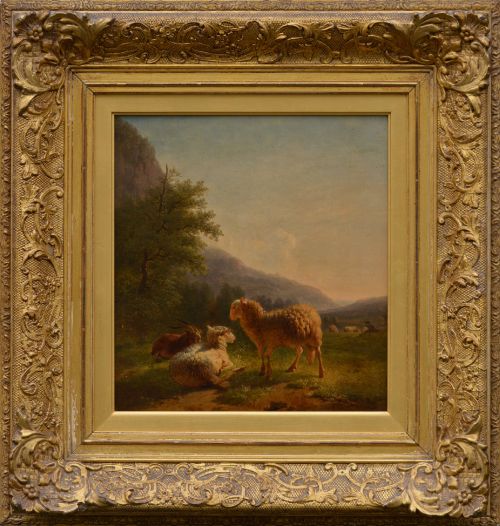
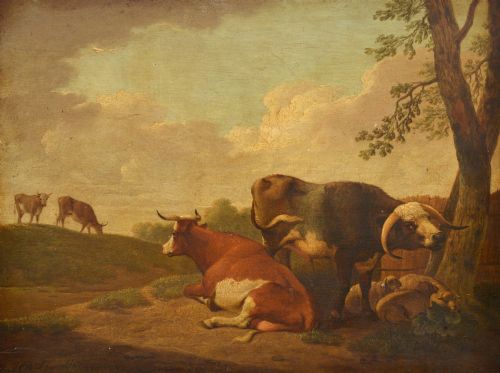
An antique livestock canvas captures rural heritage through oil paint on stretched fabric, bringing pastoral scenes of cattle and sheep directly into your interior.
Antique Livestock Canvas
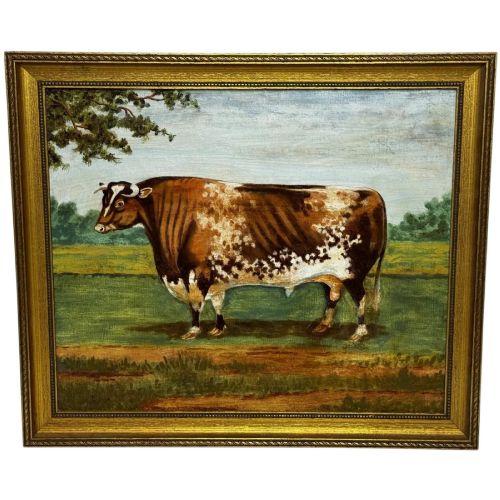
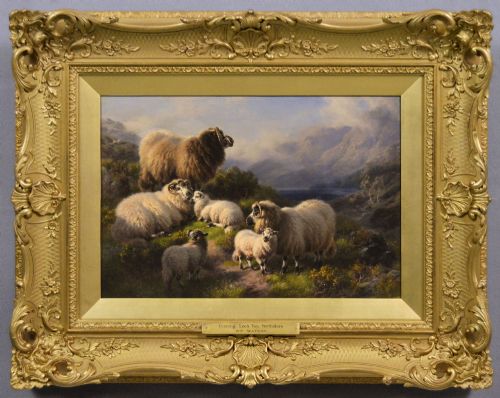
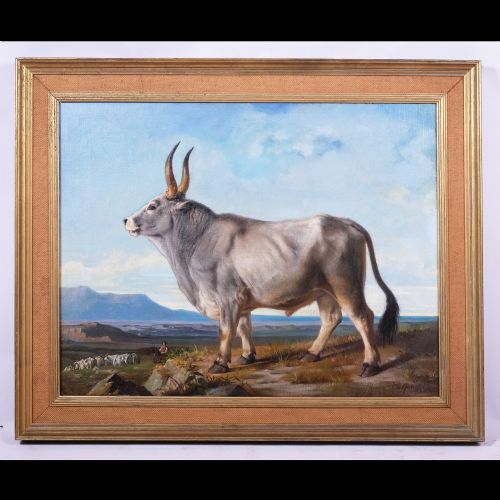
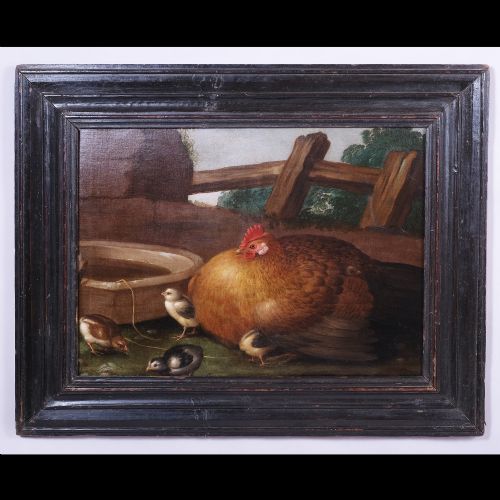
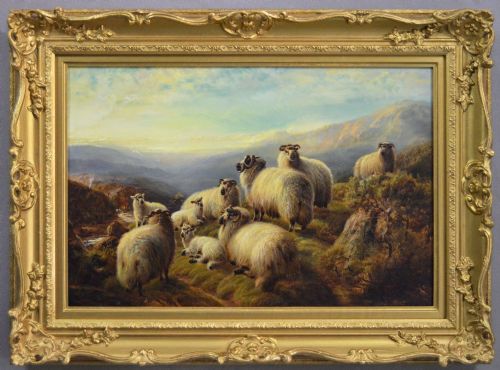
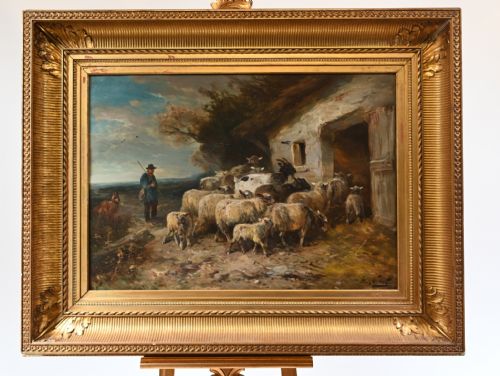
When you search for an antique livestock canvas, you encounter framed oil paintings depicting farmyard scenes, cattle, sheep, and horses set within rural or pastoral landscapes. These works originate predominantly from the nineteenth and eighteenth centuries, produced by British, Belgian, Dutch, and German artists working in realist and romantic traditions.
The version you are most likely to meet on this page is a Victorian canvas portraying prize bulls, Highland cattle, or flocks of sheep resting by rivers and within barns. They range from intimate panel-sized rural studies to large gallery-scale landscapes populated by farm animals and agricultural workers.
Materials and Technique
Artists painted these works using oil paint applied to a woven canvas substrate, often supported by wooden stretcher frames. Painters built depth through layered brushwork, rendering the texture of animal coats, pastoral landscapes, and atmospheric skies with oil pigments.
Original framing frequently incorporates gesso mouldings finished with gold leaf, creating a giltwood border that defines the edge of the canvas. These traditional components combine to preserve the pictorial surface over centuries of display.
Antique Livestock Canvas Retail Price Guide 2026
Typical asking prices for livestock canvas among the pieces listed under this phrase on Sellingantiques today, from the lower quarter to the upper quarter. They describe what is for sale here now, not the wider market.
Materials documented across the listings include oil paint, stretched canvas, wood, gesso, and gold leaf.
Qualities of Execution
The distinction between ordinary and superior works lies in the anatomical accuracy of the animals and the handling of light within the landscape. Master painters render the muscle structure of a shorthorn bull or the fleece of a sheep with precise observation, whereas lesser works rely on formulaic repetition.
Compositional balance also separates the range, with accomplished artists integrating livestock seamlessly into river valleys or winter snow scenes rather than placing isolated subjects against static backgrounds.
Eugène Verboeckhoven·Thomas Sidney Cooper·William Watson Jnr·Henry Schouten·Claude Cardon
The Antique Livestock Canvas Glossary
- Canvas
- A heavy woven fabric stretched across a wooden frame to form the foundation for oil paintings. It provides a flexible yet durable surface for brushwork.
- Giltwood
- Wood carved and coated with gold leaf or metallic paint, commonly used for traditional picture frames. This finish enhances the visual weight of the artwork.
- Pastoral
- A style of art depicting rural life, shepherds, and domestic farm animals in natural landscapes. These scenes romanticise agricultural existence.
- Gesso
- A plaster mixture applied to wooden frames as a smooth base before gilding. It allows for intricate moulded decorative details.
Antique Livestock Canvas: Frequently Asked Questions
What subjects appear on these canvases?
Paintings depict domesticated farm animals including cattle, shorthorn bulls, sheep, horses, and poultry within rural landscapes, farmyards, or coastal settings.
Scenes frequently feature shepherds with flocks, herds drinking by rivers, or livestock sheltering inside barns during winter weather.
How do I date an antique canvas?
Dating relies on stylistic markers, artist signatures, framing methods, and stretcher construction typical of eighteenth, nineteenth, and early twentieth-century production.
Period inscriptions, exhibition labels, and biographical dates of the painter provide definitive chronological anchors for individual works.
How were these paintings displayed originally?
Works hung primarily within domestic drawing rooms, country houses, and rural parlours to signal an appreciation for agriculture and the countryside.
Owners selected heavy giltwood frames to complement period interior decor and project status through the depiction of prized livestock.
How should I care for an oil painting?
Protect the canvas from direct sunlight, extreme temperature shifts, and high humidity to prevent paint cracking and warping of the wooden stretcher.
Dust the surface gently with a soft, dry brush and avoid chemical cleaners or moisture on both the painted canvas and the giltwood frame.