


Antique Literary Bronze
These antique literary bronze pieces bring classical writers and poets straight into the study, offering a tangible connection to great works through enduring metal.
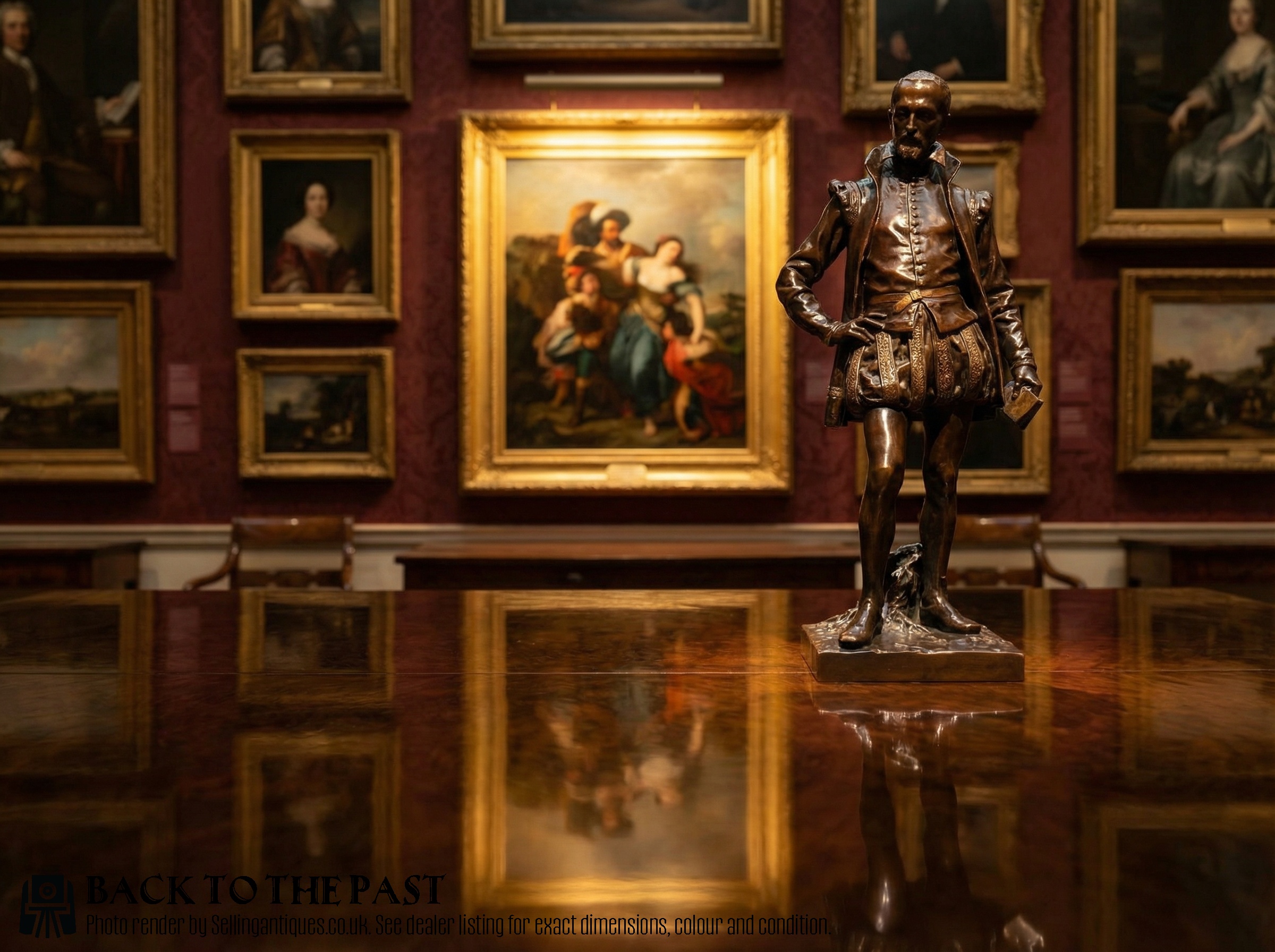
Antique Literary Bronze
When you search for antique literary bronze, you are looking at sculptures, busts, bookends, plaques, and clock garnitures depicting famous authors and poets. The most common versions on this page are 19th-century bronze busts and figures mounted on marble bases, portraying literary figures such as Dante Alighieri, William Shakespeare, and John Milton.
The selection spans various historical periods including Victorian and Art Deco eras, drawing on Classical Revival and French Neoclassical styles. Pieces range from small commemorative medals and wall relief plaques to larger mantel clocks and desk accessories designed to celebrate canonical writers.
How they were made
Many sculptures and busts are paired with supporting structural elements of marble, onyx, or oak. Bases and plinths provide stability and contrast, while gilt bronze accents enhance specific decorative details on clock garnitures and mantel pieces.
Shakespeare makes multiple appearances here in bronze, keeping a watchful metal eye on your bookshelves.
What varies in quality
The choice and integration of secondary materials play a significant part in the overall standard of the object. A heavy marble base or an onyx plinth fitted with precision elevates the piece, whereas poorly matched or clumsily mounted stones detract from the sculptural impact of the bronze above.
Leofanti Adolphe
The Antique Literary Bronze Glossary
- Patinated bronze
- Bronze that has been chemically treated to alter its surface colour, usually resulting in a dark brown, black, or green finish. This layer protects the metal and defines sculptural details.
- Clock garniture
- A set consisting of a mantel clock accompanied by matching side ornaments or vases. These suites often incorporate literary figures or allegorical themes related to the arts.
- Wall relief
- A sculptural wall plaque where the figures project minimally from a flat background. These pieces are cast in bronze to capture crisp profile portraits of authors.
- Commemorative medal
- A small metal disc struck to mark a specific historical event or personage. Literary examples celebrate anniversaries or memorials of major poets and writers.
Antique Literary Bronze: Frequently Asked Questions
What subjects do these bronzes show?
The pieces depict celebrated European writers, poets, and dramatists from various centuries. Subjects include historical literary figures such as Dante Alighieri, Joachim de Bellay, William Shakespeare, John Milton, Lord Byron, Sir Walter Scott, and Charles Dickens.
These depictions range from standalone portrait busts and full-figure studies to profile plaques and figures integrated into functional items like mantel clocks and bookends.
How were literary bronzes used originally?
In the nineteenth and early twentieth centuries, these objects served as scholarly desk accessories, mantelpiece ornaments, and library decorations. They demonstrated the owner's erudition and cultural interests.
Larger sculptures and clock garnitures anchored the decor of formal parlours and studies, while smaller medals and plaques were kept as collector items or commemorative tributes.
How do I style a literary bronze at home?
Place a bust or pair of bookends on a wooden bookshelf, desk, or mantelpiece where the dark metal contrasts against lighter walls or bindings. Pairing them with traditional library furniture enhances their period character.
Ensure the piece has adequate lighting to reveal the patination and details of the casting, keeping it clear of excessive moisture or direct heat sources.
How can I tell the period of a bronze?
Look to the overall style, mounting materials, and accompanying bases for chronological clues. Pieces featuring heavy black marble plinths, onyx details, or specific revival aesthetics typically point to nineteenth-century or Victorian manufacturing.
Stylistic shifts towards geometric simplicity and streamlined forms indicate later periods like Art Deco around the nineteen-twenties.