



Antique Lion Bookends
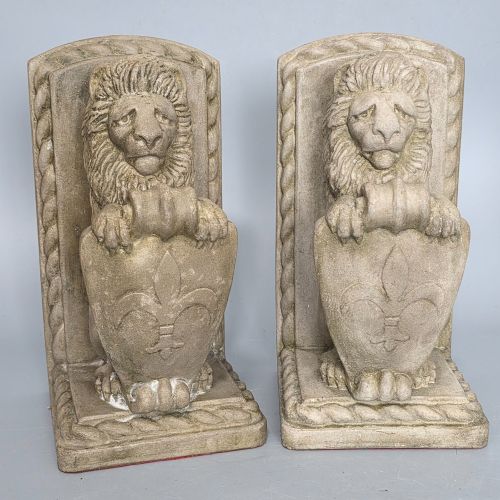
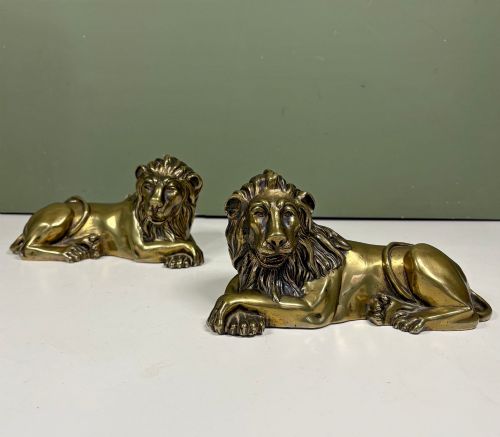
These antique lion bookends are heavy desk furniture and shelf supports cast in bronze, brass, iron, and ceramic.
Antique Lion Bookends
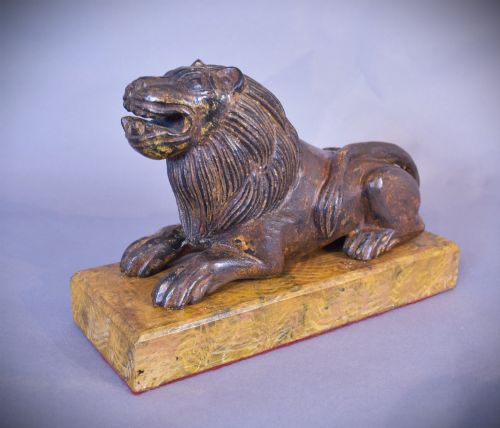
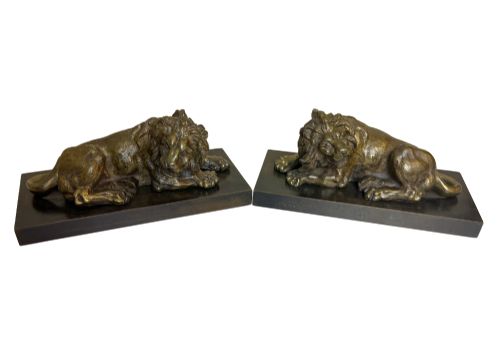
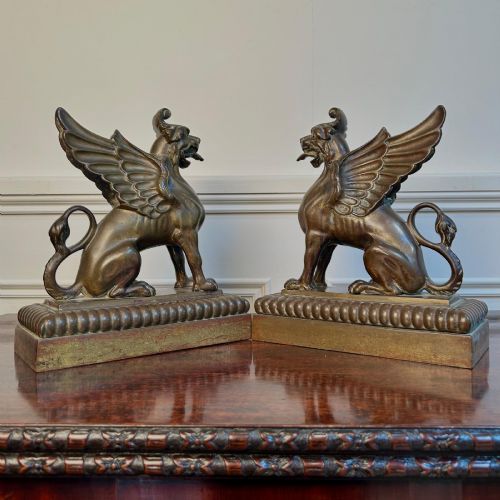
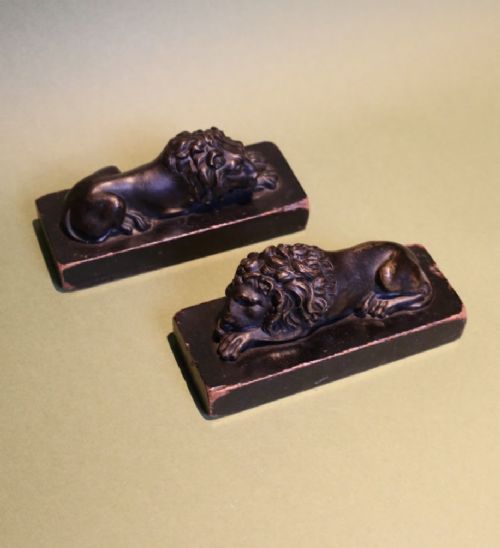
Antique lion bookends encompass heavy figural supports cast or carved to hold volumes upright on shelves and desks. The selection includes pairs modelled after the classic Canova lions, recumbent beasts, and winged figures derived from grand tour travels.
Most examples originate from the nineteenth and early twentieth centuries, spanning Victorian, Regency, and Art Deco periods. Buyers frequently encounter matched pairs rendered in cast iron, patinated bronze, and glazed earthenware.
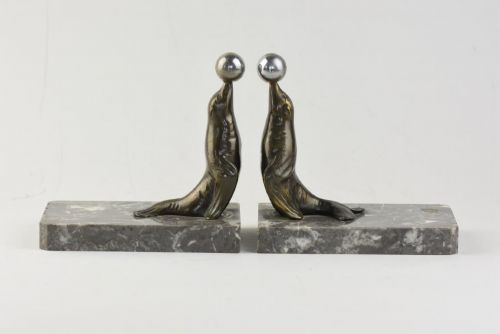
Makers drew inspiration from classical sculpture, translating monumental stone figures into domestic desk accessories. Alongside traditional lions, related guardian figures such as foo dogs, griffins, and sea lions appear within the category.
How they were made
Metal versions rely on foundry casting in bronze, brass, and cast iron, often finished with a dark patination, bronze coating, or black paint. Artisans chased the metal surfaces by hand to sharpen the manes, paws, and facial expressions.
Ceramic and earthenware pairs utilise mould-shaping followed by glazing, notably treacle glazes that pool in the recesses of the clay. Carved variants employ traditional woodworking techniques on pine, or hand-chiselling on serpentine, soapstone, and marble.
Listings feature items spanning the seventeenth to the twentieth centuries, utilising materials from bronze and soapstone to carved pine.
What varies in quality
The weight and stability of the base dictate functional success, as heavier metal and stone pairs secure large volumes more effectively than lighter ceramic equivalents. Original patination and intact surface finishes preserve the integrity of the piece.
C Omin·Lancaster and Sons of Hanley
The Antique Lion Bookends Glossary
- Canova Lions
- Sculptural lions designed by Antonio Canova for the tomb of Pope Clement XIII in Rome. These iconic forms were widely copied during the grand tour period.
- Grand Tour
- A cultural journey undertaken by wealthy young Europeans in the eighteenth and nineteenth centuries to study classical art. Souvenirs included small bronze and stone animal sculptures.
- Foo Dogs
- Traditional Chinese guardian lions symbolizing protection. They appear frequently in oriental bookends carved from soapstone, jade marble, or cast in iron.
- Treacle Glaze
- A dark, translucent brown lead glaze applied to earthenware ceramics. It creates a rich, glossy surface that accentuates moulded details.
- Serpentine
- A compact green mineral resembling marble, often polished and used for decorative carvings and animal figures during the nineteenth century.
Antique Lion Bookends: Frequently Asked Questions
How heavy are antique metal bookends?
Metal bookends cast in solid bronze, brass, or iron possess substantial weight designed to anchor heavy volumes in place.
Lighter ceramic or carved wooden pairs rely on a wider base footprint rather than mass to maintain stability on a shelf.
What are Canova lions?
Canova lions are neoclassical sculptural figures originally created by the Italian artist Antonio Canova for monumental tomb architecture.
Miniature bronze and stone versions of these recumbent beasts became popular souvenirs for travellers touring Italy.
Are foo dogs considered lions?
Foo dogs represent mythical guardian lions in Chinese tradition, guarding sacred spaces and domestic thresholds against malevolent spirits.
They entered Western interior design through trade and travel, often taking the role of decorative bookends or desk seals.
How do I date cast iron bookends?
Dating cast iron involves examining the depth of the casting detail, the quality of the paint or patination, and the construction marks on the base.
Nineteenth-century examples typically display sharper tool work and heavier oxidation patterns than later twentieth-century reproductions.