
Antique Library Shelving Cabinet
An antique library shelving cabinet brings architectural dignity to a room, offering adaptable open shelves and enclosed storage for a serious book collection.
Antique Library Shelving Cabinet
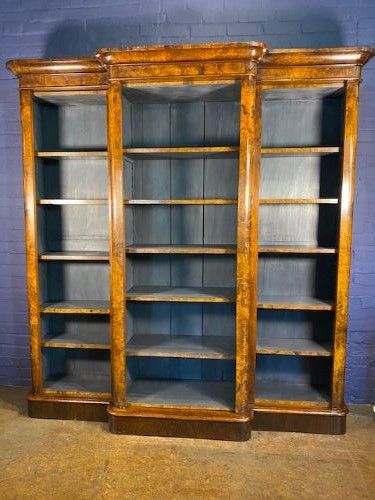
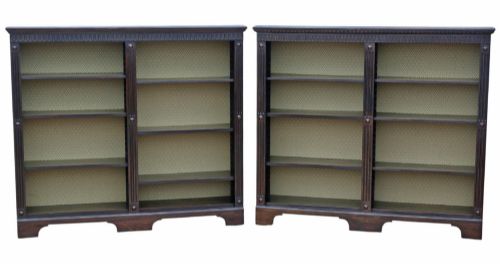
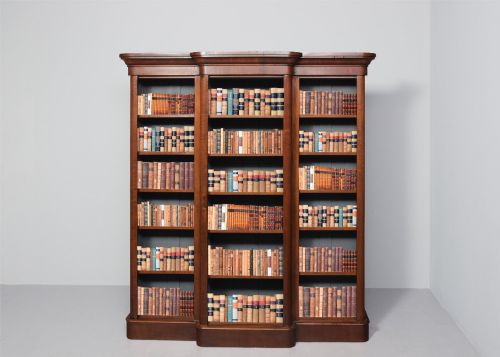
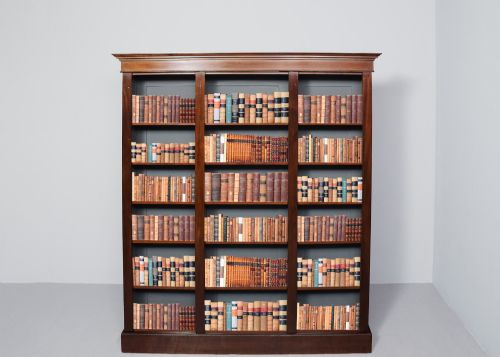
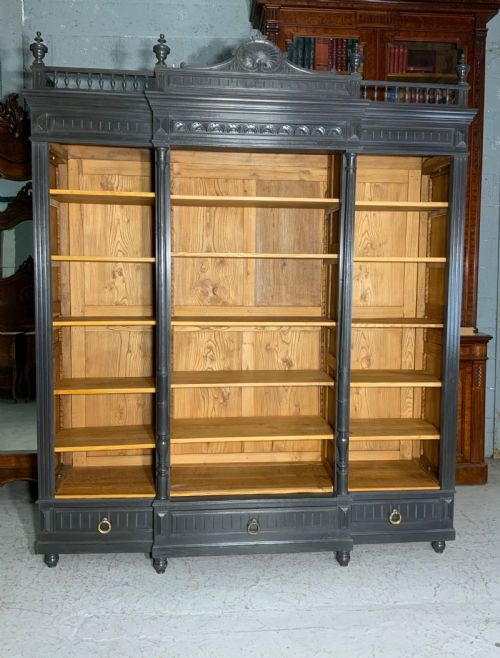
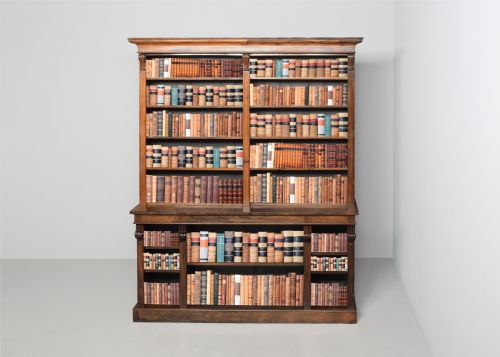
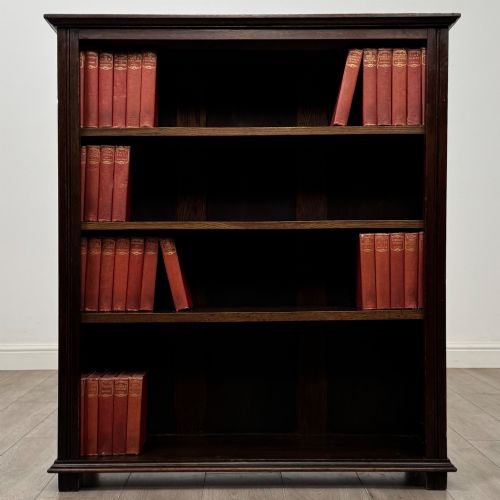
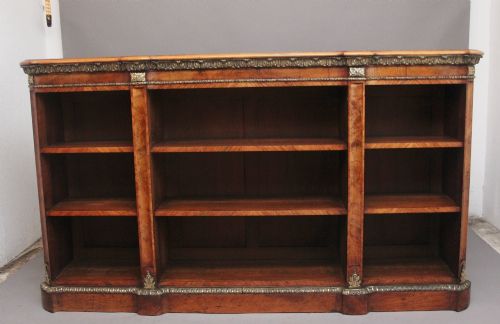
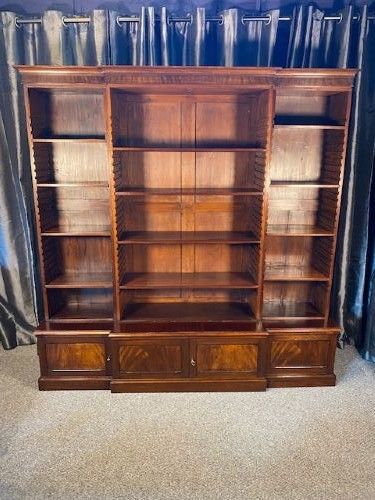
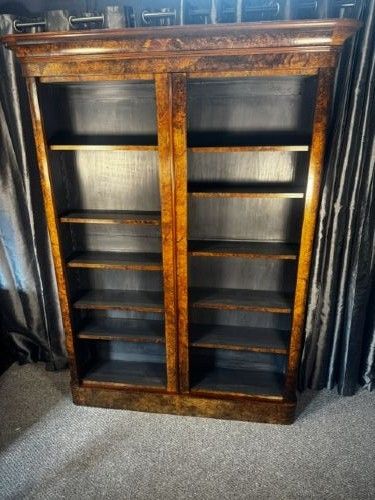
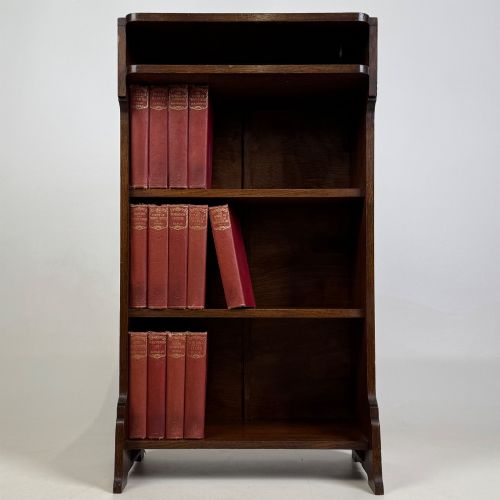
An antique library shelving cabinet combines open bookshelves with enclosed cupboard storage, providing a dual function that served studies and libraries from the Regency period through to the Edwardian era. These pieces range from substantial breakfront furniture in burr walnut to more modest pine or oak open bookcases.
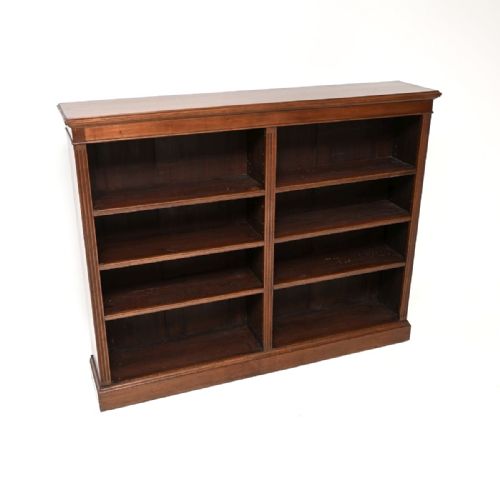
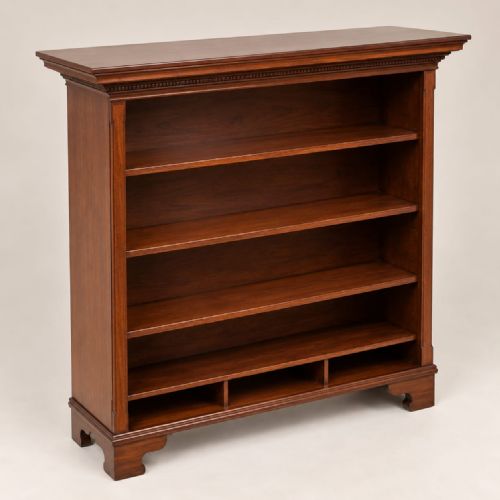
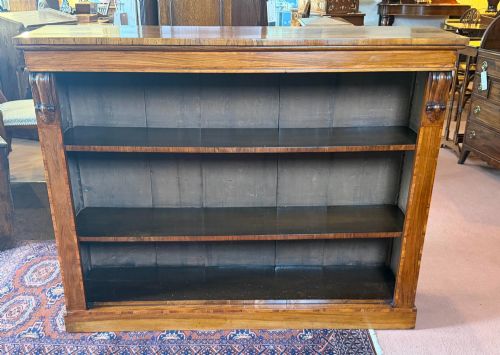
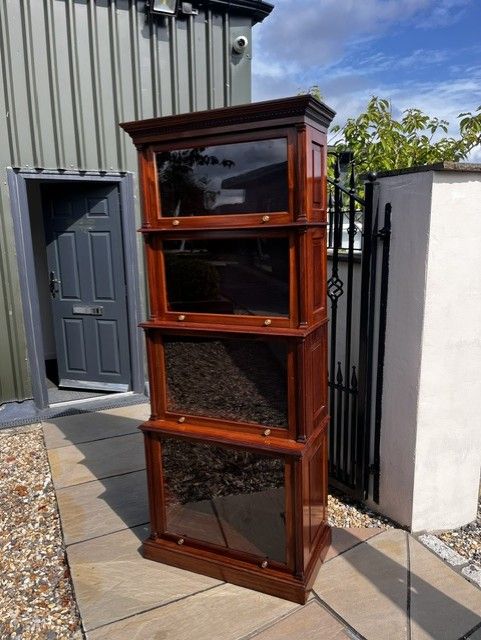
The version most frequently met on this page is the Victorian mahogany or walnut open bookcase, often fitted with adjustable wooden shelves. Many examples incorporate glass doors or lower cupboards, drawing on styles that span from Regency and William IV to Arts & Crafts and Sheraton Revival.
Makers and cabinetmakers constructed these units to house growing collections of volumes in private homes and offices. The mix of open shelving and lower cabinetry allows both display and protection for books, maps and documents.
Materials and construction methods
Makers utilised dense hardwoods such as mahogany, rosewood, walnut and oak as the structural foundation for these library pieces. Finer examples applied burr walnut or satinwood veneers, sometimes accented with brass fittings, ormolu mounts and inlaid details.
Construction relied on solid timber frames and dovetailed joints, housing adjustable shelving systems that allowed owners to alter shelf heights for different book sizes. Glazed doors utilised lead or wooden astragals to hold individual panes of glass securely within the frame.
Listings feature woods including mahogany, oak, walnut, rosewood and pine, spanning the Victorian, Regency and Edwardian periods.
Markers of quality and execution
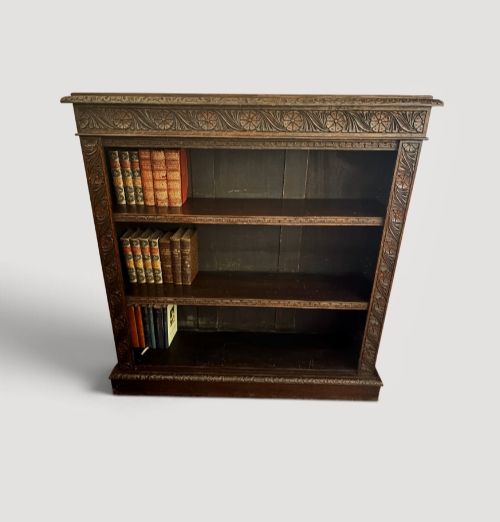
Superior execution shows in the selection of timber figures, such as heavily figured burr walnut, matched mahogany grains and select satinwood veneers. The depth of hand-carving on oak and walnut elements distinguishes standard production from more ambitious commissions.
Hardware and interior details reveal the grade of the piece, from simple brass shelf supports to intricate leather-edged shelving and fine ormolu mounts. The precision of the joinery in breakfront sections and the weight of the solid timber panels separate standard library furniture from exceptional workshop output.
Gillows·Johnstone and Jeanes
The Antique Library Shelving Cabinet Glossary
- Breakfront
- A cabinet design where the central section projects forward from the flanking wings. This architectural layout creates depth and visual interest in large library pieces.
- Waterfall bookcase
- A set of open shelves that steps back progressively from bottom to top, forming a tier resembling water cascading down steps. These pieces often date from the Regency and Victorian periods.
- Adjustable shelves
- Shelves supported by movable pins, ratchets or brass tracks, allowing the interior height to change. This practical mechanism appears frequently in Victorian library shelving.
- Ormolu
- Gilded bronze mounts applied to furniture for decoration, seen on finer walnut pieces. The technique adds metallic contrast to dark timber surfaces.
- Astragal
- A small wooden moulding used to divide glass panes within a cabinet door. These strips form structural grids on glazed library cupboards.
Antique Library Shelving Cabinet: Frequently Asked Questions
How do I adjust the shelves?
Most period library cabinets use wooden support pegs, brass shelf tracks or adjustable ratchet strips set into the interior sides. You simply lift the shelf and reposition the supports into the desired slots.
Take care when moving shelves in older cabinets, as dry timber can stick or splinter around the support holes if forced.
Are the shelves strong enough for heavy books?
Victorian and Regency library shelving was built using dense hardwoods like mahogany and oak to support heavy leather-bound volumes. Solid timber construction handles substantial weight without bowing over time.
Very long shelves or thinned veneer boards benefit from redistributing heavy folio volumes to prevent long-term sagging in the centre.
How do I clean mahogany or walnut surfaces?
Dust the timber regularly with a soft, dry lint-free cloth to prevent particle buildup in carved areas and veneers. Avoid modern silicone sprays that leave residues and attract dust.
Apply a traditional beeswax polish sparingly once or twice a year, buffing it thoroughly to maintain the natural lustre of the polished wood.