




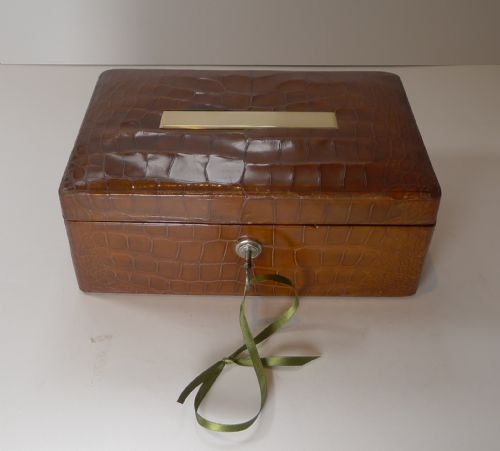

Antique Leather Trinket Box
An antique leather trinket box is a small storage piece in hide and metal that keeps precious items secure on a dressing table.
What an antique leather trinket box is
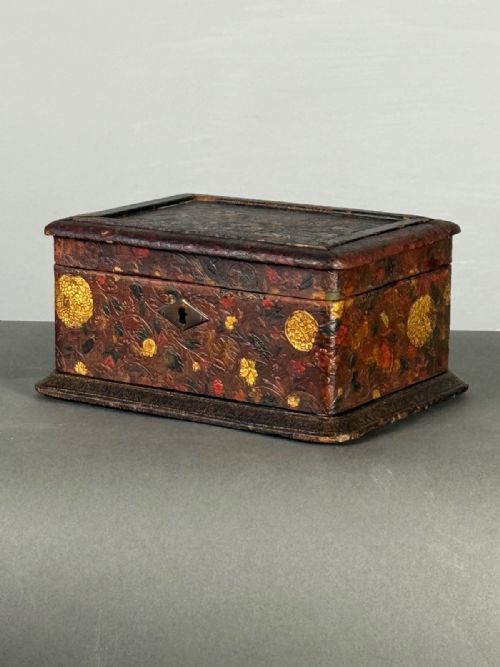
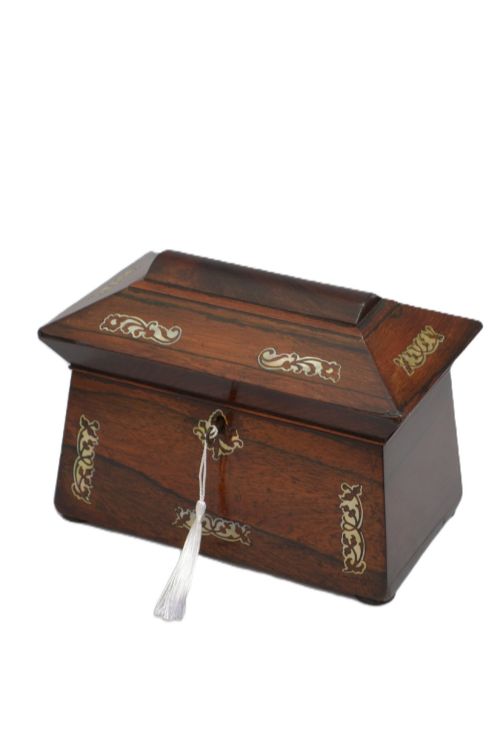
An antique leather trinket box takes the form of a small lidded container designed to hold jewellery, stamps, or personal keepsakes. These pieces surface from the Victorian era, the nineteenth century, and the early twentieth century.
The selection includes specific variants such as stamp boxes, jewellery boxes, and larger trinket cases. Makers from Paris and London shaped these domestic objects for daily use in elite households.
Examples on this page span French nineteenth century design, Art Deco lines, and Edwardian production. Each specimen demonstrates the portable luxury demanded by Victorian and Edwardian travellers and collectors.
How they were made
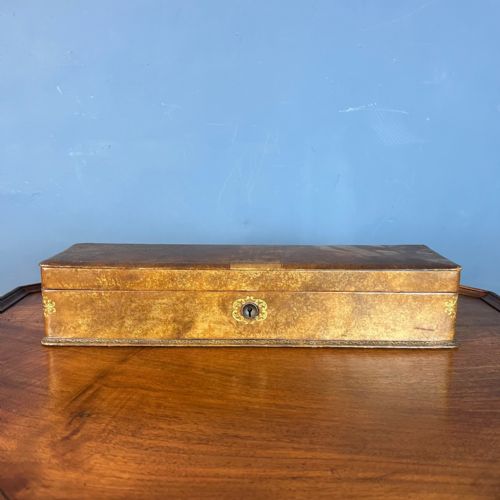
Artisans built the internal carcass from wood or metal before wrapping the exterior in fine hides, including morocco and crocodile leather. Pigment and gold leaf were applied to the leather surfaces for decorative tooling and borders.
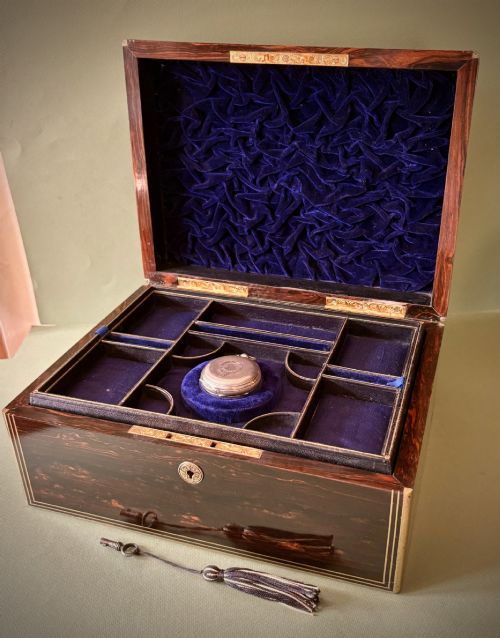
Metal hinges, locks, and clasps in brass secured the lids, while internal compartments were lined with plush velvet. Parisian and London workshops employed skilled hands to bind the leather tightly to the rigid core without creases.
Retail Price Guide 2026
Typical UK retail prices for leather trinket box, calculated from the Sellingantiques database of over a million retail prices indexed since 2003. This retail price guide relies exclusively on Sellingantiques data; no external sources or auction records are used, so the figures do not describe the wider market.
What varies in quality
The standard of an antique leather trinket box rests on the choice of hide and the precision of the exterior tooling. Fine morocco and genuine crocodile leather signify superior workshops compared to plain coated surfaces.
Internal execution distinguishes ordinary boxes from exceptional examples, notably the richness of the velvet lining and the weight of the brass hardware. Stamped maker details on the leather or locks elevate the piece further.
Susse Freres Paris·KC Vicery Regent St
The Antique Leather Trinket Box Glossary
- Morocco leather
- A fine goatskin leather traditionally tanned with sumac and noted for its distinct grain. It provides a durable and luxurious covering for nineteenth-century boxes.
- Gold leaf
- Gold beaten into an extremely thin sheet used for tooling and gilding leather surfaces. It adds bright decorative lines to the exterior.
- Stamp box
- A small compartmented box specifically sized for postage stamps. These desk accessories often feature multiple internal sections.
- Velvet
- A woven tufted fabric with a dense pile used to line the interior of jewellery cases. It protects delicate metal objects from scratching.
Frequently Asked Questions
What is an antique leather trinket box?
An antique leather trinket box is a small lidded container covered in hide, designed to hold jewellery, stamps, or personal valuables on a dressing table or desk.
These pieces date from the Victorian period through to the early twentieth century and combine practical storage with decorative exterior tooling.
How do I care for leather boxes?
Leather boxes require a stable environment away from direct sunlight and damp conditions to preserve the hide and prevent the wood underneath from warping.
Keep the brass hardware clean with a dry cloth and avoid applying modern chemical polishes to the historic leather surface.
What were stamp boxes used for?
Stamp boxes were essential desk accessories used to organise and store gummed postage stamps in the nineteenth and early twentieth centuries.
Their divided internal compartments kept different denominations separate and ready for use on correspondence.
How are different periods identified?
Periods are identified through a combination of materials, hardware styles, lining fabrics, and any maker stamps found on the locks or leather.
Victorian and Edwardian pieces often display distinct tooling patterns and clasp designs that reflect the manufacturing tastes of their decade.