




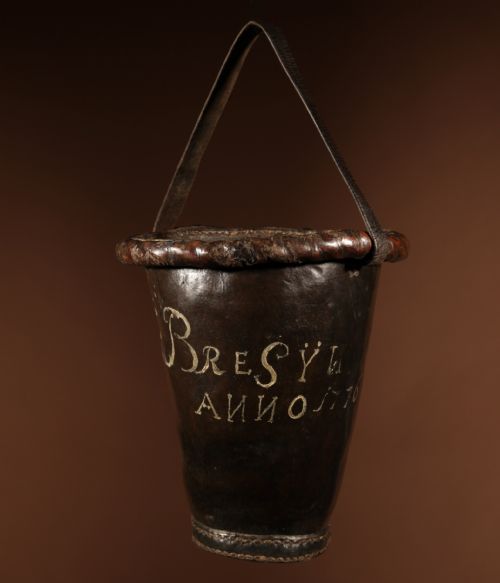


Antique Leather Container
These antique leather container pieces bring robust character and history into a room, offering practical storage disguised in rich, aged hide.
Antique Leather Container
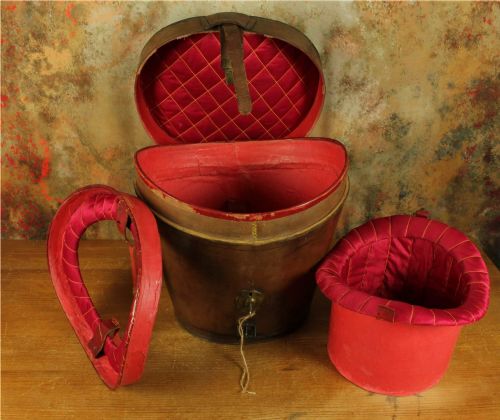
When you search for an antique leather container, you encounter a surprisingly varied group of objects shaped by daily utility rather than mere display. The selection ranges from robust fire buckets and tall hat boxes to small desk accessories, snuff boxes, and cigar cases.
Most pieces you meet on this page hail from the Georgian, Victorian, and Edwardian eras, often showing the sturdy construction typical of military or travel gear. You will find items formed of boiled leather, painted surfaces, and occasionally reinforced with brass or wood.
Domestic and travel items dominate the forms, reflecting how previous generations stored everything from top hats and umbrellas to personal correspondence and cologne bottles. Each piece carries the distinct patina of use, whether it sat in an English country house or travelled on military campaigns.
How they were made
Makers shaped these containers using heavy cattle hide, frequently employing the boiled leather technique to achieve rigidity and durability for items like fire buckets and tall hat boxes. This process involved soaking the hide in hot water or wax, allowing artisans to mould the leather into firm, protective shapes that retained their form over decades of heavy handling.
Metal reinforcement was essential for structural integrity, with brass bands, rivets, and handles fitted securely to bear the weight of contents like cordite or water. Artisans also incorporated secondary materials such as wood, glass bottles, and silk linings, combining utilitarian leatherwork with fine interior detailing for travel sets and desk boxes.
Antique Leather Container Retail Price Guide 2026
Typical asking prices for leather container among the pieces listed under this phrase on Sellingantiques today, from the lower quarter to the upper quarter. They describe what is for sale here now, not the wider market.
Listings feature storage forms spanning the 18th century to the 1940s, utilising leather, brass, wood, and painted finishes.
What varies in quality
The distinction between ordinary and exceptional pieces lies in the crispness of the original form and the integrity of the stitching and metal mounts. Superior examples retain their structural rigidity without collapsing at the seams, showing careful hand-tooling, intact painted armorials, or original brass hardware.
Provenance and maker attribution elevate certain containers significantly, particularly those bearing the marks of renowned outfitters or specific military and naval crests. The quality of the surface finish matters greatly; pieces with untouched, deep patination and honest signs of age command far more interest than those with overly restored or stripped leather.
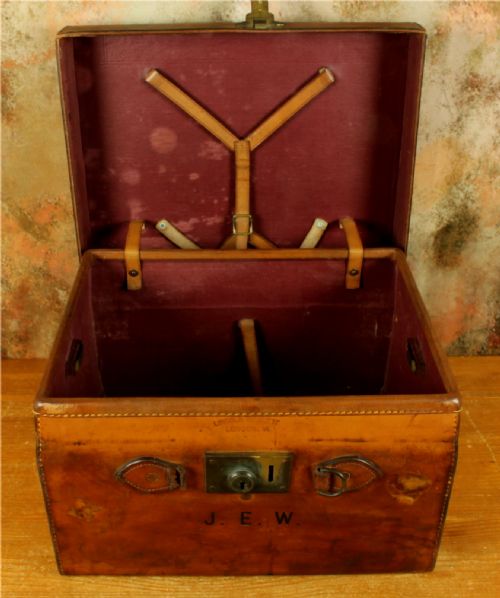
Lincoln Bennett·J.E.W.·JW Allen·Huntley & Palmers·Peek Frean and Co
The Antique Leather Container Glossary
- Boiled leather
- Hide treated by heating in water, oil, or wax to make it stiff and durable. This ancient technique created waterproof vessels like fire buckets and sturdy travelling cases.
- Cordite bucket
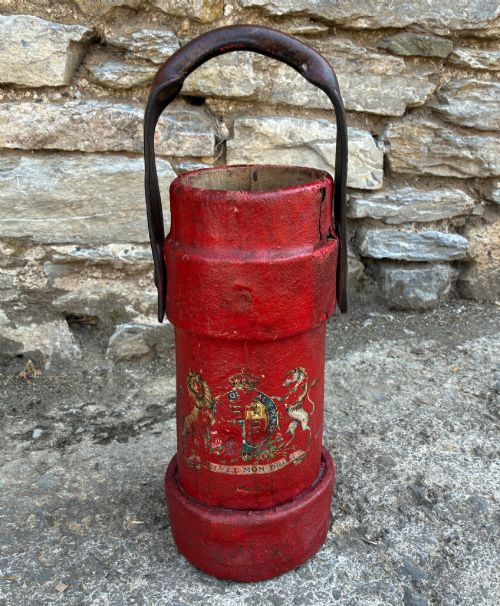
- A heavy-duty cylindrical container originally designed to safely transport propellant charges for artillery. These pieces are typically robust and carry distinct military provenance.
- Armorial crest
- A heraldic design painted, stamped, or engraved onto a surface to denote family lineage or institutional ownership. They frequently appear on fire buckets and military storage items.
- Cheroot case
- A small, often pocket-sized container fashioned to hold thin cigars with cut ends. Many surviving examples utilise shaped leather or book-form designs from the nineteenth century.
Antique Leather Container: Frequently Asked Questions
What were leather fire buckets used for?
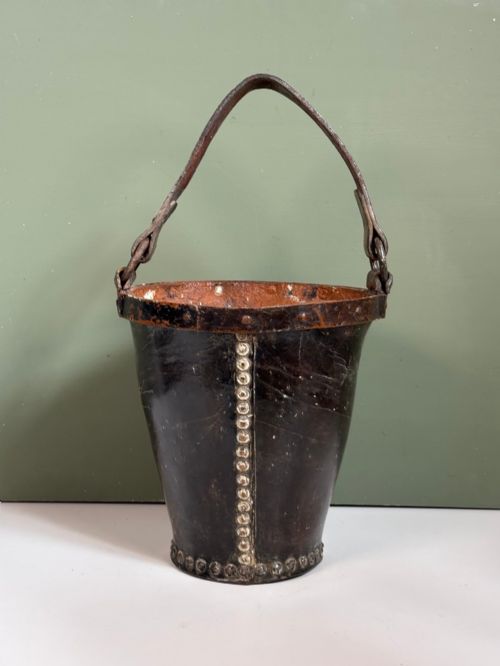
These buckets formed part of early fire-fighting apparatus in country houses, ships, and towns, kept ready to pass water down a line.
Because leather could be rendered watertight through boiling and waxing, it provided a lightweight alternative to metal that would not rust or dent easily.
How do I clean antique leather containers?
Dust gently with a dry, soft cloth and avoid using modern chemical cleaners or saddle soap that might strip the historic finish.
Feeding the dry hide with a museum-grade microcrystalline wax helps preserve the surface without darkening the original patina or damaging painted crests.
Are hat boxes sturdy enough for daily use?
Tall Victorian and Edwardian hat boxes were built to withstand travel by train and carriage, making them remarkably durable for modern storage.
While they easily hold scarves, gloves, or contemporary items, keep them away from damp environments to protect the structural integrity of the stiffened hide.
How can I tell a Georgian piece from a Victorian one?
Georgian containers often display hand-stitched seams, simpler toolwork, and thick boiled leather designed for heavy domestic or civic service.
Victorian and Edwardian items frequently show more refined hardware, maker stamps from established outfitters, and specialised fitted interiors for travel.