



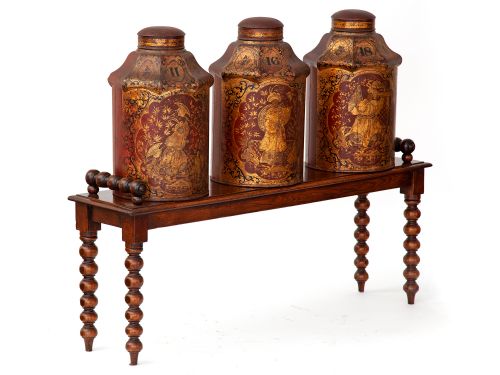
Antique Lacquer Caddy
An antique lacquer caddy is a small, portable container made for storing dried leaf, finished in polished resin surfaces with painted or gilt scenes.
Antique Lacquer Caddy
When you search for an antique lacquer caddy, you enter a field dominated by English Regency and Victorian specimens alongside imported Chinese Export work. These vessels served to keep precious leaves secure under lock, styled to display wealth in the drawing room.
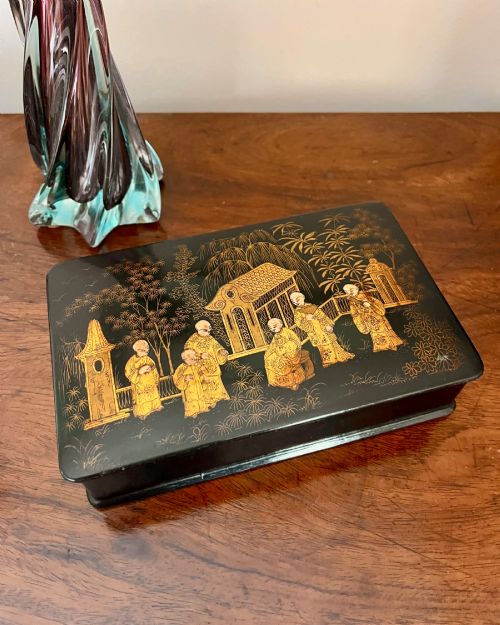
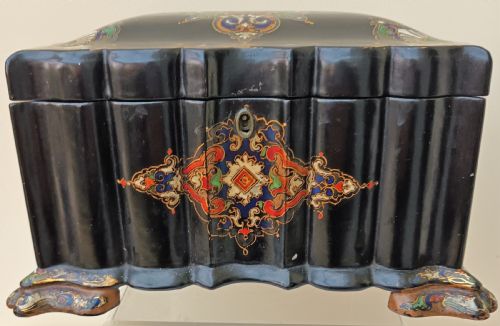
The most common forms on this page include rectangular tea canisters, double compartment tea caddies, and hinged document or keepsake cases. Makers drew upon Chinoiserie motifs, Italian Rococo Revival curves, and pagoda themes to decorate the exteriors.
Geographic origins span from Georgian English workshops to Chinese export centres and Kashmiri collections. Materials shift from papier-mâché and wood bases to painted, gilt, and penwork finishes.
How they were made
Workers applied layers of resinous lacquer or painted finishes over wooden or papier-mâché carcasses, building a hard surface that could take detailed gold leaf and hand-painted pigments. Penwork decoration substituted ink drawings for heavy paint, creating intricate monochrome scenes of figures and foliage.
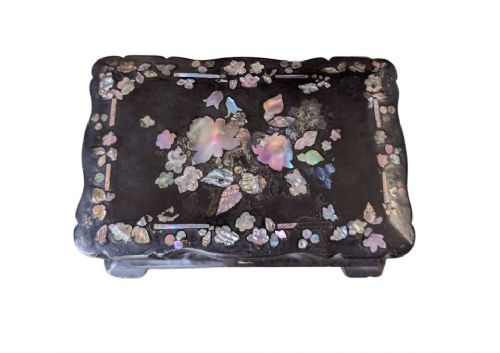
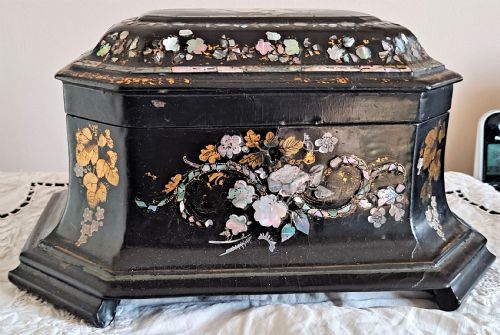
Metal fittings such as brass locks, hinges, and occasional bone elements secured the lids and provided interior divisions for tea leaf storage. Mother-of-pearl inlay frequently appeared on Victorian papier-mâché surfaces to catch the candlelight.
Some of these little boxes have witnessed centuries of gossip while safely guarding nothing more dangerous than dried leaves.
What varies in quality
The finesse of the hand-painted or penwork detail separates standard production from exceptional pieces, particularly where figures and pagodas are drawn with crisp perspective. Surfaces that retain their original depth of gilding and polish without heavy overpainting command greater interest.
Structural integrity of the papier-mâché or wooden carcass and the survival of interior fittings like compartments and lids determine the overall standard. The subtlety of the colour palette, whether yellow lacquer, red, or deep black, dictates the visual impact of the box.
The Antique Lacquer Caddy Glossary
- Lacquer
- A durable finish applied in multiple layers to a wooden or papier-mâché base. It creates a smooth, glossy surface suitable for painting and gilding.
- Papier-mâché
- A composite material made from paper pulp or layers of paper bound with glue, pressed into moulds and dried. It forms a lightweight yet strong body for Victorian tea caddies.
- Penwork
- A decorative technique utilising India ink applied with a fine pen to create detailed monochrome drawings on wood. It is seen on Regency boxes alongside gilt highlights.
- Canister
- A small vessel designed to hold dry goods such as tea leaves. In these collections, canisters often fit inside a larger outer caddy box.
Antique Lacquer Caddy: Frequently Asked Questions
What is an antique lacquer caddy?
These pieces are lidded containers built to store and preserve dry tea leaves in domestic parlours. Their exteriors display decorative painting, penwork, or lacquer work.
They appear in various forms, from English papier-mâché boxes to Chinese export chests and Kashmiri pieces. Each served to protect valuable commodities while adding visual interest to furniture surfaces.
How were these caddies used originally?
Households utilised these vessels to keep expensive tea secure from servants or damp air. The lockable lids ensured the mistress of the house retained control over the supply.
Inside, divided compartments held different varieties of tea leaves, sometimes accompanied by small glass or metal mixing bowls. They sat on side tables in the formal reception rooms of the house.
How do I care for an antique lacquer caddy?
Keep these boxes away from direct sunlight, extreme heat, and moisture to protect the fragile lacquer and painted surfaces. Dust them gently with a dry, soft cloth rather than liquid cleaners.
Opening and closing the lids with care preserves the original brass hinges and internal partitions. Maintaining a stable indoor climate prevents the wood or papier-mâché from warping.
How can I tell a Regency caddy from a Victorian one?
Regency pieces often feature fine penwork, geometric stringing, and classical Chinoiserie scenes executed around eighteen hundred to eighteen thirty. Their forms lean towards sarcophagus shapes or neat rectangular boxes.
Victorian examples frequently utilise papier-mâché with mother-of-pearl inlay, bold floral painting, and richer, darker resin finishes. The materials and decorative techniques shift to reflect the industrial and aesthetic changes of the later nineteenth century.