




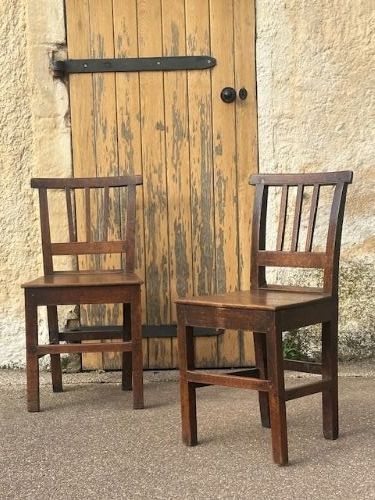
Antique Joined Chair
An antique joined chair brings the solid weight of seventeenth-century carpentry directly into a modern room.
Antique Joined Chair
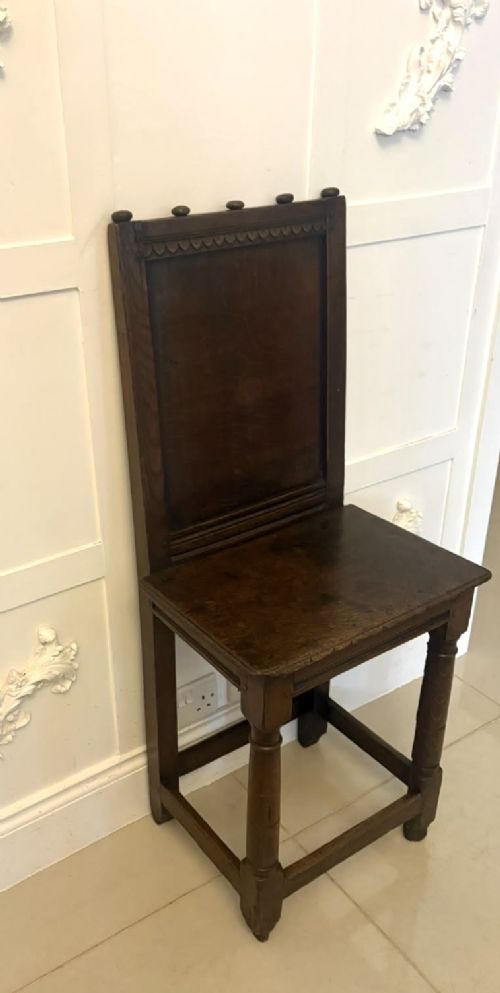
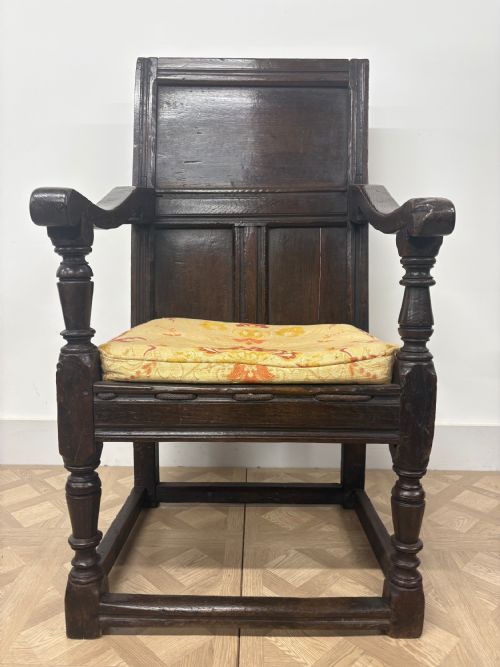
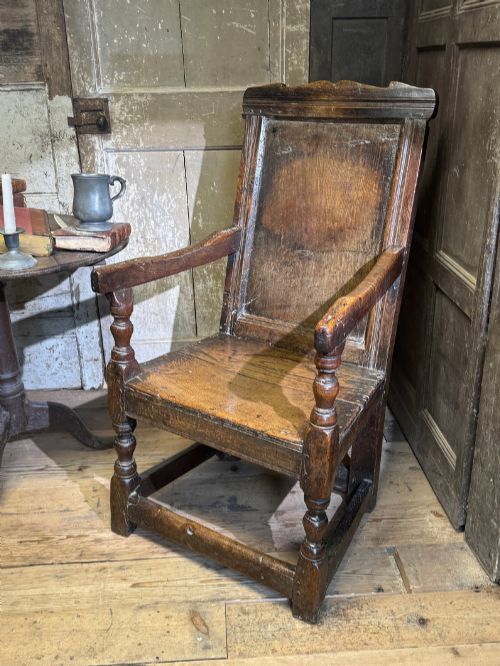
The antique joined chair is a sturdy seat constructed using traditional mortise and tenon joints secured with wooden pegs rather than metal nails or glue. These pieces appear primarily from the seventeenth and eighteenth centuries, reflecting vernacular domestic traditions across England, Wales, and Scotland.
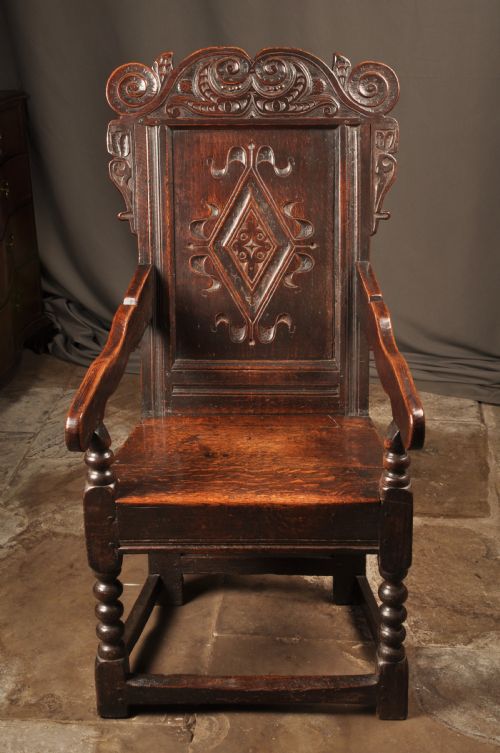
Buyers encounter regional forms ranging from solid panel-backed wainscot armchairs to joined back stools, highchairs, and close stools. Oak is the primary medium, sometimes accompanied by tapestry upholstery or iron fittings depending on the specific domestic function.
How they were made
Construction relies heavily on solid oak, shaped and fitted with pegged joints that give the joined chair its enduring structural rigidity. Cabinetmakers and local carpenters utilised regional vernacular styles, incorporating carved panels and sturdy stretchers.
Iron components appear where structural reinforcement or mechanical function requires metalwork, particularly in specialised forms like close stools. Surface finishes develop naturally over centuries through use, handling, and wax polishing.
Antique Joined Chair Retail Price Guide 2026
Typical asking prices for joined chair among the pieces listed under this phrase on Sellingantiques today, from the lower quarter to the upper quarter. They describe what is for sale here now, not the wider market.
A child's highchair bearing initials and the date 1688 proves that toddlers have been making demands from a great height for centuries.
What varies in quality
Quality rests in the crispness of the original timber carving and the integrity of the joined frame. Pieces retaining their primary structural timber without extensive replacement parts stand apart from heavily restored examples.
Proportion and regional character also define the better pieces, particularly where distinct Yorkshire, Welsh, or Scottish vernacular traits remain unaltered. Surface depth and untouched timber patination elevate certain examples above plainer or overly sanded equivalents.
The Antique Joined Chair Glossary
- Joined chair
- A wooden chair constructed with mortise and tenon joints pegged together by the carpenter. This method preceded the widespread use of glued joints in standard chair manufacture.
- Wainscot armchair
- A heavy wooden armchair featuring a panelled back and solid wooden seat, common in the seventeenth century. The term originally denoted oak panelling used on walls.
- Back stool
- An early form of chair without arms, essentially a stool fitted with an upright backrest. These pieces served standard seating duties around seventeenth-century tables.
- Close stool
- A box-like piece of furniture containing a chamber pot, often enclosed with a lid and designed to resemble a small cabinet or chair. These items functioned as indoor sanitation before modern plumbing.
- Vernacular
- Objects built by local craftsmen following regional traditions rather than high-style metropolitan designs. These pieces often utilise locally sourced materials and practical construction methods.
Antique Joined Chair: Frequently Asked Questions
What is a joined chair?
A joined chair is an early form of wooden seating constructed using rigid mortise and tenon joints secured by wooden pegs.
This technique produced sturdy, heavy frames capable of surviving centuries of domestic use.
How do I date an oak chair?
Dating relies on construction methods, timber characteristics, and stylistic details such as carved panelling or regional framing.
Seventeenth-century examples typically feature pegged joined construction and solid panel backs, while later vernacular pieces show regional variations.
Where were these chairs made?
These pieces originate from workshops across England, Wales, and Scotland, often displaying distinct regional vernacular traits.
Local carpenters built them using native timber, particularly solid oak sourced from nearby woodlands.
How should I care for oak furniture?
Keep wooden furniture away from direct heat sources and sudden humidity changes to prevent the timber from splitting.
Apply a traditional beeswax polish occasionally to nourish the surface and maintain the natural finish.