
Antique Jewellery Case
An antique jewellery case brings order to precious things, preserving the personal history held within fitted trays, velvet linings and polished timber.
Antique Jewellery Case
When you search for an antique jewellery case, you encounter a varied group of receptacles designed to store, protect or exhibit personal treasures. The selection ranges from compact travel caskets and fitted dressing cases to freestanding bijouterie tables and countertop display cabinets.
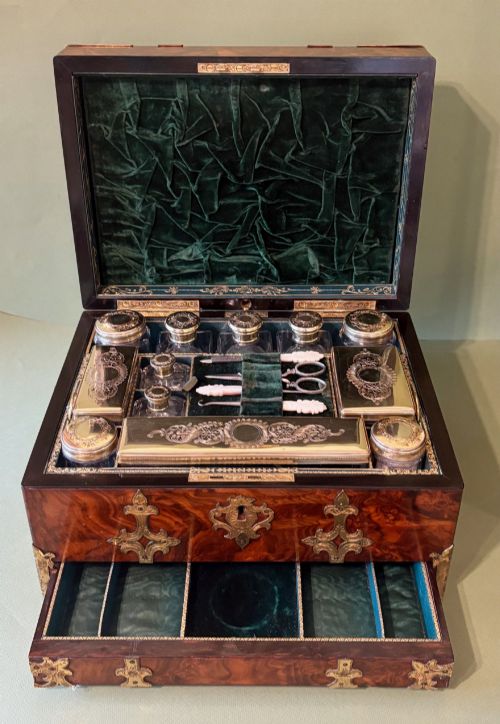
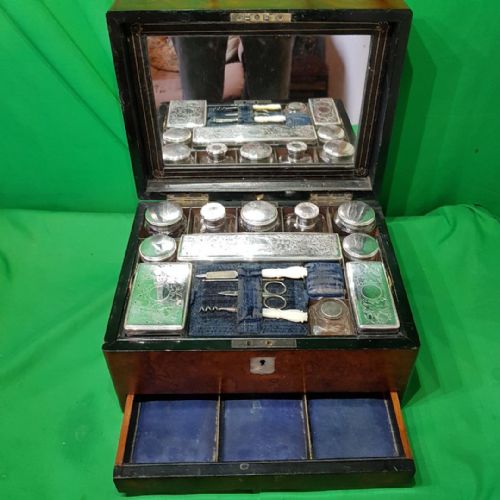
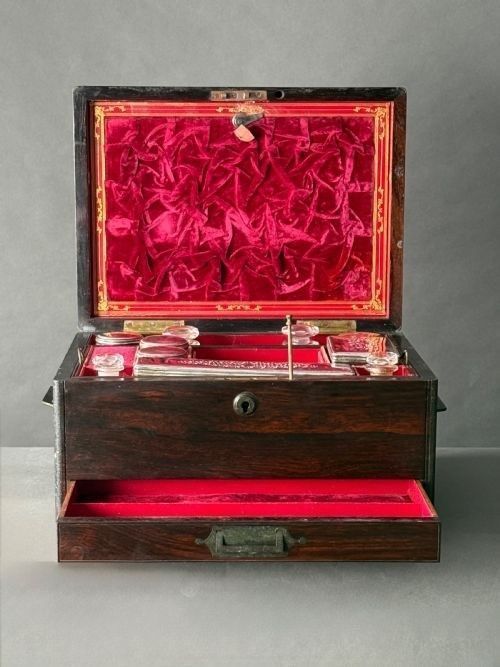
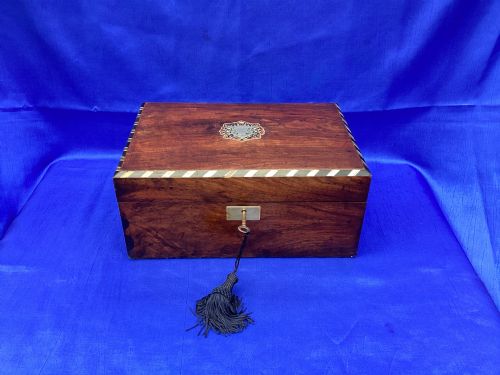
The versions you meet most frequently on this page date from the Victorian and Edwardian periods, constructed in timbers such as mahogany, walnut and rosewood. These pieces often feature internal compartments, mirrors and dedicated slots for rings and trinkets.
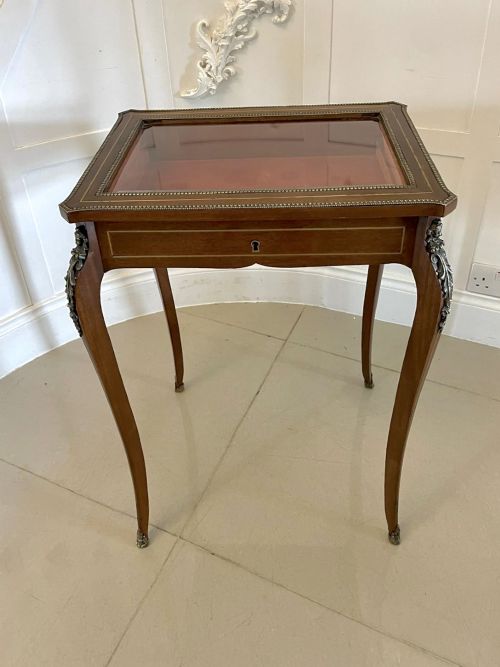
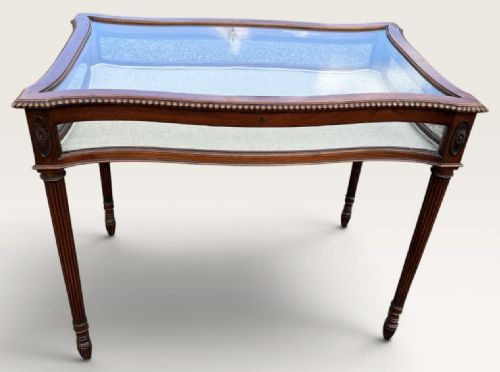
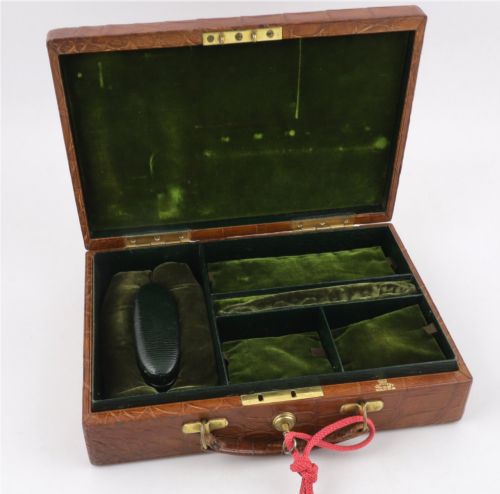
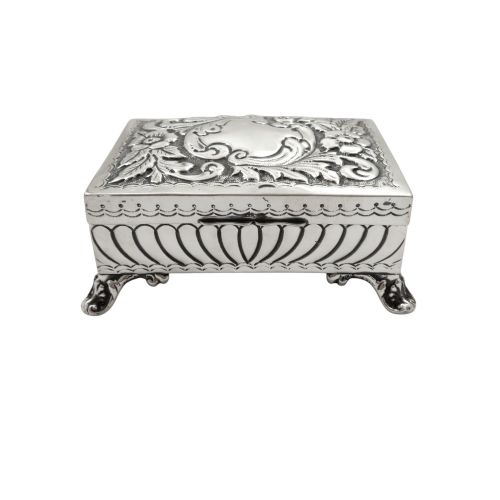
Larger examples include glass-topped vitrines and mahogany display tables intended to showcase collections rather than conceal them. Alongside traditional timber boxes, the selection contains specialised leather vanity cases, crocodile skin boxes and sterling silver ring boxes.
How they were made
Cabinetmakers utilised dense hardwoods like mahogany, burr walnut and rosewood, frequently applying decorative veneers or brass mounts to the exterior. Interiors required meticulous hand-fitting of partitions, lined with velvet, silk or leather to cushion fragile items.
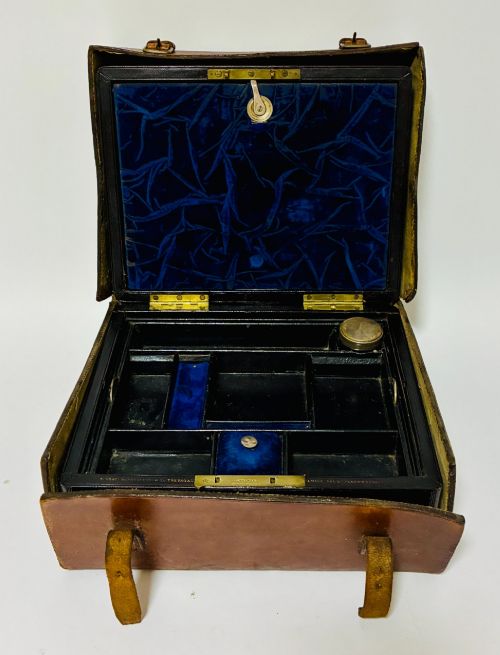
Glass panels set into brass or timber frames defined the construction of bijouterie tables and display cabinets, allowing visibility from multiple angles. Leather cases relied on reinforced stiffened hides, fitted internal trays and working brass locks with custom keys.
What varies in quality
Quality rests in the integrity of the construction, the choice of materials and the completeness of the internal fittings. Superior examples retain their original silk linings, working locks, maker plaques and fitted compartments without replacement parts.
Finer boxes display thoughtful detailing, such as finely figured timber veneers, substantial brass hardware and precise joinery. The distinction between standard storage and exceptional craftsmanship lies in the retention of original elements and the refinement of the internal arrangement.
J C Vickery·F. West·H Mitchell·G. Colani
The Antique Jewellery Case Glossary
- Bijouterie table
- A glass-topped display table designed specifically for showcasing small valuables, medals and trinkets. These pieces typically stand on slender legs with hinged glazed lids.
- Vitrine
- A glass-fronted or glass-topped display cabinet intended for the presentation of curiosities and collections. They frequently incorporate mirrored backs and adjustable shelving.
- Dressing case
- A comprehensive travel box fitted with compartments for cosmetics, brushes and jewellery. These often feature concealed drawers and integrated mirrors.
- Sarcophagus form
- A box shape characterised by a sloping, domed lid reminiscent of an ancient monumental tomb. This style appeared frequently on rosewood and mahogany boxes during the nineteenth century.
- Fob seal
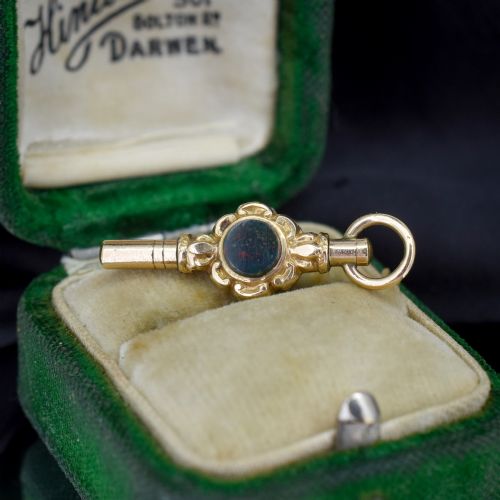
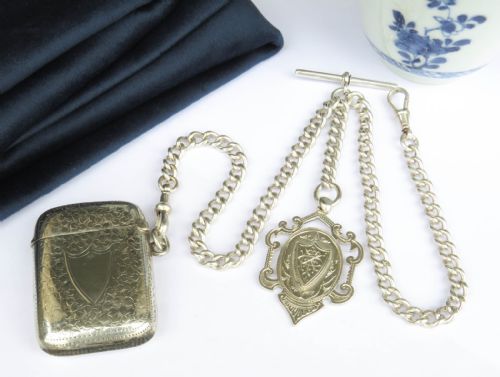
- A small pendant seal used historically for stamping wax signatures, often mounted in gold or silver with hardstone carvings. They frequently appear alongside jewellery cases as part of a collector's assortment.
Antique Jewellery Case: Frequently Asked Questions
What is the difference between a jewellery box and a bijouterie table?
A jewellery box is a portable container with a solid lid, designed to keep personal items private and secure on a dressing table. In contrast, a bijouterie table is a piece of furniture featuring glass panels specifically built to display collections openly in a room.
While both serve the purpose of housing precious items, one prioritizes concealed storage while the other functions as a display surface.
How were Victorian dressing cases used?
Victorian dressing cases travelled with their owners, carrying everything needed for personal grooming and attire management away from home. They housed scent bottles, brushes, writing materials and jewellery within intricate, multi-tiered internal compartments.
Owners relied on these sturdy leather or timber chests to maintain domestic routines during extended journeys by carriage or rail.
How do I care for leather and wood jewellery cases?
Timber cases benefit from occasional treatment with appropriate wax to nourish the grain and protect the polished surface from drying out. Leather and crocodile cases require gentle dusting and protection from direct sunlight and excessive moisture to prevent cracking.
Internal velvet and silk linings should be kept dry and free from dust using a soft brush rather than liquid cleaners.
How can I tell an Edwardian display case from a Victorian one?
Edwardian display cases often exhibit lighter satinwood or mahogany timbers, reflecting a shift toward airier interior aesthetics after 1901. Victorian examples frequently lean toward heavier proportions, darker burr walnut, rosewood and more elaborate carved ornamentation.
Examining the internal hardware, lining materials and construction techniques helps confirm the manufacturing era.