



Antique Jardiniere Base
An antique jardiniere base raises your plants to eye level with sturdy tripod structures or heavy columns.
Antique Jardiniere Base
When you search for an antique jardiniere base, you are looking at sturdy furniture designed specifically to support heavy plant containers and urns indoors and in orangeries. The pieces available here include stands and pedestals shaped as columns, tripod structures, and planter tables from various historical periods.
You are most likely to meet 19th century examples on this page, alongside Georgian and Regency pieces. These items appear in forms ranging from simple wooden plant stands to elaborate marble columns and ceramic planter bases decorated with lions' heads.
The objects serve primarily to display greenery or floral arrangements while adding architectural interest to a room. Their construction reflects the decorative tastes of the Victorian, William IV, and Italian Renaissance Revival styles.
Materials and construction
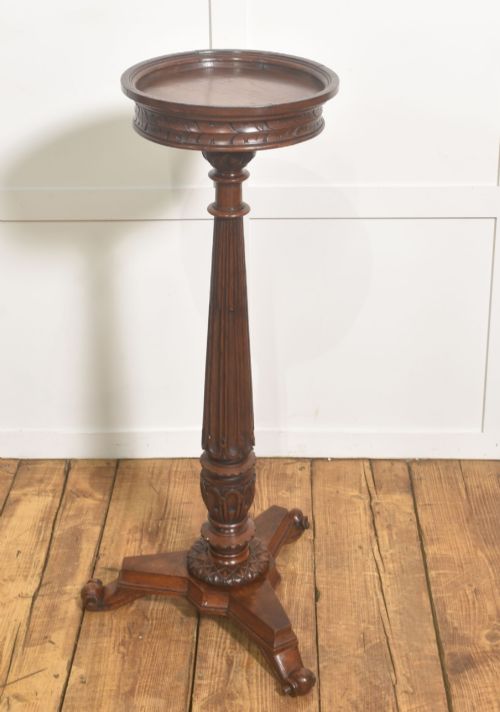
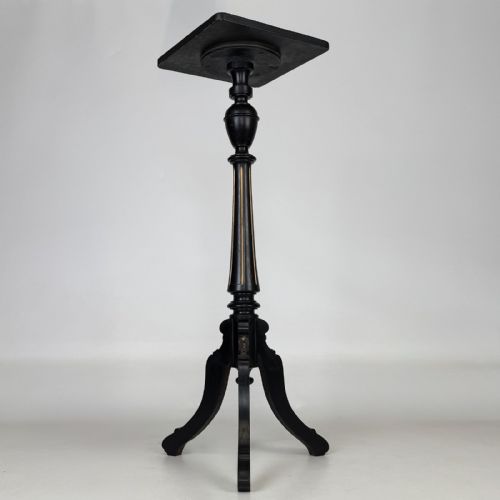
The pieces on this page utilise a range of dense timbers including mahogany, walnut, rosewood, oak, and ebonised wood. Artisans shaped these woods into tripod bases, pedestals, and plant stands, often employing carved details.
Other materials recorded in the evidence include brass, marble, and gilt finishes, alongside ceramic majolica. Vert de Patricia marble appears in column forms, while metallic elements and figural decorations add weight and visual contrast to the wooden frameworks.
Antique Jardiniere Base Retail Price Guide 2026
Typical asking prices for jardiniere base among the pieces listed under this phrase on Sellingantiques today, from the lower quarter to the upper quarter. They describe what is for sale here now, not the wider market.
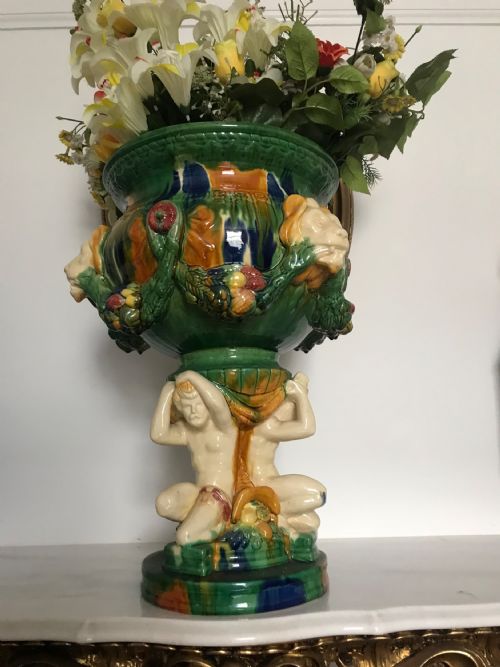
One Italian planter stands ready on a figural base featuring lions' head decoration.
Evaluating quality and craftsmanship
Quality in these pieces rests upon the solidity of the timber and the precision of the carving. Items featuring intricate details like figural lion head decorations or specialised stones such as marble columns sit at the higher end of the range.
The stability of the tripod base or pedestal column determines structural integrity, as these supports must bear considerable weight. Simpler turned wooden plant stands represent more utilitarian workshop production.
Thomas King
The Antique Jardiniere Base Glossary
- Jardiniere
- An ornamental pot or stand for holding plants or flowers. It often sits on a dedicated base or pedestal.
- Tripod base
- A three-legged support structure commonly found on plant stands and tables to ensure stability on uneven floors. This configuration appears frequently across nineteenth-century designs.
- Pedestal
- An architectural support or column that elevates a planter or bust. These vertical structures distribute weight evenly to the floor.
- Majolica
- A type of earthenware decorated with opaque coloured glazes. It provides a vibrant surface for ceramic planters and stands.
- Ebonised wood
- Timber treated to resemble ebony through staining or painting. This dark finish creates a formal appearance on Victorian furniture.
Antique Jardiniere Base: Frequently Asked Questions
What is an antique jardiniere base?
An antique jardiniere base is a supportive structure, pedestal, or stand designed to elevate potted plants and heavy planters. These items include tripod configurations and architectural columns.
They serve both a practical function in protecting floors from water and an aesthetic purpose in interior and conservatory display.
Where were these stands used?
Historically, these stands were placed in drawing rooms, parlours, and orangeries to display indoor greenery and flowering plants.
They allowed households to bring outdoor plants inside while protecting valuable interior surfaces.
How do I identify a Regency base?
Regency pieces often incorporate classical architectural motifs, dark woods like rosewood and mahogany, and clean geometric lines. The influence draws from Greek and Roman design.
Tripod supports and pedestal configurations from this era prioritise balanced proportions and refined timber grain.
What materials are common?
The listings show a frequent use of timbers such as walnut, mahogany, rosewood, oak, and ebonised wood. Marble and brass also appear.
Ceramic elements like majolica are utilised on specific planter stands alongside stone columns.