


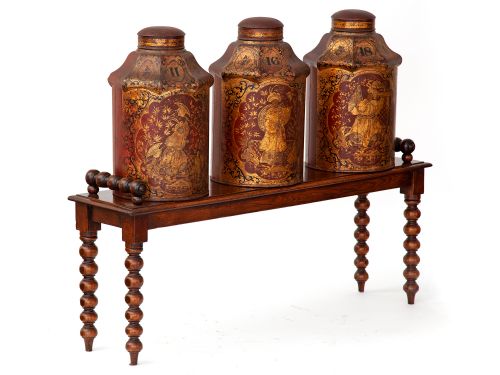

Antique Japanned Caddy
These antique japanned caddy pieces bring distinct Chinoiserie lacquer and toleware surfaces to your room, offering period storage with striking painted detail.
Antique Japanned Caddy
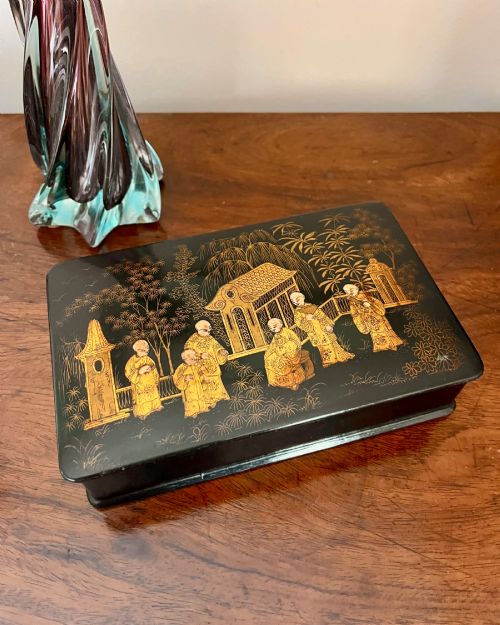
An antique japanned caddy brings Chinoiserie decoration into domestic spaces through lacquered wood, painted tinplate, and toleware forms. These items originate across the Georgian, Regency, William IV, and nineteenth-century periods.
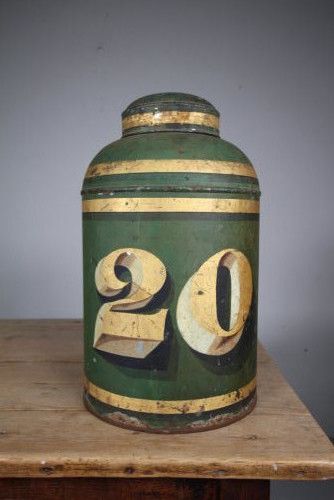
The selection on this page centres primarily on tea caddies, tea canisters, and decorative boxes, alongside related spice boxes and mantel clocks. Buyers frequently encounter painted toleware canisters and lacquered wooden boxes finished with gilt details.
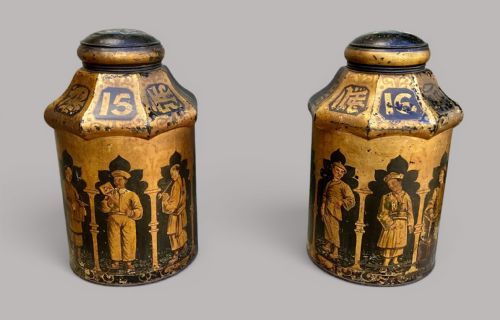
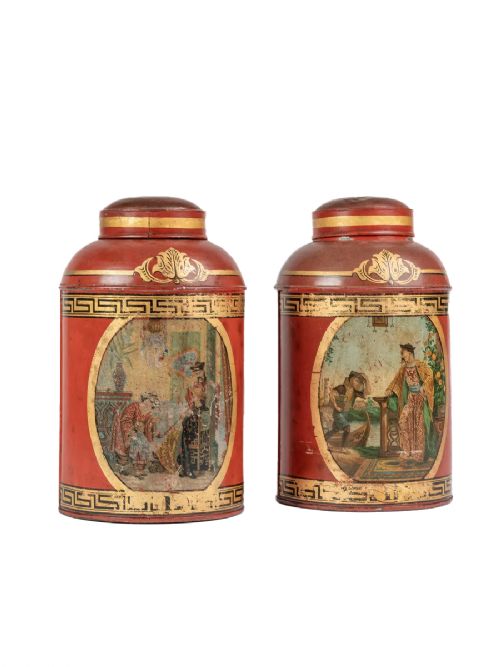
Forms range from single tea canisters to sets of three, alongside larger nineteenth-century examples and Chinese export pieces. Styles span English country interpretations, Victorian Chinoiserie, and pagoda designs.
Materials and construction
Maker construction relies heavily on wood, iron, and tinplate, built into boxes and canisters then finished with layers of paint and lacquer. Craftsmen applied gold leaf to highlight intricate Chinoiserie motifs against black, yellow, maroon, or red grounds.
Surface decoration frequently employs penwork and hand-painted figures, pagodas, and landscapes characteristic of eighteenth and nineteenth-century taste. Brass fittings and mounts complete many of these lidded containers.
Several sets include three separate canisters, perfect for hoarding tea blends or hiding your favourite biscuits from unexpected visitors.
Evaluating quality and execution
Quality rests in the crispness of the hand-painted or penwork Chinoiserie details and the preservation of the original lacquer and gold leaf. Finer pieces demonstrate superior depth in the layered ground and more intricate draughtsmanship on the figures and foliage.
The integrity of the original painted surface, whether black lacquer, yellow paint, or maroon tinplate, dictates the visual strength of the piece. Matching sets, such as pairs or groups of three canisters, show greater decorative cohesion than isolated survivors.
The Antique Japanned Caddy Glossary
- Japanning
- European imitation of East Asian lacquerwork, created by applying layers of varnish and paint then cured and polished. This technique produced glossy black or coloured grounds adorned with gilt motifs.
- Toleware
- Painted or enamelled tinplate items manufactured in Britain and Europe during the eighteenth and nineteenth centuries. These vessels often received japanned finishes to resemble more costly oriental lacquer.
- Penwork
- Decorative technique using fine ink or paint applied with a pen to create intricate surface patterns on wood. It often appears on Regency boxes alongside tinted washes.
- Canister
- A lidded container designed for storing dry goods such as tea leaves. In this context, they form sets housed within larger boxes or stand as paired decorative objects.
Antique Japanned Caddy: Frequently Asked Questions
What were antique japanned caddies used for?
These containers served primarily to store and preserve dry tea leaves when tea was an expensive commodity requiring safe, airtight storage. Wealthy households kept them in formal rooms.
Over time, many functioned as general decorative boxes for small valuables or writing accessories as tea storage habits evolved.
How do I date a japanned tea caddy?
Dating relies on the substrate materials, the style of the Chinoiserie decoration, and the construction methods of the box itself. Georgian and Regency pieces often feature refined penwork or black lacquer, while mid-nineteenth-century items frequently utilise painted toleware.
Examining the hinges, interior compartments, and the ageing of the lacquer layers provides further confirmation of the period.
Where should I place a toleware canister?
These pieces suit side tables, mantelpieces, or enclosed shelving where their bright gilt decoration and coloured grounds can be appreciated. Direct sunlight should be avoided to protect the aged lacquer and paint.
They pair effectively with other nineteenth-century decorative objects and wooden surfaces without needing to function as active tea storage.