




Antique Japanese Ceramic Fish
These antique japanese ceramic fish figures and vessels bring the mastery of nineteenth-century kilns directly into your home.
Antique Japanese Ceramic Fish
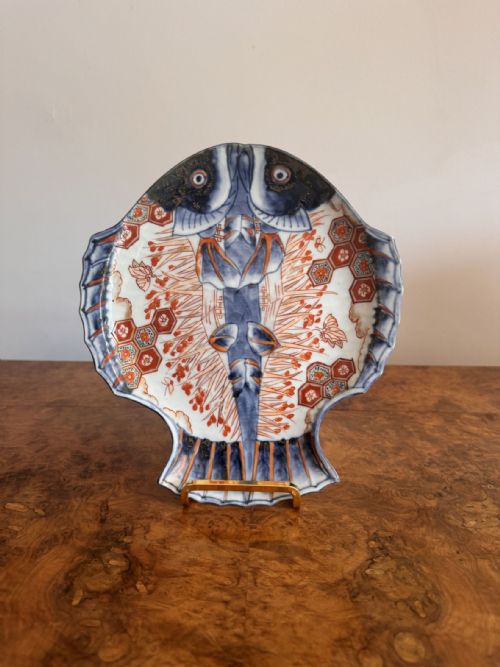
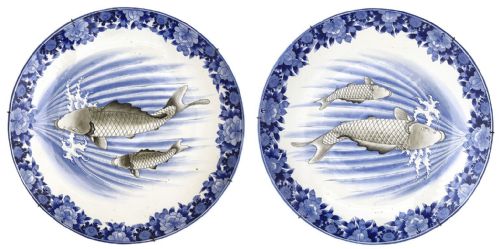
When you search for antique japanese ceramic fish, you find a fascinating array of nineteenth-century forms ranging from decorative plates moulded in the shape of swimming koi to grand jardinières and architectural roof ornaments. The examples met most frequently on this page date from the Meiji period, capturing the vibrant naturalism and technical skill of Japanese ceramicists working between the late Edo era and nineteen hundred.
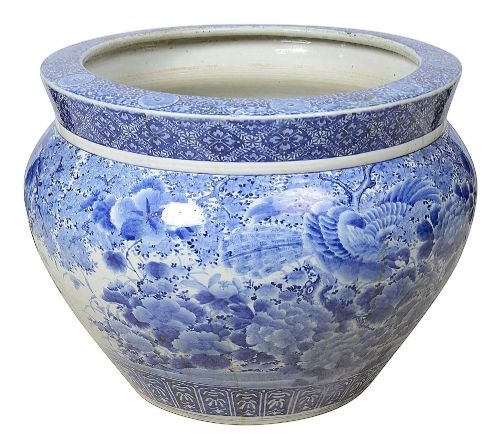
The objects span practical vessels such as large blue and white porcelain planters and chargers, alongside unusual novelty items like twin koi pairs and shachikoko roof tiles. Makers utilised traditional forms to celebrate aquatic themes, depicting fish in cobalt underglaze, Imari palettes, and occasionally combined with lacquer over black paint.
Originating predominantly from Arita kilns, these pieces reflect the peak of nineteenth-century export production and domestic artistry alike. Whether you encounter a plate formed entirely as a fish or a porcelain vase adorned with koi motifs, each item demonstrates the enduring cultural significance of aquatic life in Japanese design.
How they were made
The physical construction of these pieces relies heavily on fine porcelain and ceramic bodies shaped into complex sculptural forms or thrown as large jardinières and vases. Artisans applied cobalt underglaze pigments directly to the unbaked clay before glazing and firing, achieving the deep blue tones characteristic of Arita production.
Many works incorporate colourful enamel decoration over the glaze, as seen in traditional Imari pieces, whilst others experiment with contrasting textures by applying lacquer over black paint. Architectural roof ornaments required robust ceramic moulding to withstand weathering, contrasting with the delicate detailing found on decorative plates and twin koi pairs.
Listings feature ceramics spanning the nineteenth century, prominently capturing the Meiji period and the transition from the Edo era.
What varies in quality
The standard of painting and modelling marks the primary division between ordinary production and superior craftsmanship, particularly in the rendering of scales and movement on fish forms. Crisp cobalt underglaze lines and well-defined sculptural contours indicate skilled hand-workmanship within the kiln.
The complexity of the object type also influences distinction, where unusual moulded forms like the fish-shaped plate or paired shachikoko roof ornaments demand greater technical mastery than standard vessels. Preservation of delicate surface treatments, including supplementary lacquerwork and enamel application, further distinguishes the finer examples.
The Antique Japanese Ceramic Fish Glossary
- Imari
- A style of Japanese porcelain decorated in underglaze blue, iron red, and gilt, highly popular for export during the Meiji period.
- Cobalt Underglaze
- A blue pigment applied to pottery beneath the transparent glaze before firing, prized for its permanence and depth of colour.
- Jardiniere
- A large ceramic pot or planter designed to hold growing plants, often heavily decorated and displayed on stands.
- Meiji Period
- The era in Japanese history spanning from eighteen sixty-eight to nineteen twelve, noted for opening trade and exceptional decorative arts.
- Shachikoko
- Mythical Japanese creatures with the head of a tiger and the body of a fish, traditionally used as architectural roof ornaments to ward off fire.
Antique Japanese Ceramic Fish: Frequently Asked Questions
What is an antique Japanese ceramic fish?
These pieces include plates moulded into fish shapes, vases featuring koi designs, and architectural roof ornaments depicting mythical fish creatures.
Produced primarily during the nineteenth century, they showcase traditional Japanese ceramic techniques such as cobalt underglaze and Imari decoration.
How were these ceramic fish pieces used?
Many items served decorative and functional roles in domestic interiors, such as large porcelain jardinières used for housing plants and chargers displayed on walls or furniture.
Architectural ornaments like shachikoko figures were placed on temple and residential roofs, while smaller plates and vases functioned as ornamental art objects.
How do I date nineteenth-century Japanese ceramics?
Dating relies on stylistic markers from the Edo and Meiji periods, alongside specific kiln marks, pigment types, and manufacturing methods recorded across nineteenth-century production.
Pieces often reflect the shifting trade output and artistic freedoms characterising Japanese ceramics between eighteen sixty-five and nineteen hundred.
How should I live with ceramic fish pieces?
Display larger jardinières on sturdy surfaces or associated stands, allowing their detailed cobalt blue and white patterns to serve as focal points in a room.
More delicate items like plates and vases benefit from stable placement away from heavy traffic areas to protect their enamels and painted details.