




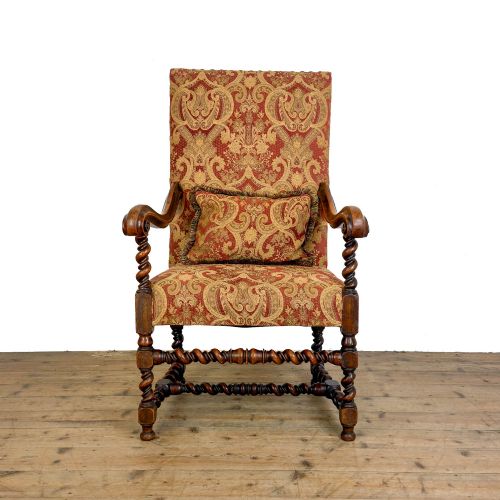
Antique Jacobean Style Seating
Antique jacobean style seating brings solid timber craft and period presence into a modern interior through sturdy chairs, benches, and settles.
Antique Jacobean Style Seating
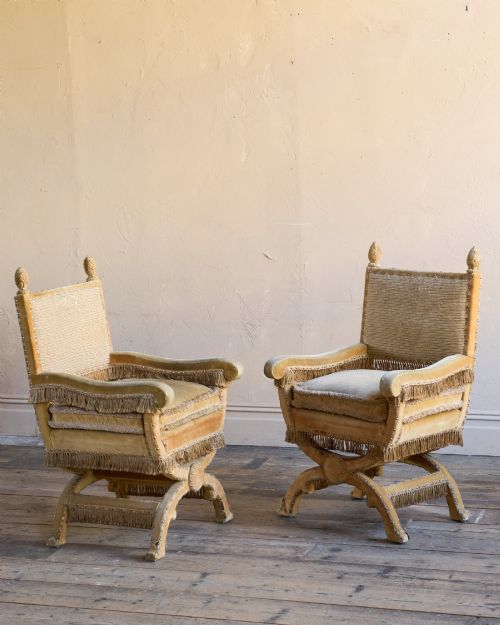
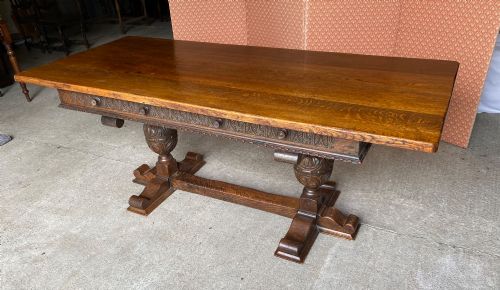
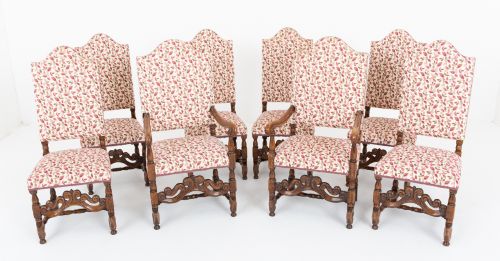
Antique jacobean style seating encompasses heavy timber furniture designed to evoke seventeenth-century domestic interiors. The selection spans dining chairs, armchairs, joint stools, and hall settles originating from the seventeenth century through the nineteenth and twentieth-century revival periods.
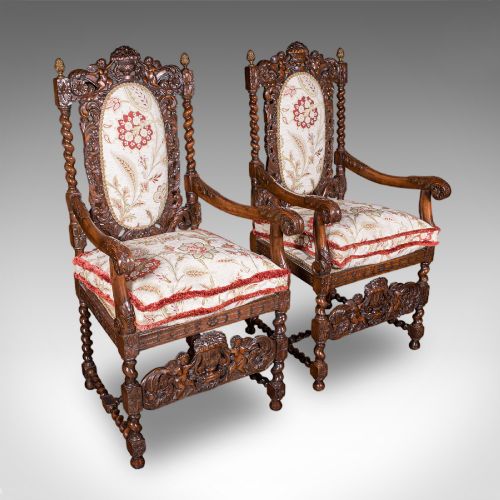
The form stretches from compact side chairs with carved splats to imposing high-backed throne chairs and convertible monk benches. Oak dominates the offerings, appearing in both dark patinated finishes and lighter limed treatments.
How they were made
Makers relied on solid oak as the primary structural timber, shaping frames using traditional joinery methods such as mortise and tenon joints secured with wooden pegs. Joint stools and framed seating units demonstrate heavy timber construction built to withstand sustained daily use.
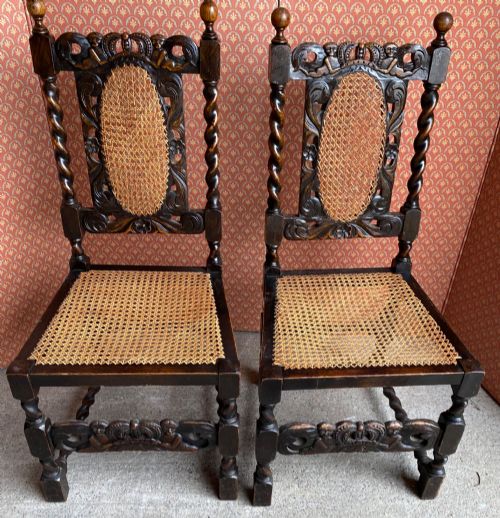
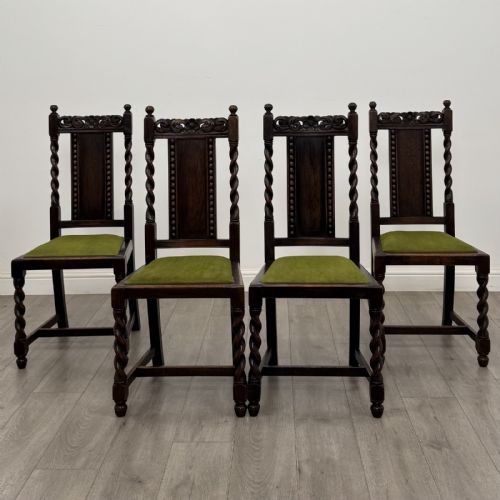
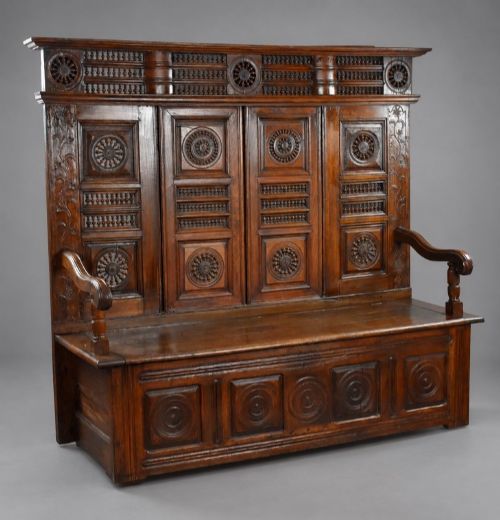
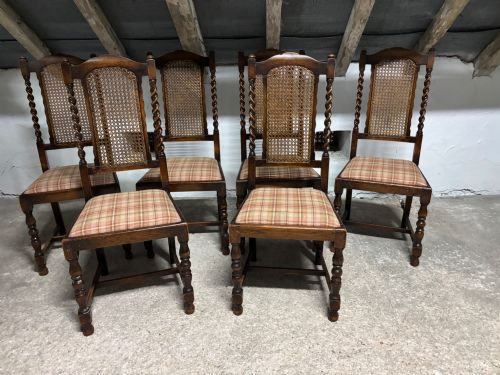
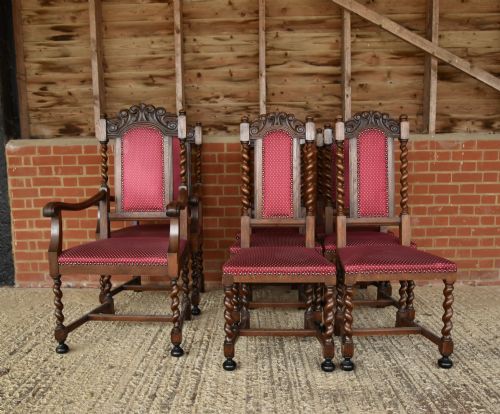
Turned elements, including barley twist and bobbin legs, were shaped on lathes to provide structural support and surface pattern. Carving was executed by hand directly into the timber framework, producing relief panels, strapwork, and crestings.
Upholstery materials such as leather, velvet, and woven cane were integrated into seats and backrests using brass tacks. Caned panels utilised split rattan threaded through drilled holes in the wooden frames.
Antique Jacobean Style Seating Retail Price Guide 2026
Typical asking prices for jacobean style seating among the pieces listed under this phrase on Sellingantiques today, from the lower quarter to the upper quarter. They describe what is for sale here now, not the wider market.
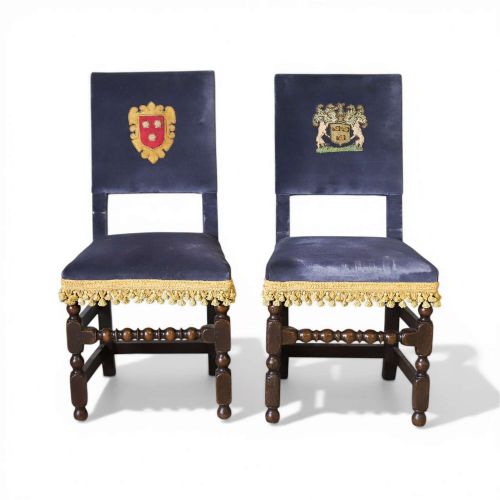
Clan armchairs bearing heraldic crests offer a seat fit for Scottish nobility, provided your clan does not mind sharing the dining room.
What varies in quality
The depth and crispness of hand-carved detail distinguish finer examples from mass-produced revival pieces. Sharp, well-defined strapwork and deep relief panels indicate superior workshop execution compared to shallow, mechanical stampings.
Timber selection and structural integrity govern the tier of the piece. Dense, quarter-sawn oak with prominent medullary rays provides superior stability, whereas lesser examples use plain-sawn boards prone to movement.
Completeness of original components, such as unreplaced turned stretchers, matching sets of dining chairs, and surviving period upholstery materials, elevates the standing of an item within its category.
The Antique Jacobean Style Seating Glossary
- Joint Stool
- A sturdy wooden stool constructed with mortise and tenon joinery rather than turned legs inserted into a seat. These pieces served multi-functional roles in early households.
- Settle
- A wooden bench featuring a high back to block drafts and solid armrests. Many examples incorporate a box compartment beneath the seat for storage.
- Wainscot Chair
- An early form of heavy wooden armchair constructed with paneled backrests and solid wooden seats. They derive their name from wainscot oak boards.
- Derbyshire Chair
- A type of regional seventeenth-century chair characterised by an open arcaded backrail and turned supports. Revival versions replicate these distinct architectural motifs.
- Barley Twist
- A spiral-turned wooden column resembling a twisted rope. This turning technique appears frequently on the legs and stretchers of revival seating.
Antique Jacobean Style Seating: Frequently Asked Questions
How do I identify a true seventeenth-century piece from a revival copy?
Examination of tool marks, timber shrinkage, and joinery construction reveals the period of manufacture. Seventeenth-century originals display hand-split boards, irregular hand-carving, and pegged joints that show natural movement over centuries.
Revival pieces from the nineteenth and twentieth centuries often exhibit uniform machine sawing, standardised turning, and crisper uniformity across matching sets of dining chairs.
Were monk benches used in the seventeenth century?
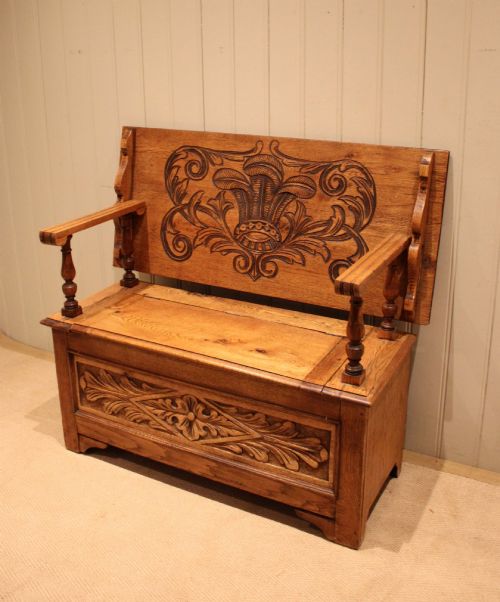
Monk benches with a hinged top that converts the backrest into a table surface are primarily nineteenth and twentieth-century interpretations of early furniture forms. While the elements draw on seventeenth-century joinery, the convertible table-bench format gained widespread popularity during the Edwardian and interwar revival periods.
These pieces served functional space-saving roles in smaller twentieth-century hallways and dining spaces.
How should I care for caned seat panels?
Caned panels require moderate humidity to prevent the natural rattan material from becoming brittle and snapping. Avoid placing these chairs near direct heat sources or in overly dry indoor environments.
Cleaning should be limited to gentle dusting with a soft brush, occasionally wiping the cane with a damp cloth to maintain flexibility.
What is the difference between a side chair and an armchair in this style?
Side chairs lack armrests and were designed to fit neatly around dining tables or against hallway walls. Armchairs feature substantial wooden arms supported by turned posts, offering a more commanding presence suited for desk use or fireplace placement.
Both forms share the characteristic turned legs, stretchers, and carved wooden back panels typical of the aesthetic.