





Antique Ironstone Urns
These antique ironstone urns bring robust weight and vibrant transfer-printed decoration to any interior, offering substantial display pieces from the nineteenth and early twentieth centuries.
Antique Ironstone Urns
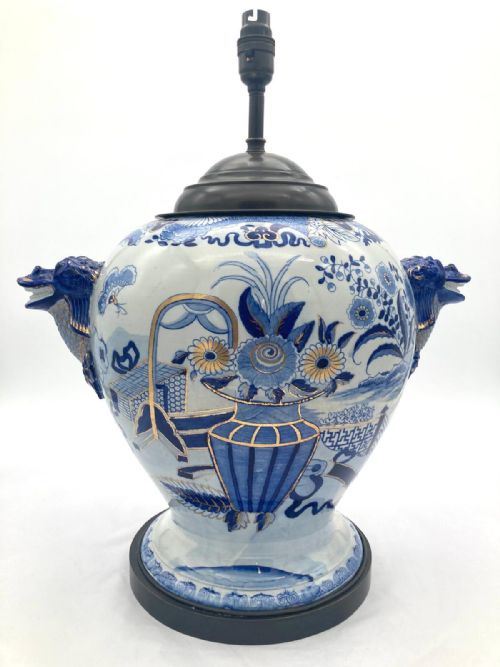
When you search for antique ironstone urns, you encounter heavy ceramic vessels designed for display, often taking the form of lidded vases, potpourri containers, and garnitures. The pieces on this page span the nineteenth century into the Edwardian era, showing both classical vessel shapes and functional conversions into lamps.
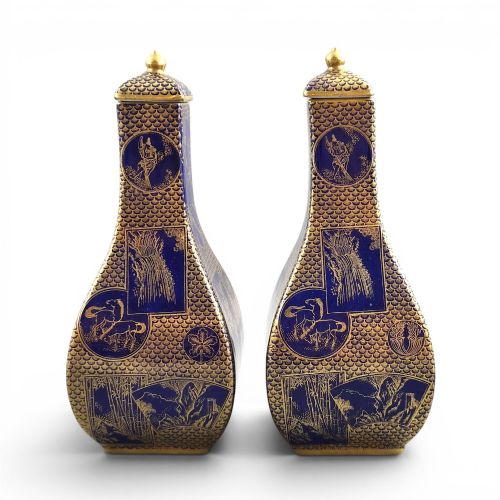
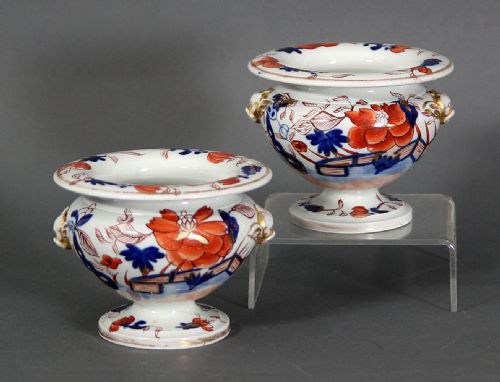
Makers such as Mason's, Spode, and Hicks and Meigh dominate these listings, frequently employing rich mazarine blue grounds, Imari palettes, and Chinoiserie motifs. You meet pairs and individual large hall vases decorated with exotic birds, peonies, and intricate bandana patterns.
Forms range from small posy vases and salts to large lidded vessels and table lamps. The physical presence of ironstone gives these items a distinct density that separates them from lighter earthenware.
Materials and Manufacture
Potters form these vessels from dense ironstone ceramic, a heavy vitrified earthenware patented to withstand daily handling while imitating porcelain. This durable body receives hand-applied enamel colours, transfer-printed designs, and occasional gilt or gold leaf highlights.
Decoration relies heavily on underglaze blue transfer printing, supplemented by hand-painted enamels depicting Chinoiserie birds, floral sprays, and geometric bandana patterns. Makers fire these ceramic bodies at high temperatures to fuse the glazes and secure the metallic gilding.
Antique Ironstone Urns Retail Price Guide 2026
Typical asking prices for ironstone urns among the pieces listed under this phrase on Sellingantiques today, from the lower quarter to the upper quarter. They describe what is for sale here now, not the wider market.
Listings feature ironstone pieces spanning the nineteenth century, Regency era, and Edwardian period, utilising ceramic, enamel, and gold leaf materials.
Assessing Quality and Execution
Quality rests in the crispness of the transfer printing and the precision of the hand-applied enamels that animate the Chinoiserie scenes. Superior examples display vibrant mazarine blue grounds and well-preserved gilding that remains bright against the white ceramic body.
The sophistication of the modelling determines distinction, separating standard production wares from ambitious garnitures and large lidded hall vases. Intricate potting, complex forms such as potpourri covers, and the inclusion of original lids elevate certain pieces.
Mason's Patent Ironstone·Hicks and Meigh·Miles Mason·Spode
The Antique Ironstone Urns Glossary
- Ironstone
- A heavy, durable ceramic body patented in the nineteenth century to provide a strong alternative to porcelain. It takes glazes and transfer printing exceptionally well.
- Chinoiserie
- European artistic interpretations of Chinese and East Asian decorative motifs. This style appears frequently on nineteenth-century ceramic vessels depicting birds and flora.
- Garniture
- A set of matching vases or urns designed to be displayed together on a mantelpiece or sideboard. They often include a central lidded vase flanked by smaller matching pieces.
- Imari
- A decorative style inspired by Japanese export porcelain, typically featuring a palette of iron red, cobalt blue, and gold. Makers applied this colourful scheme to heavy ceramic bodies.
- Potpourri
- A lidded vessel pierced with small holes to release the scent of dried flower petals and spices placed inside. These decorative containers often feature elaborate ceramic covers.
Antique Ironstone Urns: Frequently Asked Questions
What is ironstone?
Ironstone is a dense, heavy ceramic body developed in the nineteenth century as a tough alternative to porcelain. It combines ball clay, feldspar, and slag to create a sturdy ware suitable for large decorative vessels.
Peculiar to this material is its ability to accept rich cobalt blue transfer prints and enamels while resisting chips better than standard earthenware.
How do I date these urns?
Dating relies on maker marks stamped into the ceramic base, stylistic clues like Regency or Edwardian forms, and the specific palette used in the decoration. Early nineteenth-century pieces often feature deep mazarine blue grounds and hand-painted Chinoiserie details.
Later Edwardian examples tend to show simplified transfer printing and different baseline proportions. Comparing the potting style to known factory dates provides the most accurate timeframe.
Where should I display an urn?
These substantial vessels suit strong focal points such as mantelpieces, entrance hall tables, and large sideboards where their weight and colour register clearly. Pairs look balanced when flanking a mirror or architectural feature.
Converted lamp versions function effectively on side tables, providing both ambient lighting and a decorative ceramic silhouette.
Are original lids common?
Original lids survive on some potpourri containers and lidded vases, though many historic pieces lose their covers over decades of use. Finding a matched pair with intact lids remains a notable advantage for collectors.
When a lid is present, check that the glaze and pattern match the body precisely to confirm authenticity.