


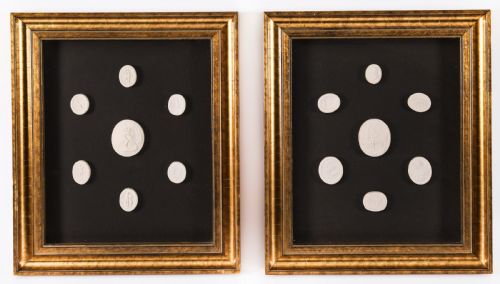


Antique Intaglio Frame
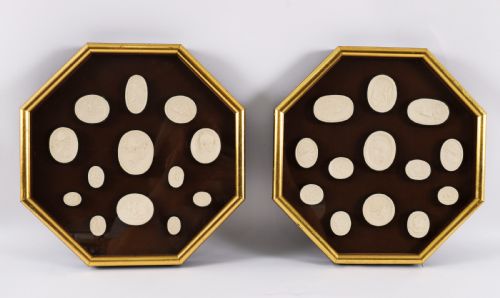
An antique intaglio frame brings classical plaster casts and grand tour medallions onto the wall, offering miniature sculptural detail for a study or library.
Antique Intaglio Frame
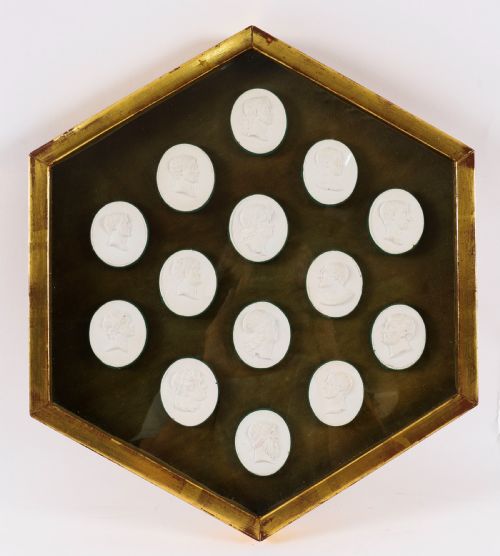
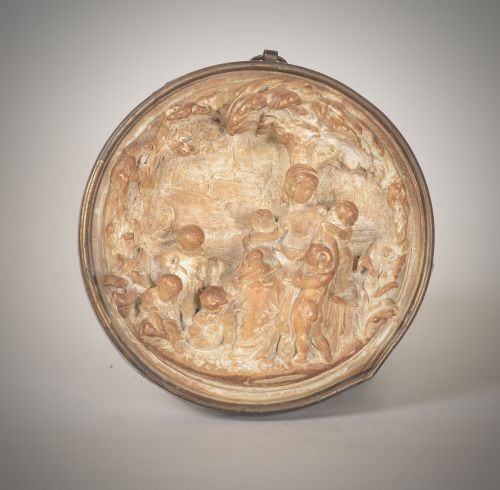
When you search for an antique intaglio frame, you find wall art and decorative objects that house collections of plaster or gypsum medallions. These pieces most commonly originate from the nineteenth century as souvenirs of the grand tour, capturing classical sculpture and mythological scenes in miniature.
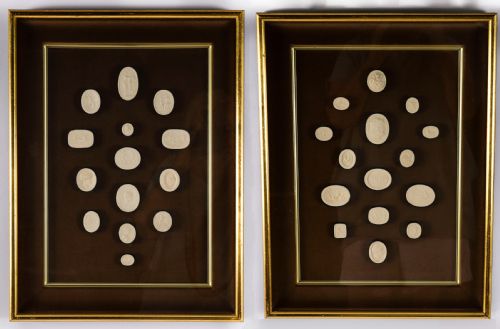
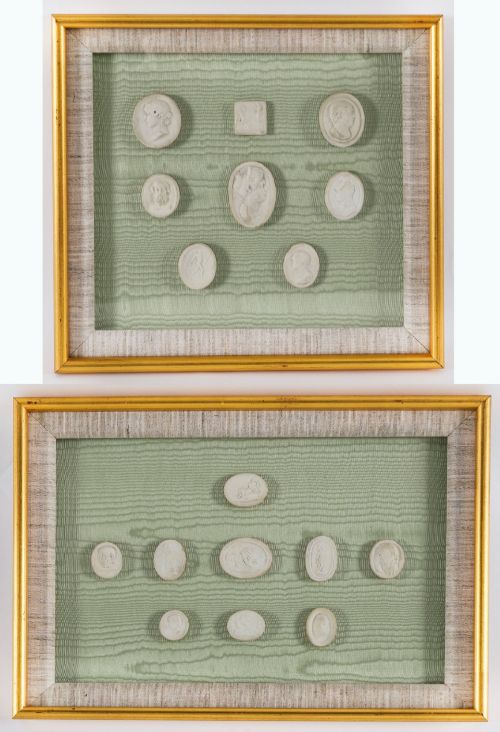
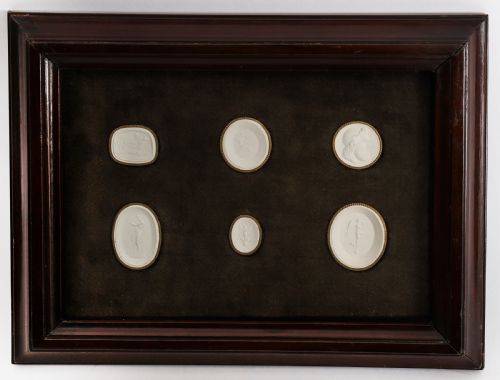
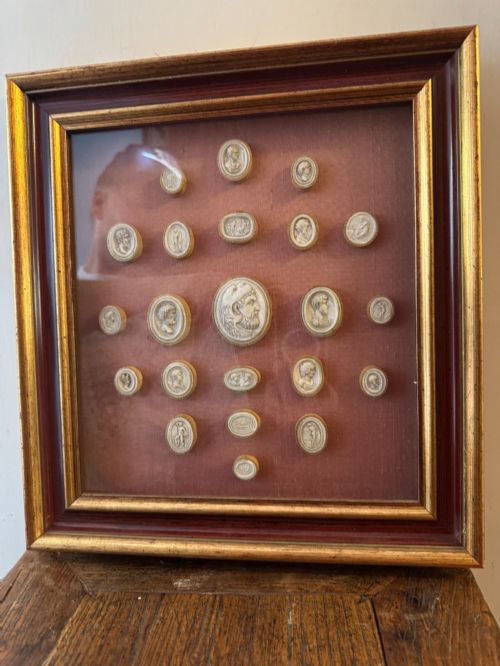
The selections range from single framed plaster reliefs to large box-framed sets containing dozens of numbered casts. Many examples pair Italian plaster intaglios with velvet or paper backings inside gilt wood frames designed to showcase the crisp relief work.
Materials and construction
The frames themselves rely on wood, gilt wood, and gold leaf, often built with deep box structures to accommodate the depth of the plaster casts. Glass protects the delicate surfaces, while fabric, velvet, and paper serve as the mounting backgrounds that hold the individual medallions in place.
The intaglios and cameo panels are cast from plaster or gypsum, replicating ancient carved gems and architectural fragments. Makers such as Giovanni Liberotti and Pietro Bracci arranged these white or tinted casts meticulously within their custom frames.
Antique Intaglio Frame Retail Price Guide 2026
Typical asking prices for intaglio frame among the pieces listed under this phrase on Sellingantiques today, from the lower quarter to the upper quarter. They describe what is for sale here now, not the wider market.
Travellers brought home dozens of tiny plaster gods in frames so they could pretend they dug them up themselves.
Distinctions in quality
The mounting work and frame joinery also divide ordinary pieces from superior examples. Original gilt wood frames with intact velvet linings and legible handwritten collector labels command greater regard than later replacements.
James Watson·Francis Cotes·Giovanni Liberotti·Pietro Bracci·W Ward·F. Petitjean
The Antique Intaglio Frame Glossary
- Intaglio
- A design carved into a material so that the impression sits below the surface, though the term also describes the plaster casts taken from such carvings.
- Grand Tour
- A cultural journey undertaken by wealthy young Europeans in the eighteenth and nineteenth centuries, resulting in the collection of art and plaster casts.
- Giltwood
- Wood that has been coated with a thin layer of gold leaf or gold paint to provide a decorative metallic finish.
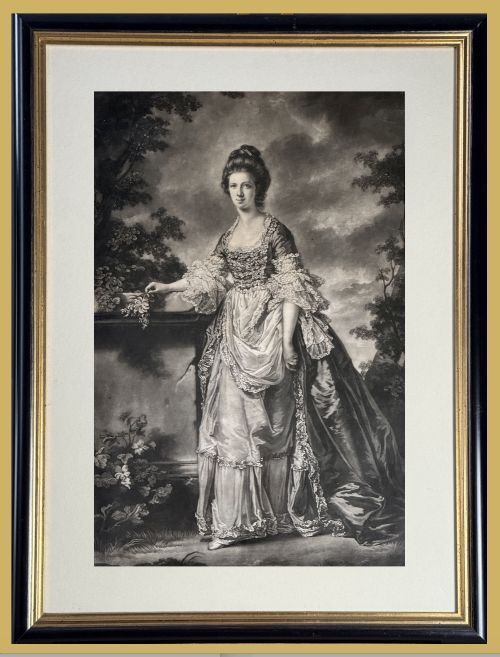
- Mezzotint
- A printmaking process of the intaglio family that allows half-tints and subtle tonal variations to be produced on a copper plate.
Antique Intaglio Frame: Frequently Asked Questions
What is an antique intaglio frame?
An antique intaglio frame is a piece of wall art that encloses a collection of plaster or gypsum medallions, typically created during the nineteenth century as grand tour souvenirs. These frames display miniature casts of classical statues, ancient coins, and mythological reliefs.
Such pieces function primarily as decorative wall plaques or framed artwork for studies, libraries, and hallways. They preserve centuries-old sculptural details behind glass for modern display.
How were grand tour intaglios displayed?
Travellers returning from Europe mounted their plaster medallions inside custom wooden boxes and gilt frames lined with velvet or heavy paper. These arrangements often included handwritten numbering or cataloguing beneath the casts.
The deep box construction protected the delicate gypsum reliefs while allowing viewers to examine multiple classical profiles at once.
How do I hang a heavy box frame?
Box frames containing dozens of plaster intaglios carry substantial weight due to the glass, wood, and plaster contents. They require sturdy picture hooks fixed directly into wall studs or appropriate masonry anchors.
Position the frame away from direct sunlight and damp conditions to protect the delicate plaster surfaces and the fabric backings inside.
How do I identify a nineteenth century frame?
Nineteenth century frames often show traditional joinery methods, aged gilding, and period backing papers or textiles. The materials used typically include wood, gold leaf, and old window glass.
Examining the style of the giltwood moulding alongside the handwriting on any collector labels helps confirm the period of origin.