

Antique Inlay Credenza
An antique inlay credenza brings refined Victorian and Georgian craftsmanship into a room, offering both surface display and closed storage.
Antique Inlay Credenza
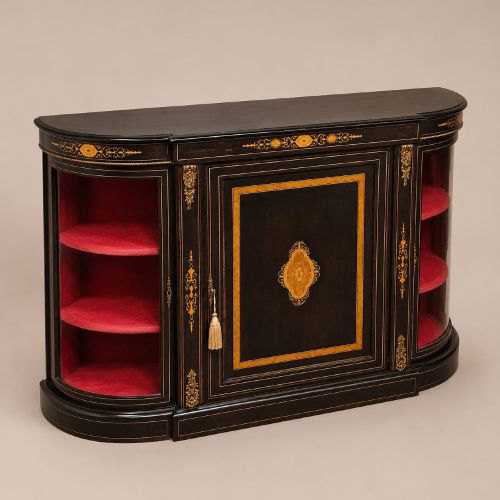
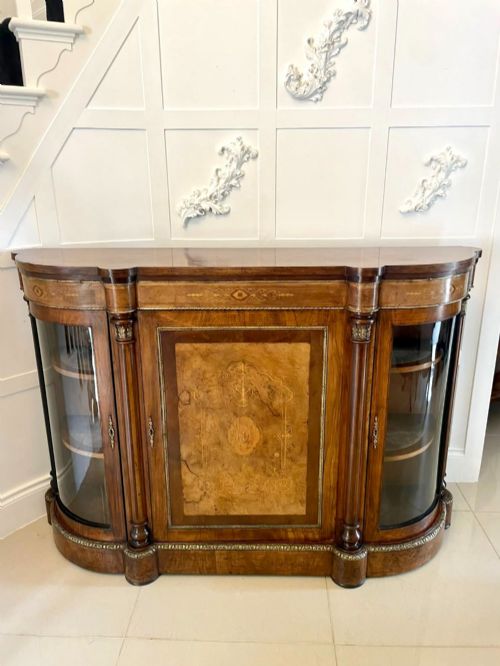
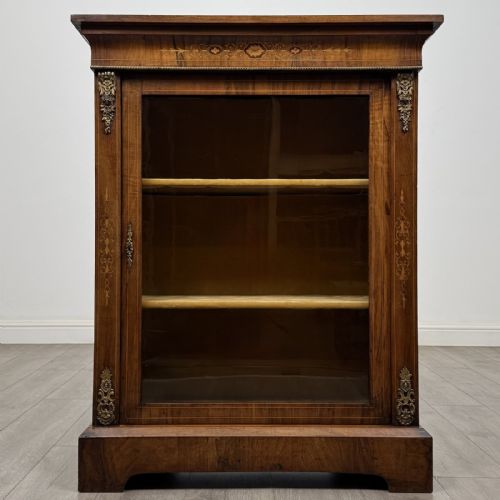
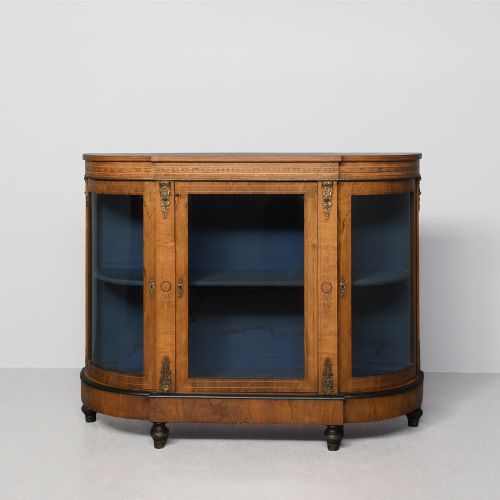
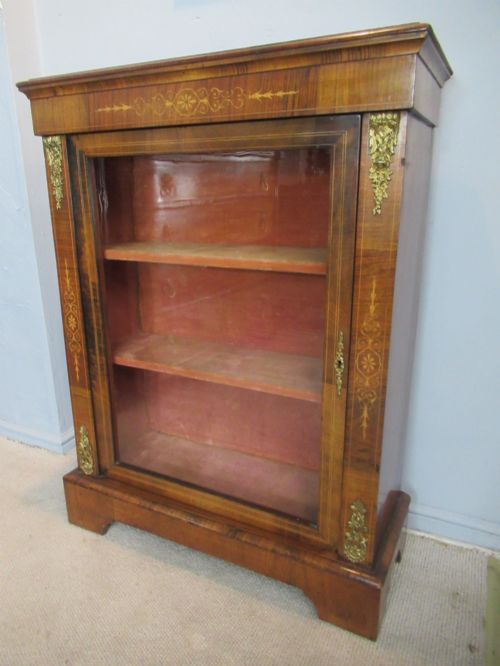
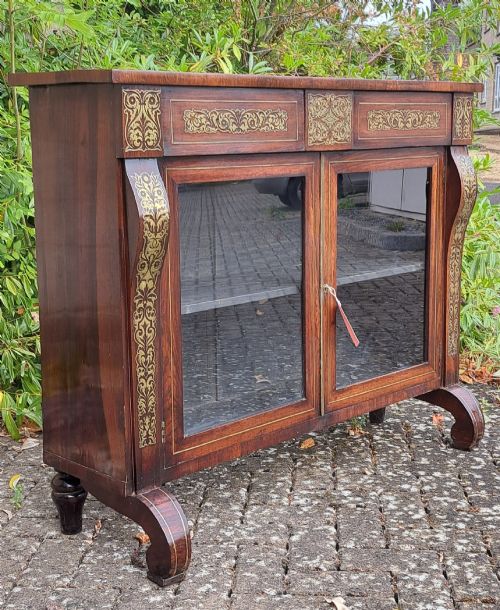
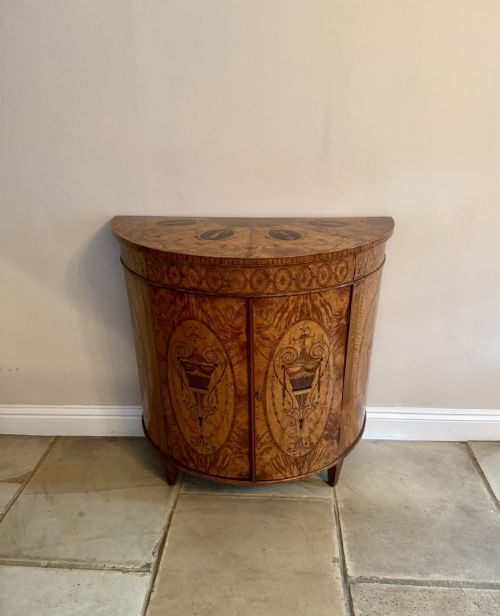
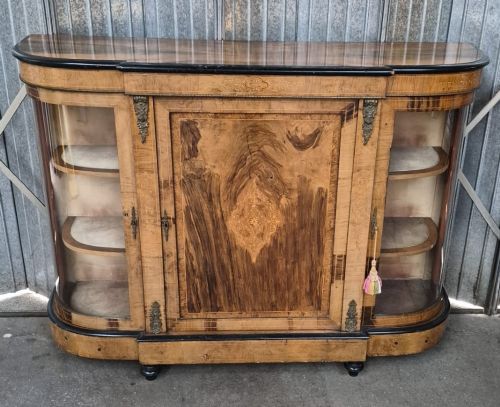
An antique inlay credenza typically presents a low, elongated silhouette designed for formal reception rooms, frequently emerging from Victorian workshops alongside related sideboards and cabinets. These pieces often feature central glazed doors flanked by curved side cupboards, providing a balanced visual weight that anchors a formal interior.
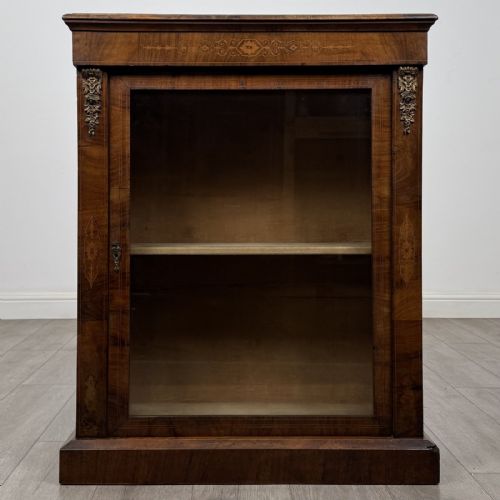
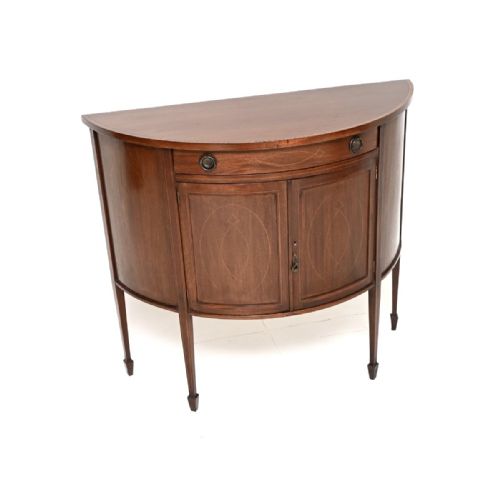
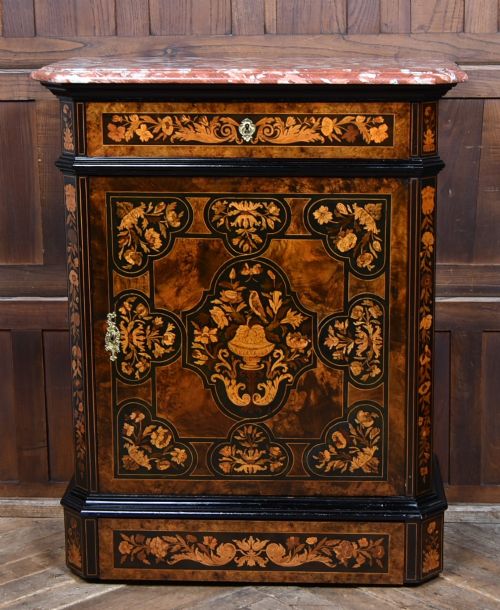
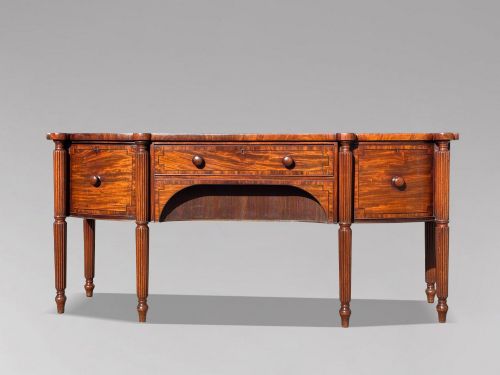
The materials span from figured burr walnut and rich mahogany to ebonised wood, decorated with contrasting satinwood and delicate marquetry. While the Victorian era dominates the selection with elaborate burr walnut and ormolu mounts, Georgian and Edwardian examples also appear with refined crossbanding and clean linear proportions.
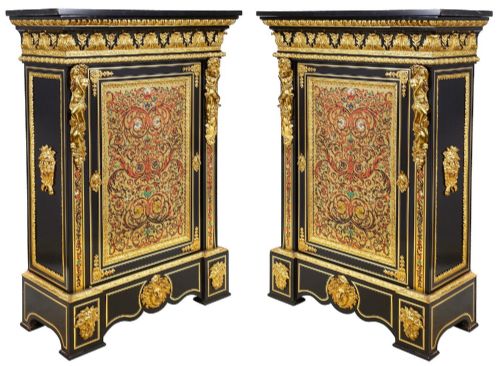
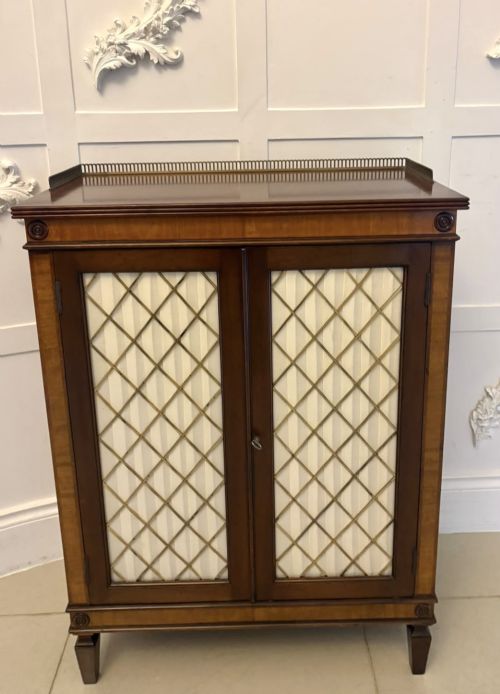
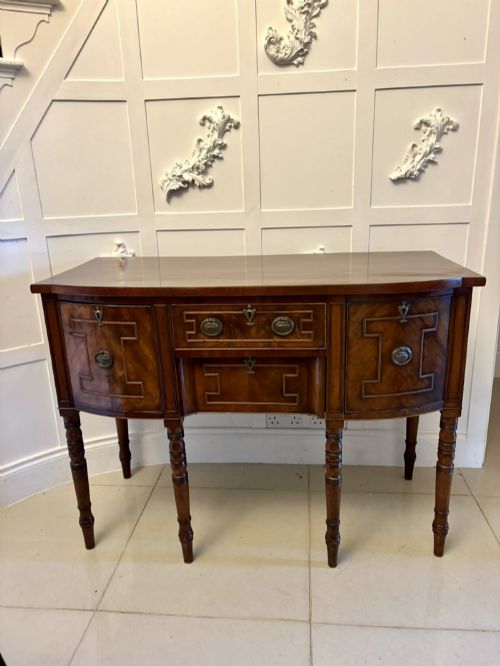
Beyond standard credenzas, the category encompasses breakfront bookcases, mirror-back sideboards, and pier cabinets that share the characteristic inlaid surface decoration. Each form serves the dual purpose of displaying porcelain or glassware while concealing table linen or papers behind panelled doors.
Materials and Construction
Cabinetmakers built the carcase using substantial timber frames of mahogany or walnut, veneering the primary surfaces with burr walnut or figured mahogany to create dynamic grain patterns. Artisans then recessed contrasting strips of satinwood, ebony, and boxwood into the timber to form geometric stringing or intricate floral marquetry.
Metal enrichment played a significant role in the construction of high-status pieces, employing cast ormolu mounts, brass banding, and glazed doors framed by slender mouldings. Porcelain plaques occasionally appear inset into the woodwork, secured with brass bezels that complement the overall decorative scheme.
Antique Inlay Credenza Retail Price Guide 2026
Typical asking prices for inlay credenza among the pieces listed under this phrase on Sellingantiques today, from the lower quarter to the upper quarter. They describe what is for sale here now, not the wider market.
Some travel cabinets packed away entire writing desks for nineteenth-century journeys.
Judging Quality
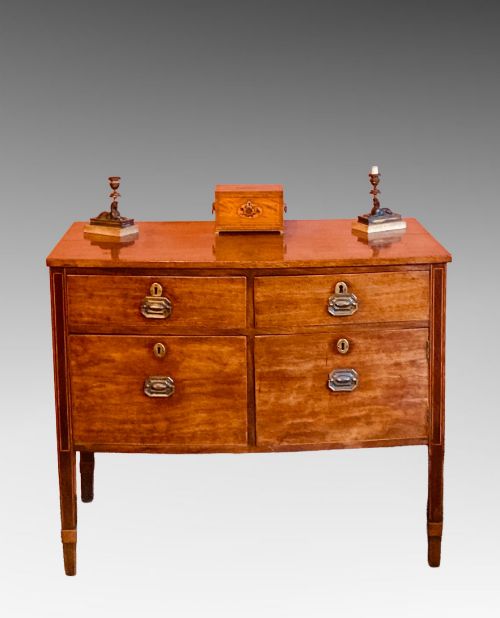
The distinction between ordinary and exceptional pieces rests upon the precision of the marquetry and the choice of veneer. Master cabinetmakers selected burr timber with deep, active figuring, matching the grain across doors and drawer fronts to form a continuous visual pattern.
Structural refinement marks the higher tier of these pieces, evident in the weight of the cast ormolu mounts, the smoothness of the door action, and the careful integration of crossbanding. Secondary timbers used inside drawers and backboards also reflect the diligence of the original workshop.
Hewetsons London·Epstein
The Antique Inlay Credenza Glossary
- Marquetry
- A decorative technique where small pieces of contrasting veneer are assembled into pictorial or geometric patterns. This work is applied directly to the carcase surface.
- Ormolu
- Gilded bronze used for decorative mounts, feet, and key escutcheons on fine furniture. The metal is cast and then finished by hand.
- Crossbanding
- A border veneer applied around the main panel where the grain runs perpendicular to the centre. This frames the primary timber.
- Breakfront
- A cabinet design where the central section projects forward from the flanking wings. It creates depth and architectural interest across the piece.
- Pier cabinet
- A narrow display cabinet designed to fit the wall space between windows. These often feature glass doors and velvet-lined shelves.
Antique Inlay Credenza: Frequently Asked Questions
What is an antique inlay credenza?
An antique inlay credenza is a low storage cabinet featuring decorative wood veneers and marquetry, popular in formal reception rooms during the nineteenth century.
These pieces typically combine enclosed side cupboards with central display space, serving as both furniture and a decorative surface.
How do I tell a Victorian credenza from an Edwardian one?
Victorian credenzas often feature heavier timbers like burr walnut, curved glass doors, and ormolu mounts, reflecting an ornate aesthetic.
Edwardian examples tend to use lighter mahogany and satinwood with more restrained inlay and simpler geometric proportions.
Where were credenzas placed in period homes?
They were designed principally for the dining room or drawing room to display silver, ceramics, and decorative objects on the top surface.
The lower cupboards provided practical storage for household items away from everyday view.
How should I care for inlaid wood?
Keep the wood away from direct sunlight and heat sources to prevent the delicate veneers and stringing from drying out and lifting.
Apply a traditional beeswax polish occasionally to nourish the timber and maintain the natural lustre of the surface.