



Antique Inlaid Parlour Bench
An antique inlaid parlour bench brings formal Victorian and Edwardian seating into a modern home with contrasting wood details and slender frames.
Antique Inlaid Parlour Bench
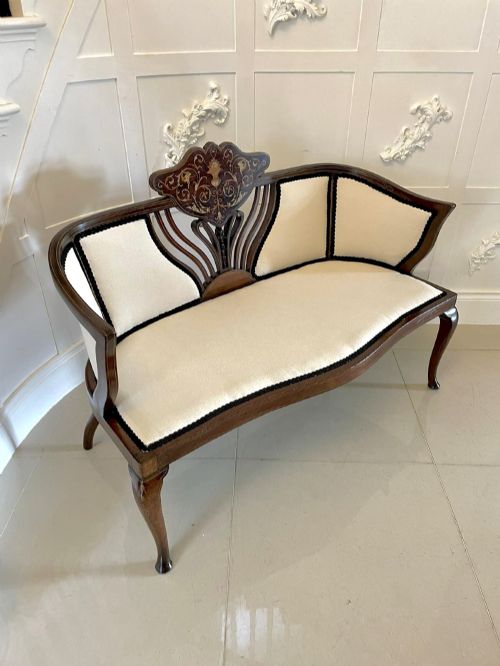
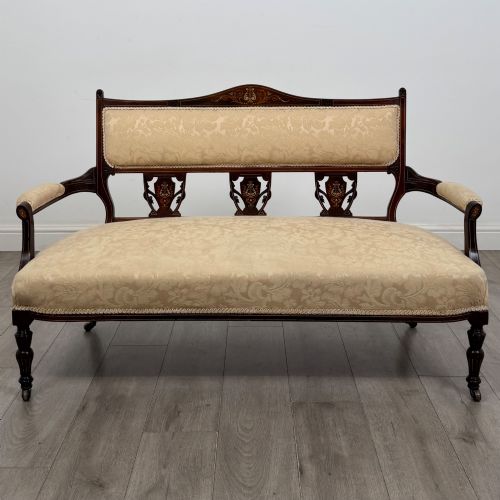
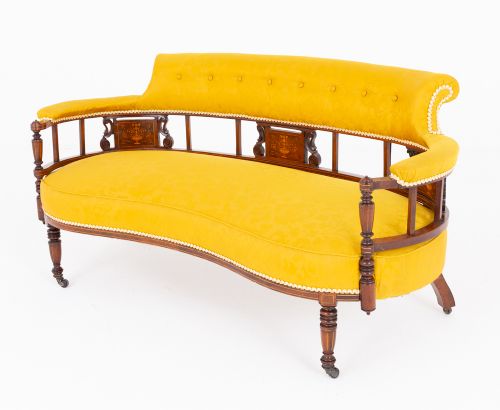
When you search for an antique inlaid parlour bench, you are looking at nineteenth and early twentieth-century seating designed for reception rooms, drawing rooms, and formal sitting spaces. The pieces appearing here span the Victorian, late Victorian, and Edwardian eras, alongside Sheraton Revival and Edwardian Art Nouveau interpretations.
The most common version met on this page is the Edwardian or Victorian mahogany settee featuring contrasting satinwood or boxwood inlay. These range from compact two-seater sofas and salon settees to larger three-piece suites and occasional benches.
Occasional variations include rosewood frames, damask upholstery, and specific regional forms such as Chinese hardwood benches with mother-of-pearl detail. The overarching category encompasses everything from a delicate bedroom sofa to a substantial parlour seat.
How they were made
Cabinet makers utilised solid timber frameworks, primarily mahogany and rosewood, shaped to support upholstered seats and backs. Selected sections received contrasting veneers and stringing.
Decoration relied heavily on marquetry and inlay work using satinwood, boxwood, and bone to create floral or geometric motifs across the wooden panels. Metal components such as brass occasionally appeared on castors or structural fittings.
Upholstery techniques involved fabric, damask, or simpler coverings intended for later replacement, supported by internal webbing and stuffing tailored to the particular period.
Antique Inlaid Parlour Bench Retail Price Guide 2026
Typical asking prices for inlaid parlour bench among the pieces listed under this phrase on Sellingantiques today, from the lower quarter to the upper quarter. They describe what is for sale here now, not the wider market.
Mahogany and satinwood dominate the timber selection across these listings, accompanied by rosewood, boxwood inlay, and fabric upholstery.
What varies in quality
The standard of an antique inlaid parlour bench rests primarily on the crispness of the cabinet work and the precision of the timber matching. Finer examples display meticulous attention to the grain and sharp execution of the inlaid details.
Subtlety in the design and proportion of the frame separates standard workshop output from exceptional creations. Pieces displaying refined Sheraton Revival lines or integrated Art Nouveau motifs generally represent a higher tier of design ambition.
The integrity of the structural timber and the condition of the decorative veneer dictate the enduring appeal of each piece. Superior items retain their original harmony without excessive replacement of the surrounding woodwork.
The Antique Inlaid Parlour Bench Glossary
- Inlay
- A technique where pieces of contrasting timber, bone, or shell are set into recesses flush with the surrounding wood surface. This method creates decorative patterns across the backrests and rails of parlour seating.
- Satinwood
- A dense, yellowish timber prized for its lustrous grain and used extensively for contrasting stringing and pictorial inlay panels. It offers a bright visual counterpoint against darker woods like mahogany.
- Sheraton Revival
- A late nineteenth-century design movement inspired by the neoclassical furniture of George Sheraton. It is characterised by slender proportions, satinwood inlay, and balanced, restrained forms.
- Settee
- A medium-length upholstered seat with a back and arms designed for multiple occupants. In nineteenth-century interiors, it served as both functional seating and decorative parlour furniture.
- Damask
- A reversible figured fabric traditionally woven from silk, wool, or linen, frequently utilised for period upholstery. Its woven patterns catch the light to complement polished wood frames.
Antique Inlaid Parlour Bench: Frequently Asked Questions
Where did people put parlour benches?
These pieces were originally placed in formal drawing rooms, parlours, and reception spaces where hosts entertained visitors. They offered comfortable seating that also demonstrated the taste and social standing of the household.
In modern interiors, they function effectively in large hallways, at the foot of a bed, or as statement seating in a living room.
How do I tell Victorian from Edwardian pieces?
Victorian examples generally feature heavier proportions, darker rosewood or mahogany timbers, and more exuberant carving. Late Victorian pieces often bridge the gap toward lighter aesthetics.
Edwardian seating tends to be lighter in scale, frequently incorporating bright satinwood inlay, Sheraton Revival influences, or delicate Art Nouveau curves.
Can I use these benches for everyday seating?
Most antique parlour seating is structurally sound for regular use, provided the internal frame and joints remain stable. Lighter salon settees are best suited for polite sitting rather than heavy lounging.
Checking the stability of the legs and the firmness of the upholstery will determine whether a piece requires professional conservation before daily service.
What is the difference between a settee and a sofa?
Historically, a settee referred specifically to an upholstered wooden bench with a back and arms, often intended for lighter parlour use. Sofas traditionally offered larger dimensions and deeper cushioning for reclining.
Over time, the terms became largely interchangeable in nineteenth-century trade catalogues and modern listings.