

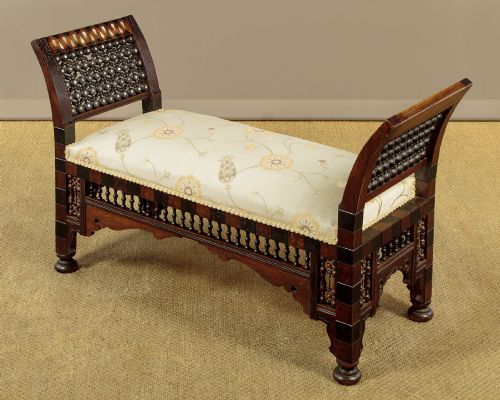


Antique Indian Bench
An antique indian bench brings distinct colonial character and rich timber warmth into a room.
Antique Indian Bench
An antique indian bench encompasses seating such as daybeds, hall benches, and settees originating from the subcontinent during the nineteenth century. These pieces bridge British colonial design and traditional craftsmanship, yielding versatile seating for modern interiors.
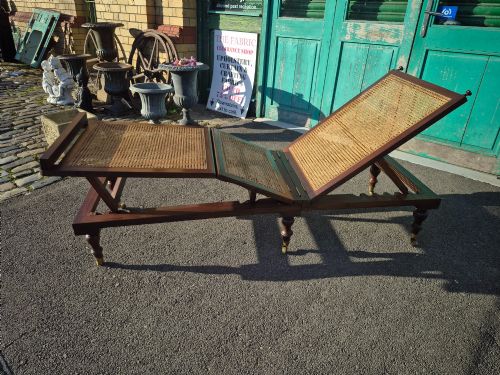
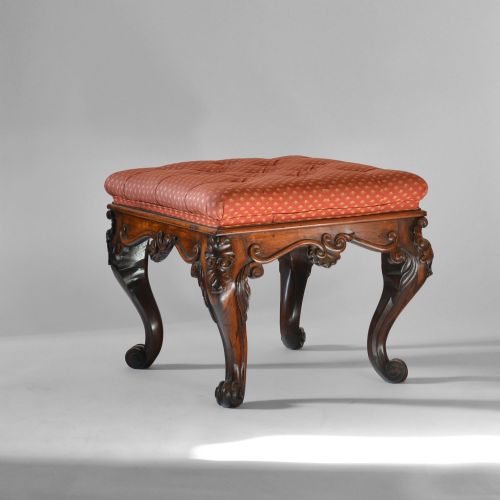
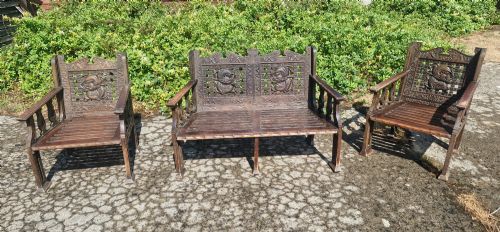
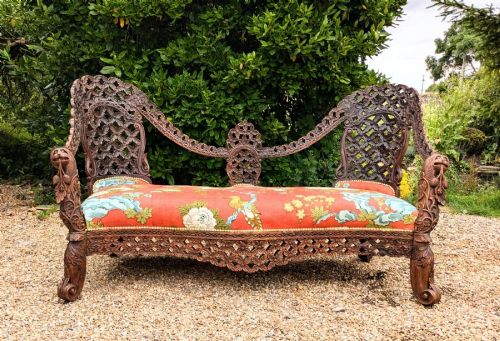
The versions most commonly met on this page include daybeds and sofas styled in the Anglo-Indian and Victorian colonial traditions. Made from dense tropical hardwoods, they often feature intricate hand-carved elements, caned panels, or upholstered surfaces.
Makers utilised resilient timbers suited to the climate, resulting in substantial furniture that has survived over a century of use. Buyers encounter forms ranging from simple veranda benches to elaborate scroll-back settees and box settles.
How they were made
Cabinetmakers constructed these benches using dense regional timbers like teak, rosewood, and mahogany. These hardwoods provided the structural integrity needed for heavy frames and intricate carved details.
Many examples incorporate woven cane panels for ventilation and lightness, alongside detailed brass decoration or bone inlay. Joinery methods relied on traditional mortise and tenon techniques to accommodate the shifting nature of solid timber.
What varies in quality
The refinement of the hand-carving distinguishes finer examples from simpler provincial work. Crisp execution in floral motifs, figures, or scrollwork indicates the hand of a skilled artisan rather than mass production.
The choice and preservation of timber also define the grade of a piece, with richly figured rosewood and well-maintained teak holding greater visual weight. Original caning and intact brass inlays add to the integrity of the construction.
The Antique Indian Bench Glossary
- Anglo-Indian
- Furniture made in India during the British colonial period, combining British furniture forms with local craftsmanship and materials. It often reflects a distinct fusion of European taste and Indian execution.
- Cane
- Woven rattan material used for seat panels and backs in tropical furniture. It provides flexibility and airflow in warm climates.
- Settle
- A wooden bench with a high back, solid arms, and often a storage box beneath the seat. This form was adapted by colonial makers using native hardwoods.
- Daybed
- A long seat designed for reclining, frequently seen in nineteenth-century colonial forms. These pieces often feature low backs and carved frames.
- Hardwood
- Dense timber from broad-leaved trees such as teak and rosewood. These materials were favoured for their durability and rich grain.
Antique Indian Bench: Frequently Asked Questions
Where should I place an antique indian bench?
These benches suit hallways, living rooms, and large bedrooms where their distinct timber and carved details can be appreciated. A daybed functions well as a low seating option against a wall or in a conservatory.
Ensure the piece has adequate clearance so that intricate carvings and scrollwork remain visible and safe from heavy household traffic.
How do I care for nineteenth-century tropical wood?
Maintain the timber by keeping the piece away from direct heat sources and sudden temperature shifts. Dust regularly with a soft cloth and apply a neutral wax sparingly to nourish the grain.
Avoid liquid polishes that can build up on carved surfaces or damage antique finishes over time.
Are these benches comfortable for daily sitting?
Many examples are designed with upright backs or firm caned bases that suit casual seating rather than deep lounging. Adding a custom cushion can improve comfort while preserving the original wooden frame.
Consider the seat height and depth of specific models, such as veranda benches or window seats, to match your intended use.
How do I distinguish regional styles?
Regional differences often appear in the choice of wood and the style of carving, with Ceylonese and Bombay pieces showing distinct ornamental traits. Motifs can range from geometric brass inlay to figurative carvings featuring animals.
Examining the construction methods and secondary timbers helps identify where a piece was likely manufactured within the subcontinent.