







Antique Horseshoe Desk
An antique horseshoe desk setup brings together heavy brass, rich timber and equestrian form for a workspace that holds real character.

Antique Horseshoe Desk
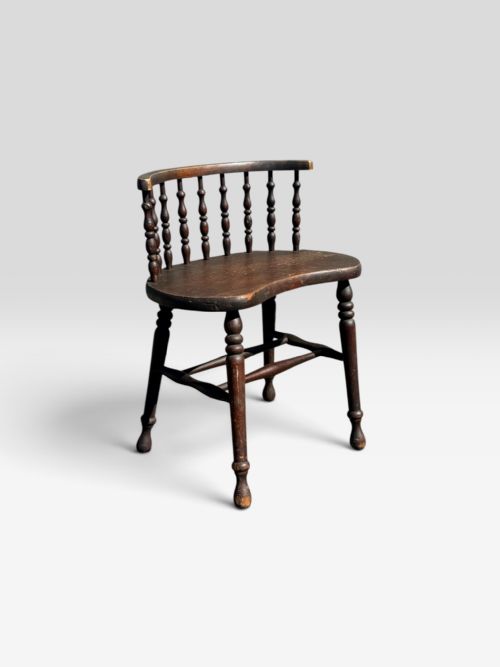
An antique horseshoe desk search uncovers a mix of sturdy seating and functional desk accessories designed around equestrian and horseshoe motifs. These pieces span from the eighteenth century through the Victorian and Edwardian eras, reflecting both English country craftsmanship and imported styles.
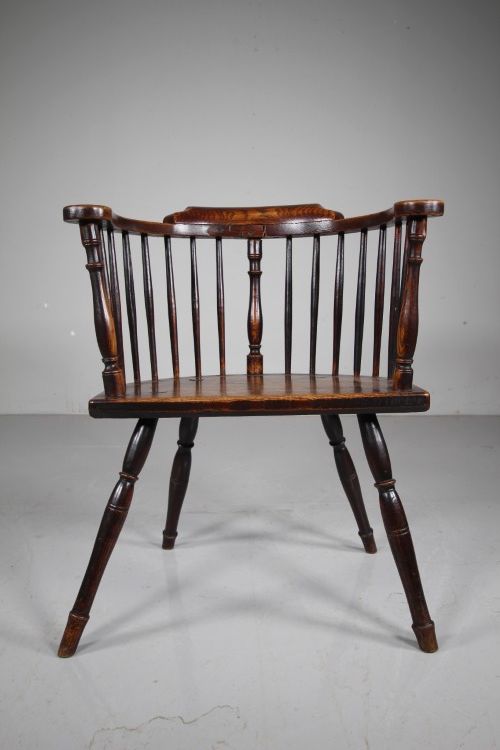
Makers utilised resilient hardwoods like oak and elm for country styles, whilst polished mahogany and walnut suited formal Victorian libraries. Buyers find everything from simple elm country chairs to elaborate gaming chairs and silver smoking compendiums.
Materials and construction
Cabinet makers relied on solid timbers including oak, elm, walnut and mahogany for frames, turning and shaping the wood to achieve curved backs. Brass feature heavily in desk clips, hinges and mounts, providing durable hardware that complements the dark grains of the timber.
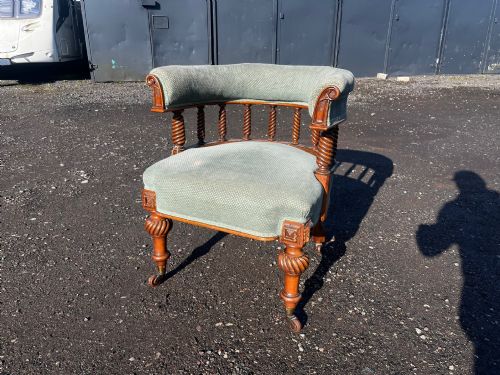
Upholstery work incorporated leather and fabric over sprung or stuffed pads, secured with brass tacks on library and desk chairs. Lacquer and canework appear on Chinese pieces, demonstrating diverse regional techniques applied to the same functional seating forms.
Equestrian desk accessories include silver smoking compendiums and jockey cap inkstands for the dedicated Victorian rider.
Judging the work
Quality rests in the weight of the timber and the crispness of the turning on legs and spindles. Solid elm and oak country pieces depend on honest joinery, whilst refined Victorian walnut and mahogany chairs show finer carving and polished surfaces.
Hardware execution dictates the grade of desk accessories, where solid brass castings and working spring clips outperform simpler stamped metal. The integration of the horseshoe motif determines whether a piece is a standard chair or a purposeful equestrian design.
Hermes Paris
The Antique Horseshoe Desk Glossary
- Horseshoe desk
- A seating form or accessory shaped to curve around the user, often incorporating horseshoe motifs in brass or timber. These items were designed for writing desks and library tables.
- Captain chair
- A sturdy wooden armchair with a rounded low back supported by vertical spindles, built for stability and comfort in offices or studies. They frequently feature timber seats or leather pads.
- Cockfighting chair
- An alternative name for a low library or reading chair designed with a saddle seat or a narrow backrest to straddle backwards. They often incorporate leather upholstery and robust oak frames.
- Letter clip
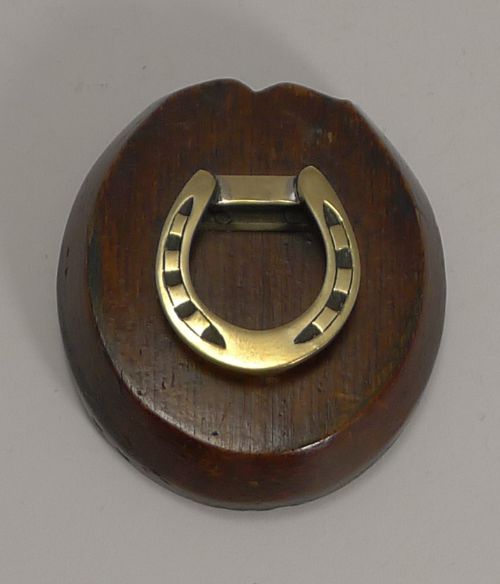
- A spring-loaded metal clip, frequently shaped as a horseshoe or equestrian object, used to hold correspondence on a desktop. Brass examples are typical of the late nineteenth century.
Antique Horseshoe Desk: Frequently Asked Questions
What is an antique horseshoe desk chair?
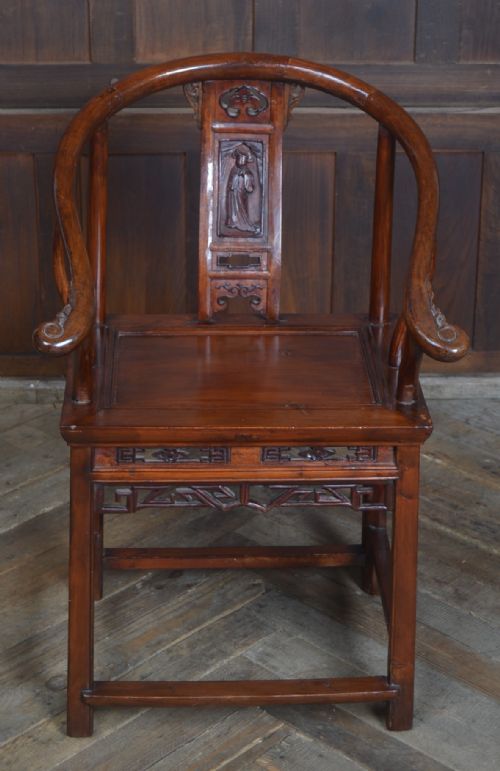
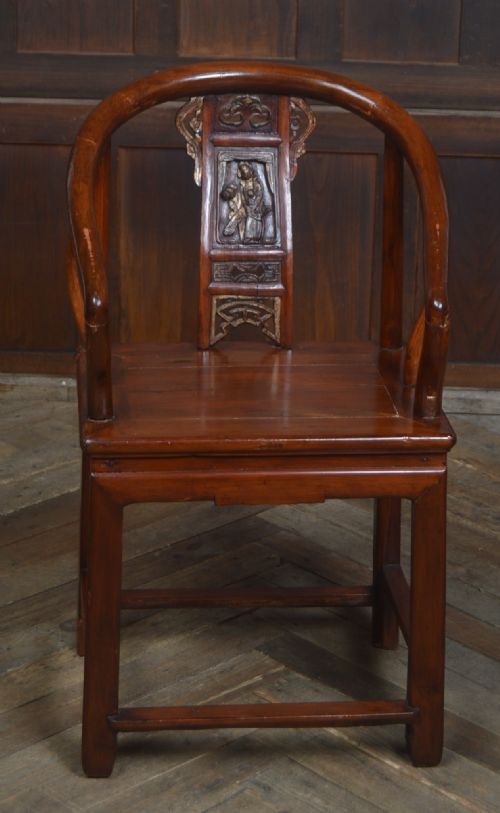
It is an armchair or elbow chair featuring a curved backrest resembling a horseshoe, built for use at a partner or pedestal desk. These chairs prioritise ergonomic support through rounded wooden rails.
They appear in various timbers such as mahogany, walnut and elm, frequently fitted with leather seats for daily writing tasks.
How do I date a Victorian horseshoe chair?
Dating relies on timber choice, construction methods and upholstery style, with mid-Victorian pieces showing dense walnut frames and hand-stitched leather. Turned legs and curved spindle backs became more stylised by the later nineteenth century.
Comparing the joinery and hardware against documented nineteenth-century cabinet-making practices clarifies the exact decade of manufacture.
Where were horseshoe letter clips used?
Letter clips served on nineteenth-century partner desks and bureau bookcases to keep incoming post organised before answering. Their heavy brass or iron spring mechanisms held paper securely in busy offices.
Equestrian motifs like horseshoes and riding crops reflected the dominant sporting interests of Victorian gentlemen.
Are Chinese lacquered chairs part of this style?
Some nineteenth-century and Edwardian listings include Chinese lacquered armchairs and bamboo seating alongside English equestrian items. These imports fulfilled the Victorian taste for eclectic and exotic furnishings in studies.
Their inclusion broadens the seating options available for period desks beyond standard European cabinet work.