







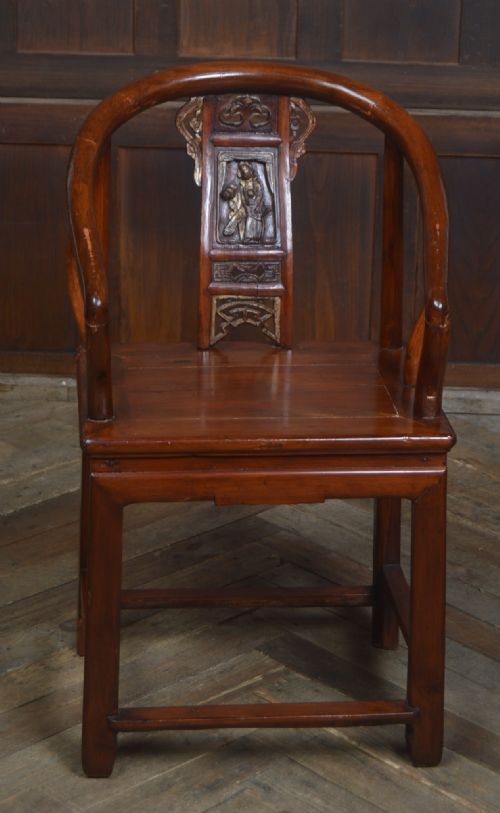
Antique Horseshoe Desk Chair
An antique horseshoe desk chair offers curved comfort at the writing table, combining sturdy timber frames with supportive wraparound backs.
Antique Horseshoe Desk Chair
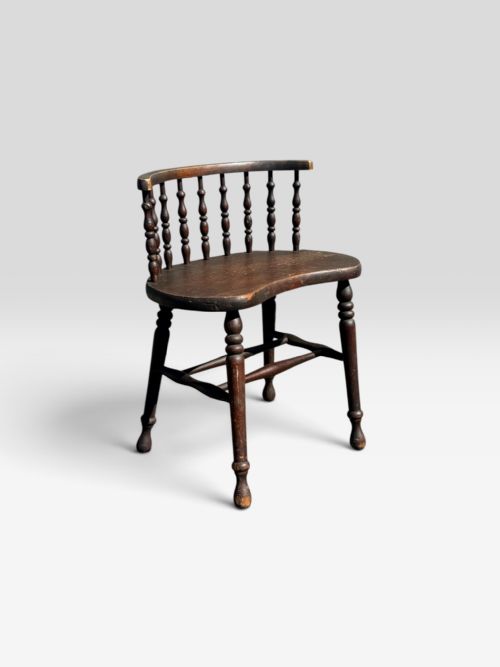
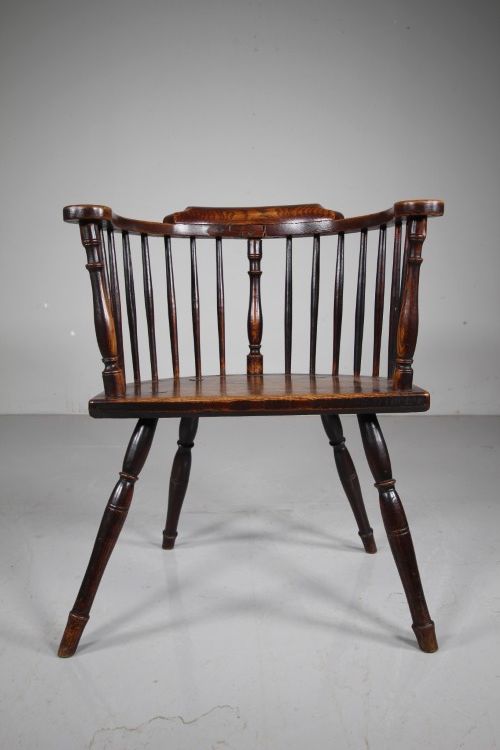
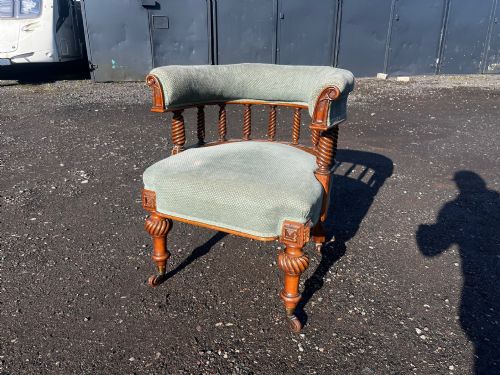
The antique horseshoe desk chair category comprises seating designed with a continuous curved backrest that sweeps around to form the armrests, echoing the shape of a horseshoe. These pieces emerge from the eighteenth century, the Victorian era, and the Edwardian period, appearing in forms such as captain chairs, library chairs, and corner chairs.
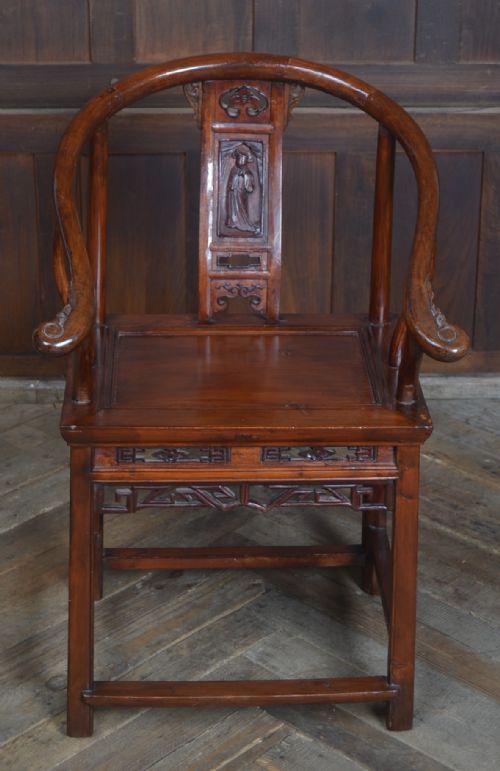
Buyers browsing this selection most frequently encounter nineteenth-century walnut and oak examples, alongside elm country chairs and occasional Chinese lacquered or bamboo variants. These chairs serve primarily at desks and writing tables, offering robust construction and ergonomic support through their distinctive enclosed back profiles.
Originating from diverse traditions including English country workshops and Chinese craftsmanship, these chairs utilise regional timbers and upholstery to meet the practical demands of reading, writing, and gaming. The enduring appeal lies in this combination of organic curved woodwork and functional desk-side utility.
How they were made
Cabinetmakers constructed the frames of these chairs using solid hardwoods such as mahogany, walnut, oak, elm, and beech, often steaming or laminating the timber to achieve the characteristic continuous horseshoe curve. Joinery relied on traditional mortise and tenon techniques to ensure the structural integrity needed for daily seating.
Upholstered variants incorporate leather or fabric coverings fastened over supportive stuffing, while others feature exposed wood surfaces or canework panels. Finishes range from polished mahogany and dark red leather to lacquered surfaces on Chinese export pieces.
Antique Horseshoe Desk Chair Retail Price Guide 2026
Typical asking prices for horseshoe desk chair among the pieces listed under this phrase on Sellingantiques today, from the lower quarter to the upper quarter. They describe what is for sale here now, not the wider market.
Red leather and dark timber conspire to make every gentleman's gaming chair look ready for a clandestine wager.
What varies in quality
Quality in these chairs rests upon the fluidity of the timber bending and the integrity of the joinery where the back rail meets the seat and arms. Superior examples demonstrate seamless continuity in the curved wooden members and judicious selection of dense, richly figured hardwoods like walnut and mahogany.
The sophistication of the turning on legs and spindles, the grade of the leather or canework used in upholstery, and the preservation of original polish further distinguish finer specimens from utilitarian workshop productions.
The Antique Horseshoe Desk Chair Glossary
- Horseshoe chair
- A seating form defined by a semicircular or rounded backrest that flows continuously into low armrests. This design provides enclosed lateral support for the sitter.
- Captain chair
- A sturdy wooden armchair, often featuring a low curved back and turned spindle supports, traditionally used in offices and libraries. Many examples include saddle seats carved for enhanced comfort.
- Canework
- Woven rattan or cane material utilised for chair seats and back panels. It offers lightweight flexibility and decorative texture.
- Cockfighting chair
- A specialised low armchair featuring a padded backrest designed for a spectator to straddle facing backward. They are frequently upholstered in leather.
- Library chair
- A heavy, comfortable armchair intended for prolonged reading and study at a desk. These pieces often feature upholstered seats and supportive armrests.
Antique Horseshoe Desk Chair: Frequently Asked Questions
What is an antique horseshoe desk chair?
An antique horseshoe desk chair is a seat featuring a rounded, continuous backrest that wraps around to form the arms, designed specifically for use at a desk or writing table. These pieces date across the eighteenth, nineteenth, and early twentieth centuries.
They appear in various timbers including oak, walnut, and mahogany, reflecting diverse styles from English country workshops to Chinese export furniture.
How were these chairs used historically?
Historically, these chairs served in studies, libraries, and offices where people spent hours writing, reading, or conducting business. The wraparound horseshoe design provided lateral support and comfort during long periods at a desk.
Certain variants, such as gaming chairs or captain chairs, also fulfilled specific domestic and institutional functions requiring sturdy, movable seating.
How do I live with an antique horseshoe desk chair?
Living with one of these chairs involves placing it at a suitable writing desk or pairing it with a reading table where its curved back can be appreciated. Regular maintenance requires simple dusting and conditioning of leather or wood surfaces according to their finish.
Positioning the chair away from direct heat sources and strong sunlight preserves the structural stability of the antique timber and upholstery.
How do I tell periods apart?
Distinguishing periods relies on observing timber choices, construction methods, and stylistic details present in the frame. Eighteenth-century and early nineteenth-century examples often display simpler country construction in elm or oak, while mid-to-late Victorian pieces frequently showcase polished walnut or mahogany with formal upholstery.
Edwardian and Chinese export pieces introduce alternative materials like bamboo and distinctive lacquered finishes that mark their specific eras of production.