

Antique Horse Carving
When you handle an antique horse carving, you hold centuries of domestic affection and fierce workshop craft in a single piece of timber.
Antique Horse Carving
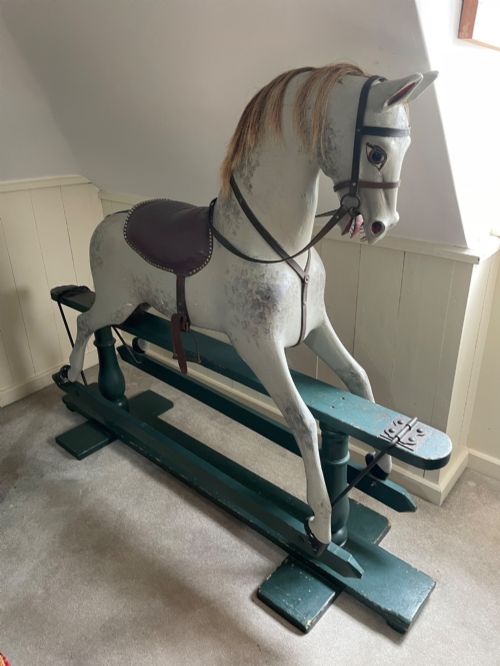
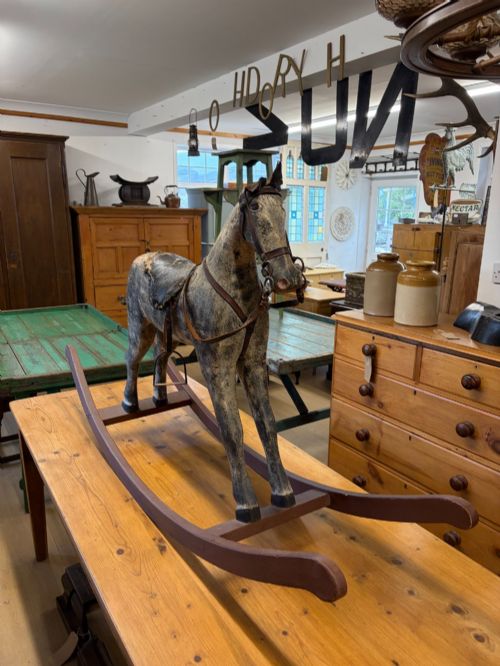
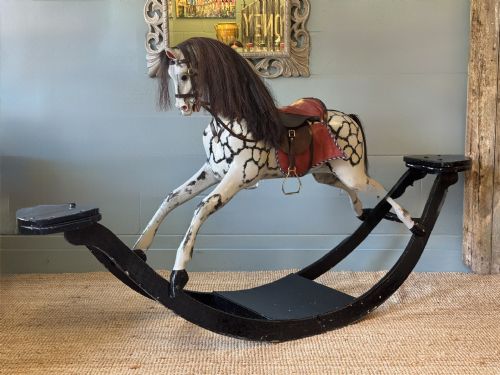
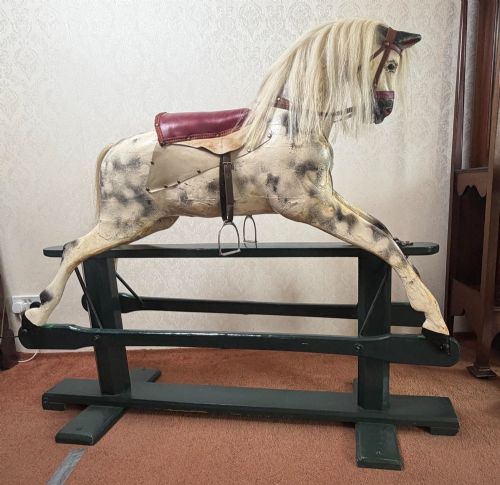
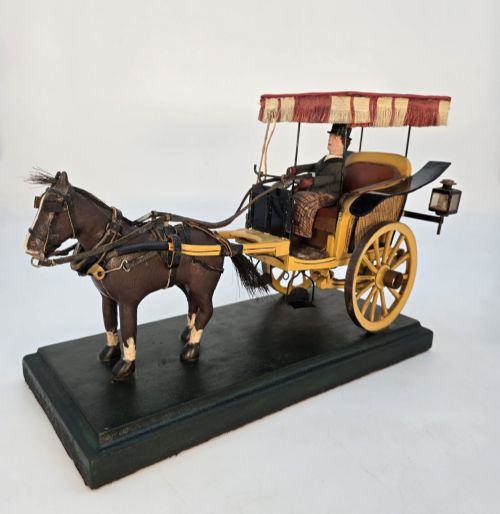
An antique horse carving brings together diverse domestic and decorative forms shaped across the eighteenth, nineteenth, and early twentieth centuries. These pieces range from grand rocking horses built for nurseries to small folk art sculptures and functional items incorporating equine motifs.
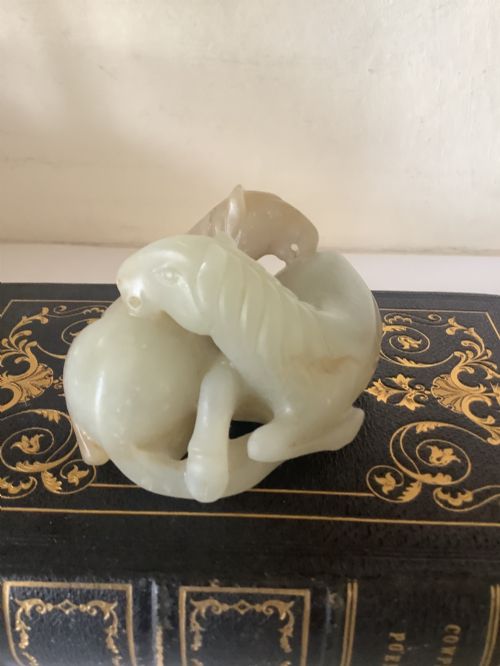
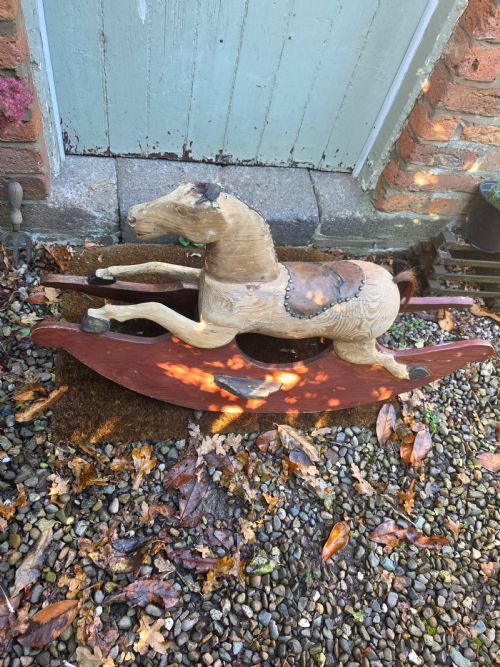
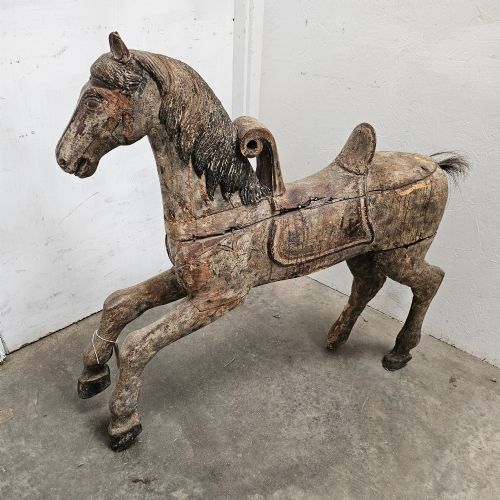
Rocking horses dominate the larger objects, often mounted on original safety stands or bow rockers, alongside carousel figures from French and English fairgrounds. Smaller works include naive wooden sculptures, hard stone carvings, and walking sticks topped with silver horse heads.
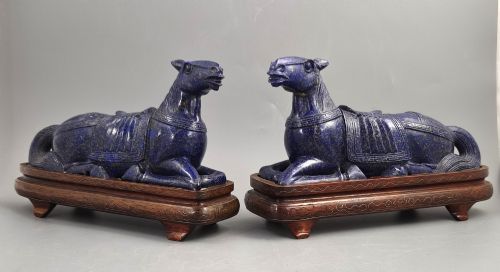
Makers and workshops across Britain, Europe, and Asia produced these carvings to serve both utility and display. The selection reflects diverse traditions, from Victorian folk art to Qing Dynasty lapis lazuli studies.
How they were made
Makers turned principally to timbers such as pine, walnut, mahogany, and padouk, shaping the core bodies with hand tools before applying layers of paint, leather tack, and genuine horsehair. Larger rocking horses required sturdy joinery and iron fixings to withstand heavy nursery use.
Folk art and carousel figures relied on direct, naive carving techniques where tool marks remained visible beneath weathered paint finishes. In contrast, Asian hard stone and European marble studies employed meticulous abrasive shaping to capture the musculature of stallions.
Antique Horse Carving Retail Price Guide 2026
Typical asking prices for horse carving among the pieces listed under this phrase on Sellingantiques today, from the lower quarter to the upper quarter. They describe what is for sale here now, not the wider market.
What varies in quality
Quality rests in the anatomical conviction of the carving and the survival of original surface finishes, such as early paint layers or tack. Pieces that retain their genuine leather saddles, horsehair manes, and maker markings command stronger presence.
The integrity of the timber and the balance of the stance separate standard workshop production from master-carved carousel figures or signed rocking horses. Altered surfaces or replaced components diminish the historical coherence of the piece.
G & J Lines of London·F.H. Ayres·Collinson
The Antique Horse Carving Glossary
- Rocking horse
- A toy or nursery fixture mounted on bow rockers or a safety swing stand designed for children to ride. Most examples utilise carved pine or hardwoods fitted with real horsehair.
- Carousel horse
- A carved wooden figure removed from a fairground ride, often displaying dynamic poses and remnants of decorative paint. These pieces were built to withstand rigorous outdoor operation.
- Folk art
- Objects created by self-taught makers or within regional traditions without formal academic training. This category includes naive wooden horse sculptures and scratch-built models.
- Mangle board
- A domestic wooden board used historically in Scandinavia for smoothing linen, frequently finished with an elaborate carved horse head handle. They represent a distinct intersection of utility and folk sculpture.
- Padouk
- A dense tropical hardwood prized for its rich reddish-brown colour and durability. It appears in furniture and carved stands associated with Asian export pieces.
Antique Horse Carving: Frequently Asked Questions
How do I date an antique rocking horse?
Dating relies on construction methods, body shape, and the style of the tack and stand. Earlier nineteenth-century examples often feature slimmer bodies and simpler bow rockers, while later models shifted to safety swing stands.
Maker stamps and distinctive carving details in the head and shoulders also help narrow down the period of production.
Were carousel horses meant for outdoor use?
Carousel figures were engineered for commercial fairground rides and endured constant movement and exposure to the weather. Workshops built them from durable timbers and coated them in thick lead-based paints to protect the wood.
Today, these survivors show layers of historical paint beneath their weathered decorative finishes.
How should I care for carved wooden horses?
Wooden carvings require stable indoor humidity to prevent the timber from splitting or warping over time. Keep pieces away from direct heat sources and strong sunlight that can fade original painted surfaces.
Dust gently with a dry, soft cloth and avoid applying modern polishes to antique painted or distressed finishes.
What is the difference between folk art and studio carvings?
Folk art carvings stem from untrained or regional traditions, resulting in charmingly naive proportions and direct tool marks. Studio or academic carvings focus on precise anatomical accuracy and refined finishing techniques.
Both categories offer distinct insights into the carver's intent and period aesthetic.