




Antique Hooded Clock
An antique hooded clock brings precision timekeeping and rich cabinet-making traditions into a room, spanning wall-hung and tall floor-standing formats.
Antique Hooded Clock
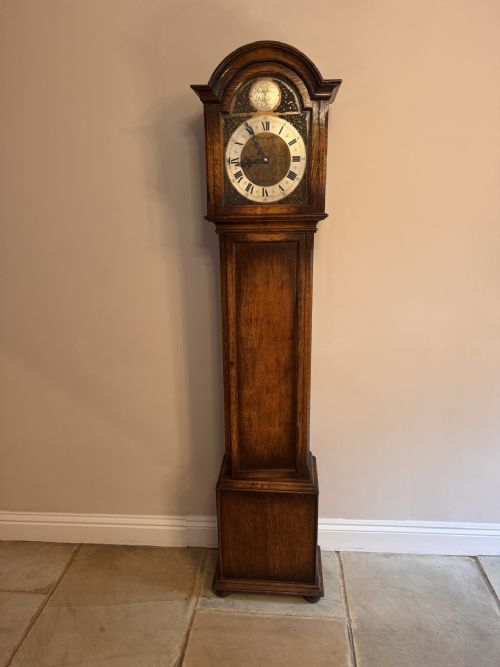
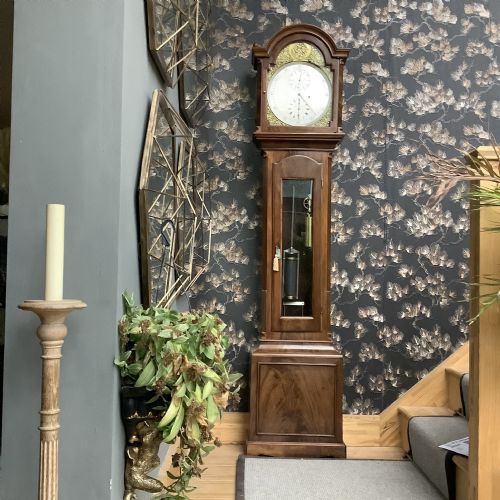
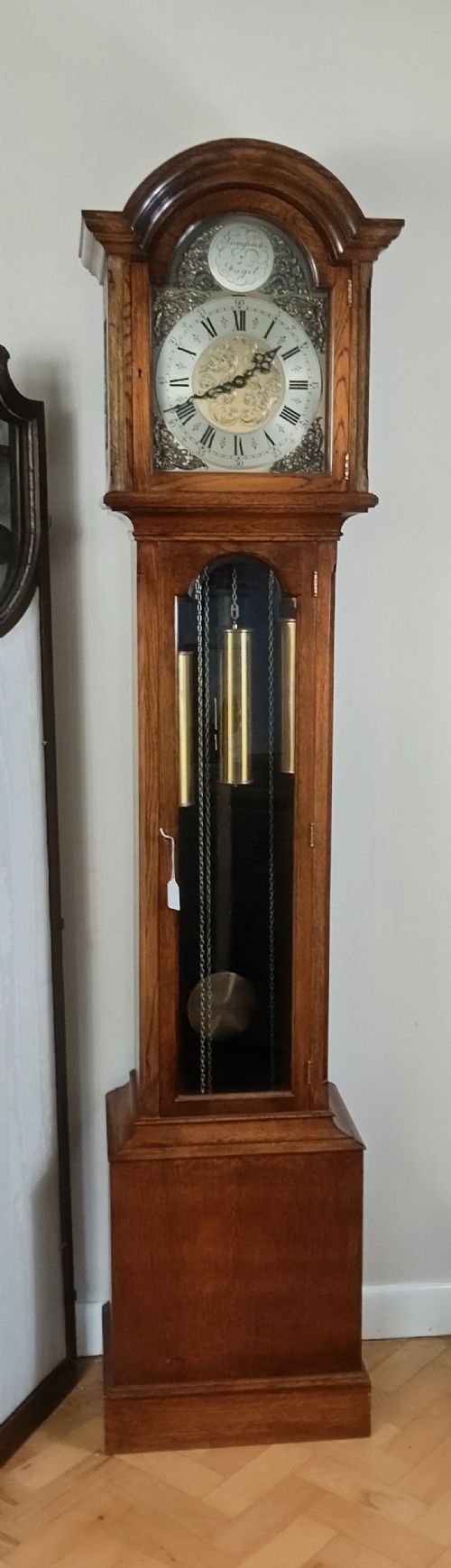
An antique hooded clock encompasses both wall-mounted timepieces and towering longcase formats, reflecting centuries of domestic horology. These pieces range from modest thirty-hour wall hung models to elaborate musical grandfather clocks.
The versions most commonly met on this page include eighteenth-century and nineteenth-century mahogany or oak longcase clocks, alongside regional wall-hung hooded clocks. Makers from London, provincial towns, and Scotland contributed to this diverse selection.
Cabinet styles extend across Georgian, Victorian, and Regency periods, utilising traditional timber cases to house intricate brass and iron movements.
How they were made
Clockmakers constructed these cases using solid and veneered hardwoods like mahogany, oak, and walnut, paired with glass dial covers and brass fittings.
Movements incorporate iron and lead components alongside brass gears and plates, driven by weights or springs depending on whether the format is a wall clock or a tall longcase.
Antique Hooded Clock Retail Price Guide 2026
Typical asking prices for hooded clock among the pieces listed under this phrase on Sellingantiques today, from the lower quarter to the upper quarter. They describe what is for sale here now, not the wider market.
Some grandfather clocks play up to three distinct tunes to mark the hours.
What varies in quality
Cabinet construction also separates standard production from finer work, seen in quarter-veneered walnut, finely figured mahogany, and well-proportioned smaller cases.
Priory of Dundee·Bravingtons·John Rainsford Leicester Square·Henry Deykin Worcester·Dwerrihouse & Carter·George Buckmaster Royston·Richard Gibbs London·Ganthony Of London·Rowning Of Newmarket·J. Hummel Of Worcester·Wenham & Son Of Dereham·John Harvey Of Weymouth·Hunsdon Of Chelmsford·Lister & Sons
The Antique Hooded Clock Glossary
- Longcase clock
- A tall pendulum clock enclosed in a wooden case, commonly known as a grandfather clock. These standing timepieces house weights suspended by lines or chains.
- Regulator clock
- A precision clock designed to keep highly accurate time, often featuring a simplified dial layout for easy reading. Nineteenth-century examples frequently served as time standards.
- Staart clock
- A traditional Dutch wall-hung clock characterised by a weighted movement beneath a wooden hood. These continental pieces display distinct regional case carving.
- Moonphase
- A dial mechanism tracking the phases of the lunar cycle. Such complications appear on select Georgian longcase clocks.
- Quarter veneered
- A cabinet-making technique applying symmetrical slices of wood veneer to a solid base. This method creates decorative geometric grain patterns on walnut clock doors.
Antique Hooded Clock: Frequently Asked Questions
What is an antique hooded clock?
An antique hooded clock refers to timepieces featuring a protective wooden hood over the dial mechanism. They include wall-hung variants and tall floor-standing longcase clocks.
These pieces span the eighteenth and nineteenth centuries, combining mechanical movement with period cabinet-making.
How do I wind a longcase clock?
Winding involves pulling up the driving weights using a key or crank inserted into holes on the dial face. Care must be taken not to overwind the mechanism.
Most traditional movements require weekly winding, though thirty-hour versions need attention more frequently.
Where were these clocks made?
Clockmaking workshops operated across London, provincial English towns, and Scotland. Makers signed dials with their town and surname.
Regional variations appear in the choice of local timbers like oak and mahogany.
How do I date an antique clock?
Dating relies on the maker's signature on the dial, the style of the wood case, and the design of the movement. Georgian and Victorian periods display distinct aesthetic shifts.
Inscribed names often match historical records of active watch and clockmakers.