



Antique Hogarth Engraving
An antique hogarth engraving captures the biting social satire of eighteenth-century London through sharp copperplate lines.
Antique Hogarth Engraving
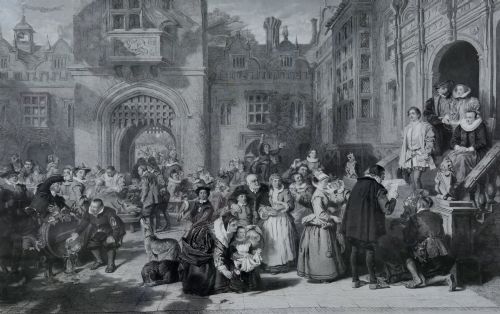
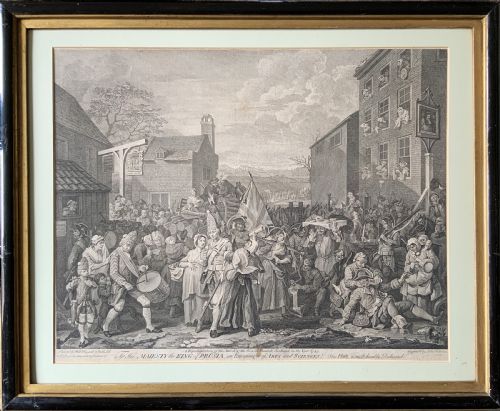
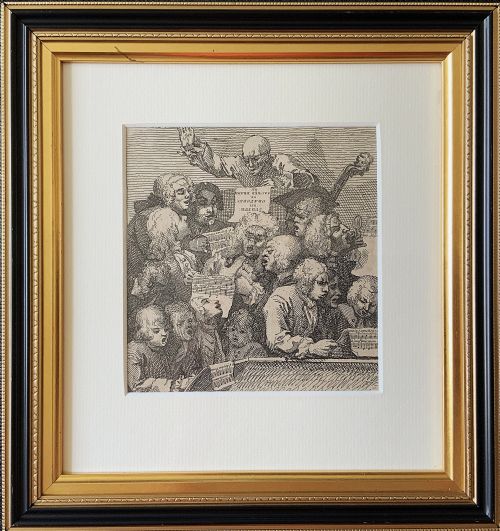
An antique hogarth engraving presents the moral narratives and satirical scenes designed by William Hogarth alongside works housed in characteristic moulded frames. Buyers looking at this page encounter individual prints, bound portfolios, and complete series executed by contemporary and later printmakers.
The selections span the eighteenth century, the Regency era, and the Victorian period, appearing as both original plates and later impressions. Framing styles range from traditional dark wood mouldings to later maple surrounds.
Subject matter extends from grand moral progressions like The Rake's Progress to bustling interior courtyard scenes and character studies. These works record Georgian society through complex compositions laden with contemporary detail.
Materials and production methods
Production relies on paper sheets impressed with carbon ink from engraved copper plates, sometimes finished with hand-applied colour or watercolours. Master engravers such as Luke Sullivan and E.L. Riepenhausen translated the original designs onto metal plates for printing.
Framing materials incorporate wood, gilt wood, and gold leaf, occasionally combined with glass protection to preserve the delicate paper surfaces. Maple frames and specialised dark timber mouldings provide the distinct profile associated with these historic prints.
Antique Hogarth Engraving Retail Price Guide 2026
Typical asking prices for hogarth engraving among the pieces listed under this phrase on Sellingantiques today, from the lower quarter to the upper quarter. They describe what is for sale here now, not the wider market.
Listings feature works spanning the Georgian, Regency, and Victorian periods, utilising paper, ink, copper, and wood.
Assessing quality and impression strength
Quality rests upon the crispness of the ink lines and the depth retained within the copperplate impression on the paper. Early strikes display finer details and sharper contrasts than later impressions pulled from worn plates.
The condition of the paper and the presence of original framing elements significantly influence the character of each piece. Intact margins, clear watermarks, and period frames housing the print enhance the historical integrity of the artwork.
William Hogarth·Luke Sullivan·E.L. Riepenhausen·E. Jackson Stodart·Ravenet and Delatre
The Antique Hogarth Engraving Glossary
- Copperplate engraving
- A printmaking technique where an artist cuts lines directly into a copper sheet with a burin before applying ink for the press. This method allows for extraordinary detail in satirical prints.
- Stipple engraving
- A method of creating tonal gradations on a printing plate using dots rather than continuous lines. This technique often appears in nineteenth-century interpretations.
- Hand-coloured engraving
- A monochrome print enhanced with watercolour applied by hand after the impression leaves the press. Colourists worked systematically to tint Georgian social scenes.
- State
- The stage of a print's development determined by alterations made directly to the copper plate between print runs. Collectors study these variations to date specific impressions.
- Impression
- A single copy of a print pulled from a prepared plate onto paper. Early impressions reveal the sharpest detail before the metal plate begins to degrade.
Antique Hogarth Engraving: Frequently Asked Questions
How can I identify an original eighteenth-century impression?
Original eighteenth-century impressions display strong plate marks, distinct paper textures, and characteristic carbon ink depth. Examining the sharpness of the fine lines reveals the wear state of the copper plate.
Paper characteristics such as watermarks and chain lines further help distinguish period production from later nineteenth-century or twentieth-century restrikes.
How should I display these prints safely?
These works require mounting behind glass with conservation-grade materials to protect the fragile paper from atmospheric pollutants and physical damage. Keeping prints away from direct sunlight prevents the fading of ink and hand-applied colours.
Maintaining stable room temperatures and low humidity levels prevents paper warping and foxing over time.
Are complete series available together?
Portfolios and complete series occasionally survive intact, presenting multiple plates from narratives like The Rake's Progress or social satire sets. These grouped collections preserve the original narrative sequence intended by the publisher.
Collectors prize complete sets for their uniformity in paper type, ink tone, and historical binding or presentation.