
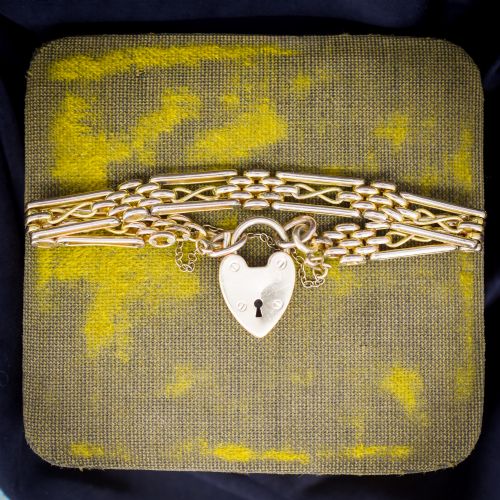
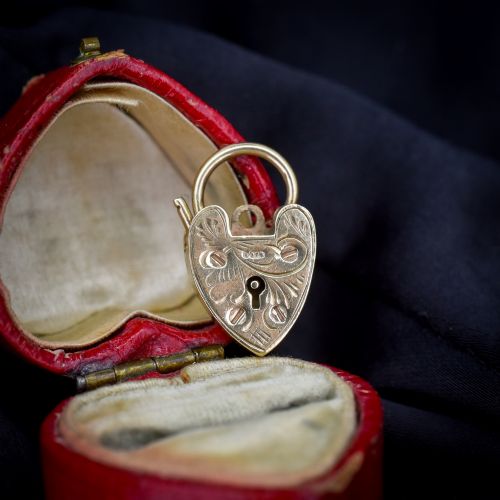
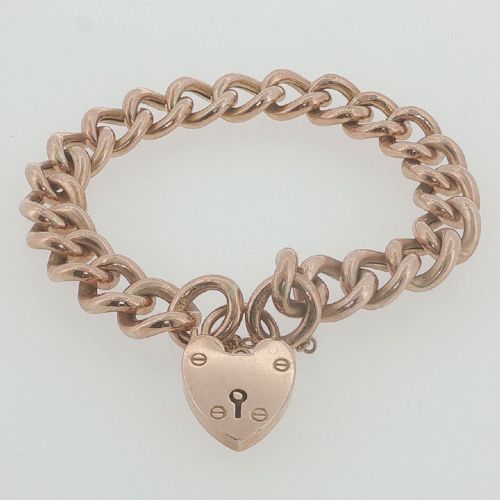
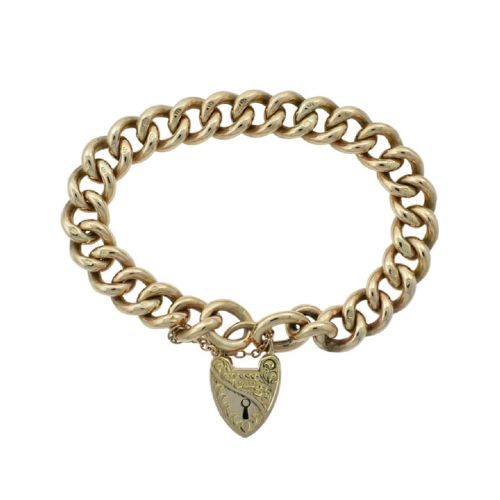
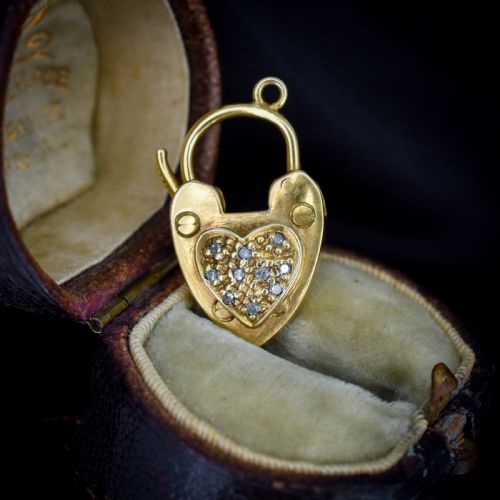
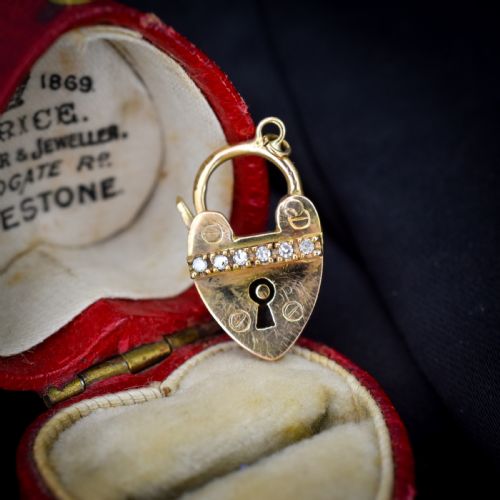


Antique Heart Clasp Bracelet
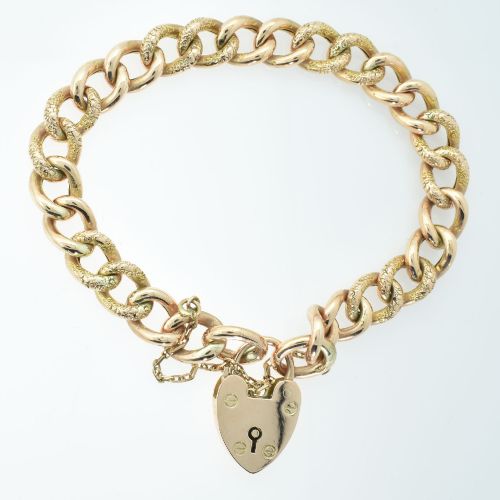
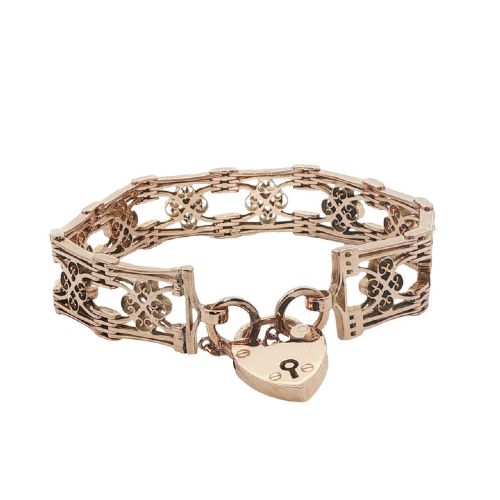
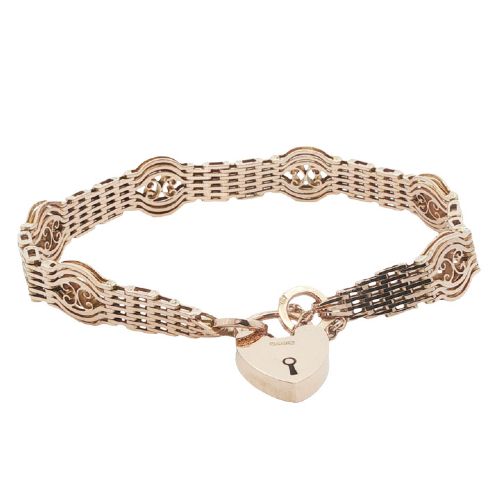
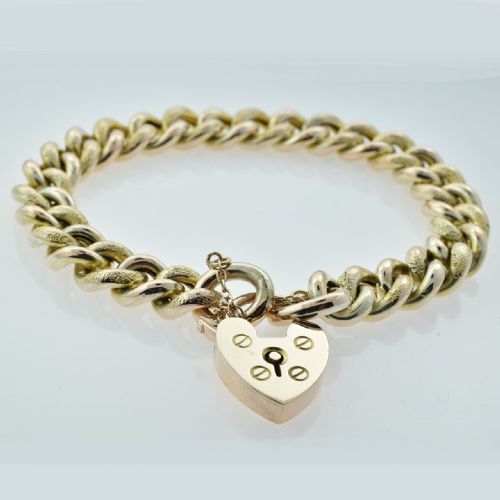
These antique heart clasp bracelet examples bring together symbolic fastenings and solid gold links from the Victorian and Edwardian eras.
Antique Heart Clasp Bracelet
An antique heart clasp bracelet centres on a padlock or clasp shaped like a heart, acting as both a secure fastening and a decorative motif. When you search for an antique heart clasp bracelet, you encounter substantial chain designs such as curb links, heavy gate links, and patterned knot assemblies.
The pieces appearing on this page stem predominantly from the Victorian and Edwardian periods, stretching into early twentieth-century production. You meet both complete bracelets fitted with their original padlocks and individual heart padlocks that double as charms or pendants.
Gold forms the foundation of these pieces, specifically nine-carat yellow and rose gold variants, often accompanied by safety chains or hallmarked details. Certain examples incorporate gem-set faces featuring pearls, rubies, amethysts, diamonds, and turquoise.
How they were made
Maker techniques rely upon solid nine-carat gold fabrication, shaping rose and yellow gold into interlocking curb links and structured gate panels. Metal surfaces frequently receive hand-engraving, displaying foliate scrolls or half-engraved patterns across the link faces.
Locking mechanisms utilise functional spring-loaded padlocks shaped like hearts, designed to snap shut securely onto a designated jump ring. Gemstones such as pearls, rubies, amethysts, and diamonds are flush-set or claw-set directly into the gold body of the padlock or surrounding links.
Listings feature nine-carat rose gold and yellow gold predominantly, alongside rolled gold variants across Victorian and Edwardian periods.
What varies in quality
Quality rests upon the weight and structural integrity of the gold links, with heavier curb and gate configurations demanding greater goldsmithing skill. The complexity of hand-engraving also dictates standard, where crisp, deep incisions denote superior execution compared to worn or shallow surface work.
The inclusion of matched gemstones, such as well-oriented pearls, rubies, or amethysts set into the heart padlock, elevates the piece. Original hallmarks indicating specific assay offices and dates provide documentary weight that simpler unmarked items lack.
The Antique Heart Clasp Bracelet Glossary
- Curb link
- A type of chain formed by interlocking, slightly flattened links that lie uniform against the wrist. This link style provides the durable foundation for many Victorian gate and padlock bracelets.
- Gate bracelet
- A wide bracelet constructed from parallel vertical bars linked by central connectors, reminiscent of country gates. These sturdy bands frequently support a prominent heart padlock clasp.
- Rolled gold
- A manufacturing method where a thin layer of gold is mechanically bonded to a base metal core. This technique offered a durable golden finish at a more accessible cost.
- Padlock clasp
- A functional miniature lock shaped like a heart that secures the two ends of a bracelet together. Many of these clasps function as independent charms or pendants when removed from the chain.
Antique Heart Clasp Bracelet: Frequently Asked Questions
What is an antique heart clasp bracelet?
An antique heart clasp bracelet is a gold chain bracelet fastened with a miniature padlock shaped like a heart. These pieces date primarily from the Victorian and Edwardian eras.
They combine structural link designs, such as curb chains or gate links, with a symbolic fastening that often doubles as a charm.
How do I date an antique heart clasp bracelet?
Dating relies upon hallmarks stamped into the metal, which indicate the assay office, metal purity, and year of manufacture. Stylistic clues such as curb link width and hand-engraved patterns also help place the piece in the Victorian or Edwardian period.
Many pieces carry specific year stamps on the heart padlock or the final link near the clasp.
Were these heart padlocks meant to open?
Yes, the heart padlocks function as operational clasps that open to release the bracelet from the wrist. Some designs use a push-button mechanism, while others rely on a spring-loaded sharn that depresses to attach to a jump ring.
Jewellery owners often added safety chains to ensure the bracelet remained secure even if the padlock sprang open.
What gemstones appear on these bracelets?
Many heart padlocks and surrounding links feature flush-set or claw-set gemstones including pearls, rubies, amethysts, diamonds, and turquoise. These stones are typically integrated directly into the face of the heart padlock or spaced along the curb chain.
Plain engraved rose gold versions without gemstones are equally common across the surviving inventory.