

Antique Hanging Hall Light
An antique hanging hall light sets the tone for an entrance, casting warm illumination through glass and metal.
Antique Hanging Hall Light
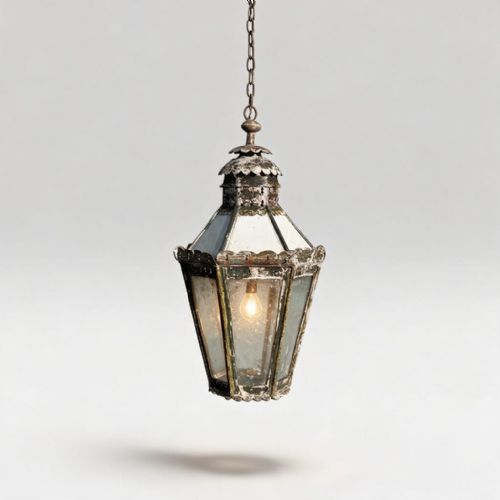
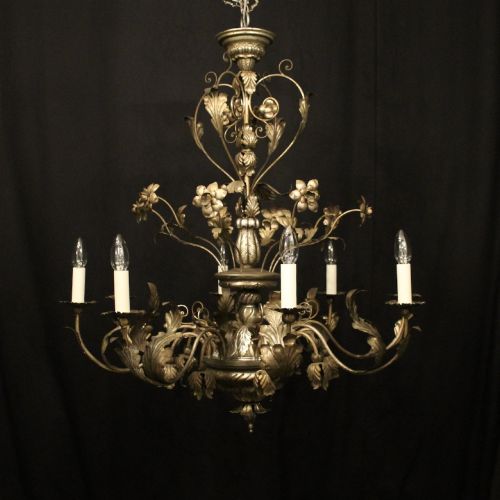
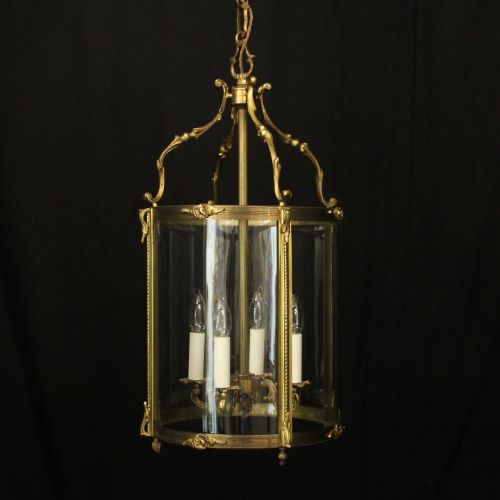
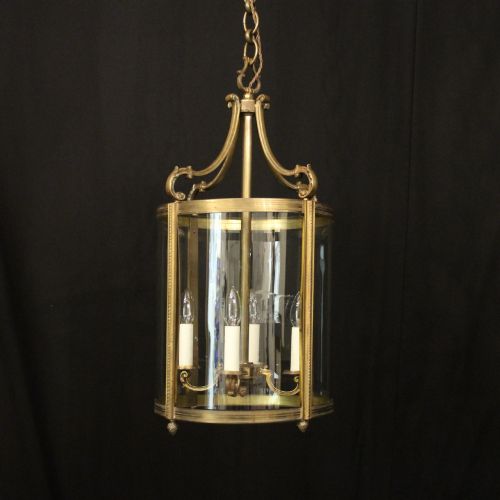
When searching for an antique hanging hall light, buyers encounter lantern forms designed to illuminate entranceways and corridors. The selection spans from the nineteenth century through the Edwardian era and into the 1930s.
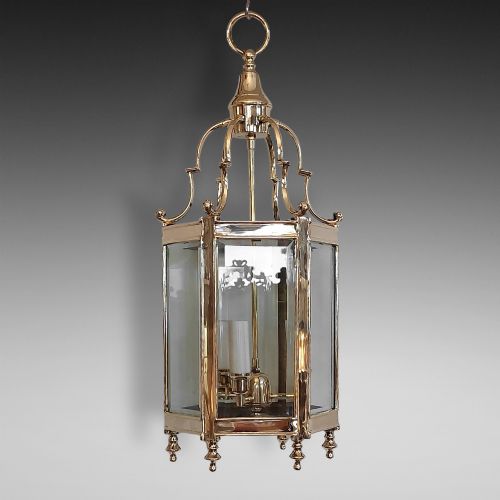
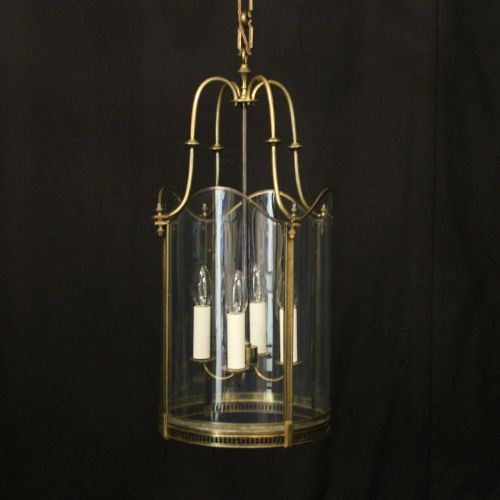
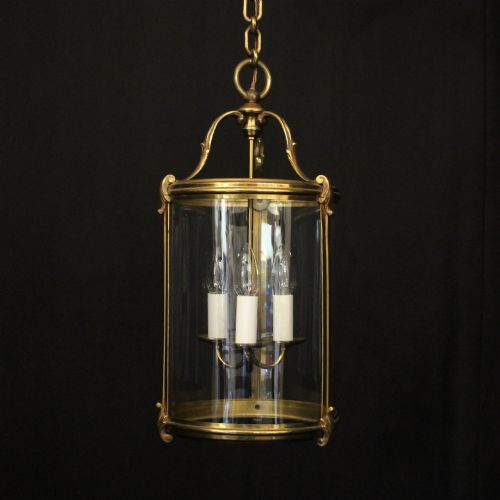
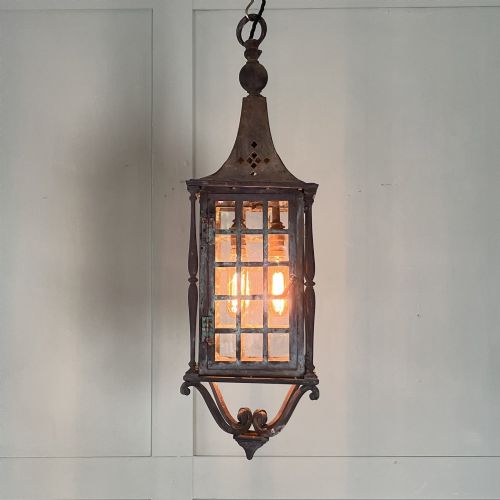
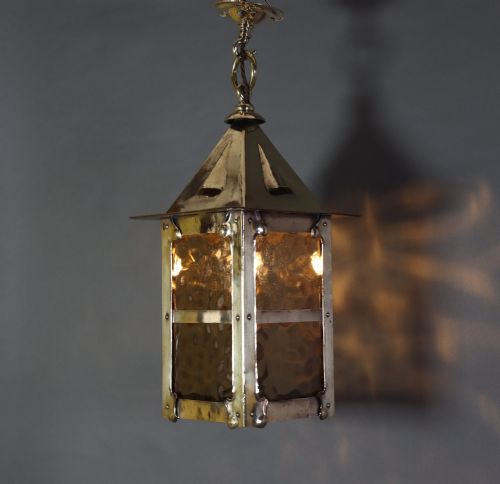
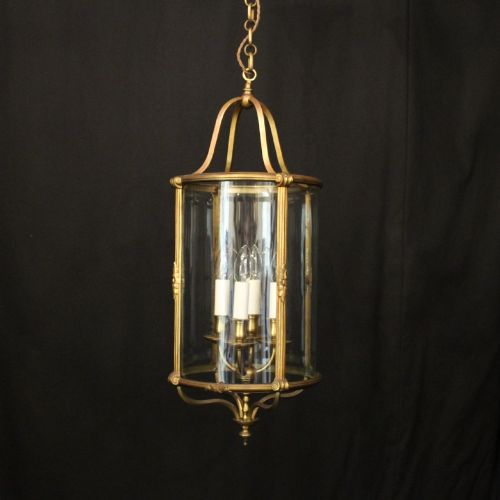
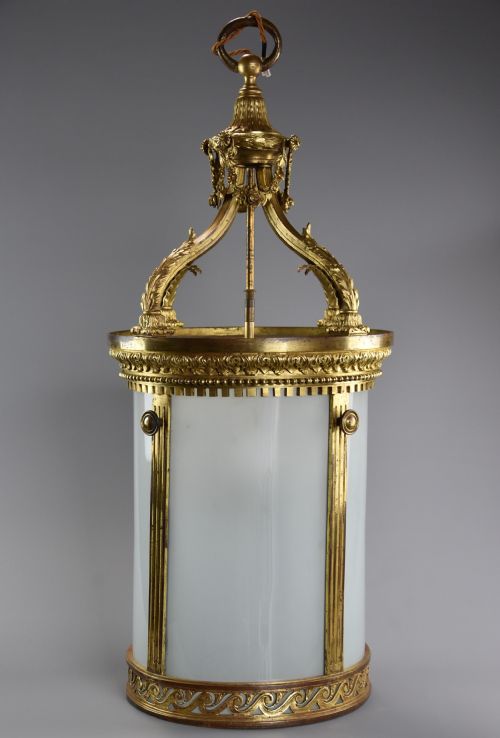
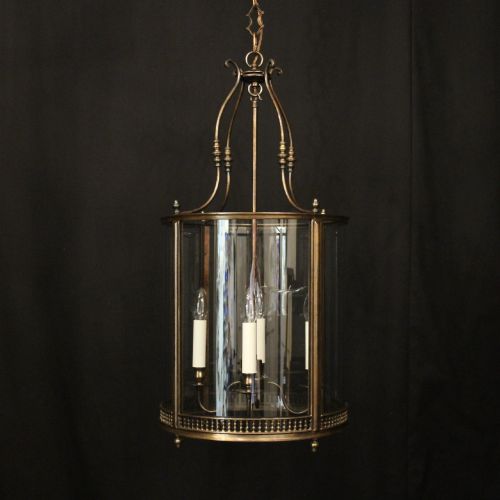
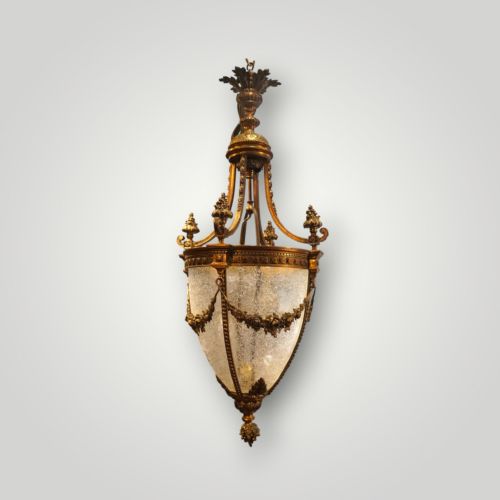
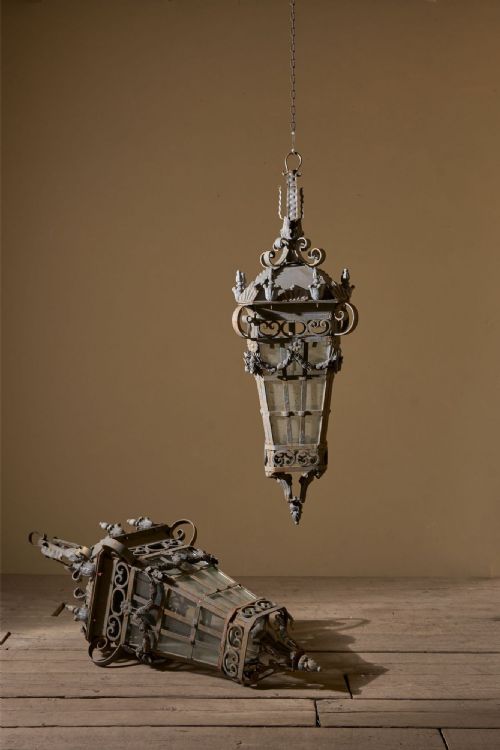
Most examples found here take the form of hall lanterns, ceiling lights, and pendant lighting. These range from simple hexagonal brass frames to ornate French gilded bronze models with multiple lights.
Origins divide broadly between English and French workshops, encompassing styles such as Gothic Revival, Arts and Crafts, and French Neoclassical. Buyers frequently meet brass framed designs alongside iron and gilt bronze iterations.
How they were made
Maker construction relies heavily on metalworking, utilising brass, gilt bronze, wrought iron, and lead to form structural frames and lanterns. Components are cast, forged, or soldered to create rigid enclosures for internal illumination.
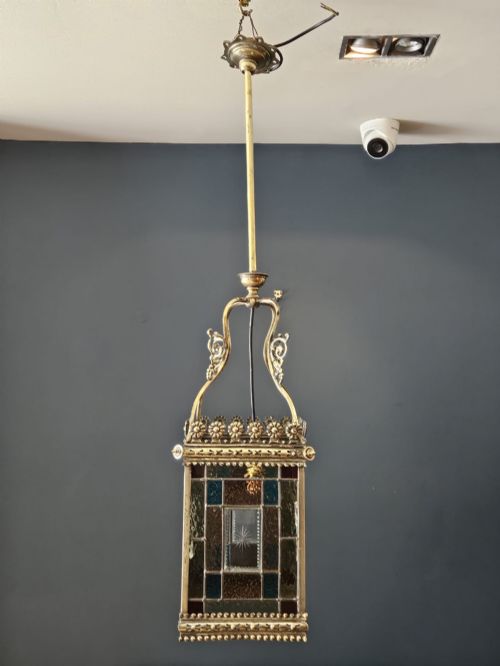
Glazing techniques define the optical character, incorporating lead glass, hand blown bulls eye glass, moonstone, and etched glass panels. Metal frames frequently feature hinged doors for interior access.
Some lanterns feature hand blown bulls eye glass, originally intended to utilise the thick centre of a glassblower's pontil mark.
What varies in quality
Material choice and metal thickness establish the baseline standard, separating solid cast bronze or heavy brass frames from lighter sheet metal constructions. The precision of joinery and the integrity of structural framing dictate long-term durability.
Glass quality distinguishes finer examples, particularly where hand blown bulls eye panes or intricate etched patterns are employed rather than plain flat glass. Gilding depth and chased detail on bronze mounts further separate standard production from superior work.
Voysey
The Antique Hanging Hall Light Glossary
- Bulls eye glass
- Formed by the centre of a glassblower's punty rod, creating a thick circular lens effect in the pane. This adds distinct optical texture and historic character to lantern panels.
- Gilt bronze
- Bronze metal treated with a fine layer of gold leaf or mercury gilding. It provides a rich, warm surface finish seen on French decorative pieces.
- Leaded glass
- Individual pieces of glass held together within a network of lead cames. This technique allows for geometric or stained glass designs in windows and lantern panels.
- Hexagonal form
- A six-sided geometric shape commonly used for lantern frames to distribute light evenly across a hallway. This configuration allows multiple glass panels to be fitted securely.
- Convex glass
- Curved glass panels that project outward from the metal frame. This shape softens the emitted light and broadens the visual volume of the lantern.
Antique Hanging Hall Light: Frequently Asked Questions
How do I choose the right size hall light?
Consider the proportions of your entranceway, ensuring adequate clearance below the fitting for foot traffic and door swings. Larger spaces accommodate grand hexagonal or multi-light lanterns, whereas compact corridors benefit from small pendant lights.
Ceiling height dictates chain or rod length. A well-proportioned light hangs centrally without dominating the threshold.
Were these lights originally electrified?
Many early pieces were originally configured for candles or gas before being converted for modern electrical use. Surviving examples may show adaptations made during the Edwardian period or later decades.
Conversion methods vary according to the age of the lantern. Professional rewiring ensures safe integration into modern household circuits while preserving historic metalwork.
How do I clean antique brass and glass?
Maintain brass frames with a soft, dry cloth to remove dust without disturbing the aged patina. Avoid harsh chemical polishes that strip historic surface character from bronze and brass.
Glass panels can be removed where accessible or wiped carefully in place using a mild glass cleaner. Ensure the power is switched off before undertaking any maintenance.
What styles suit period hallway interiors?
Match the architectural period of your home with corresponding design movements such as Arts and Crafts, Victorian, or Edwardian. Simple brass framed lanterns complement traditional Victorian settings, while French gilded pieces suit formal neoclassical halls.
Mixing eras can work if the scale and metal tone complement existing door furniture and architectural details.