





Antique Handle Candlestick
An antique handle candlestick brings a portable flame into any room, offering the practical grip of a chamberstick combined with period metalwork.
Antique Handle Candlestick
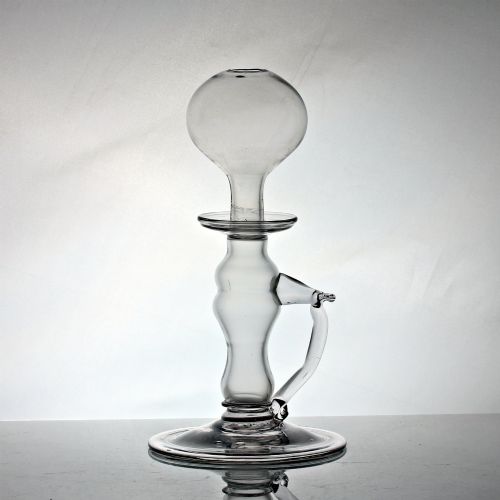
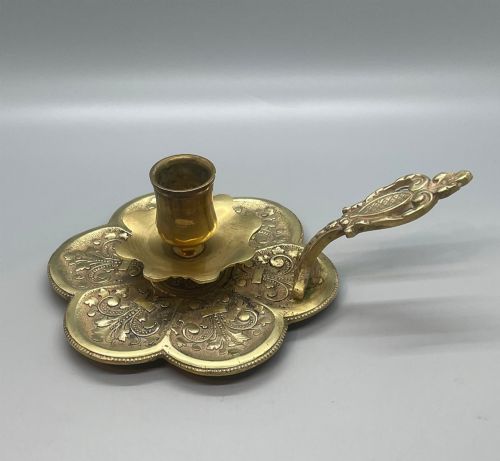
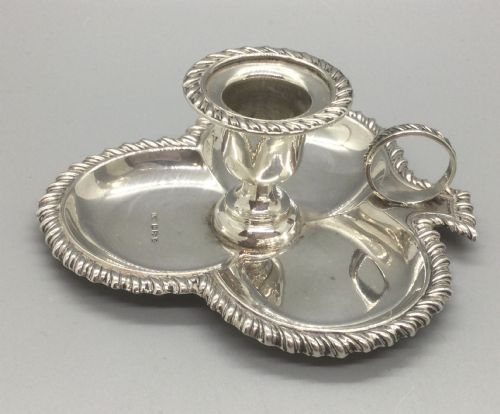
When you search for an antique handle candlestick, you uncover chambersticks and candle holders equipped with side grips or finger loops designed for carrying lit candles through dark rooms. These practical items span the eighteenth, nineteenth, and early twentieth centuries, appearing in forms from simple utilitarian holders to decorative desk accessories.
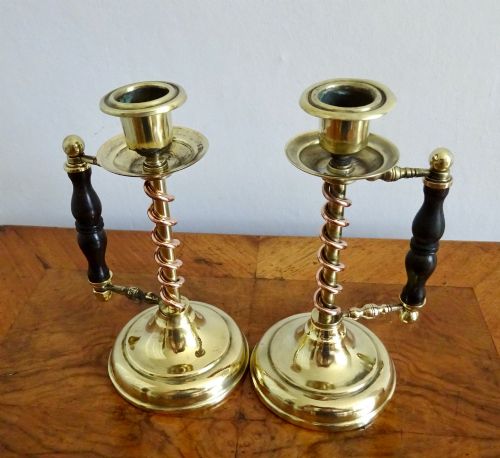
The pieces listed on this page predominantly feature brass, copper, and silver plate, alongside variations incorporating porcelain, enamel, ceramic, and wood. You encounter Victorian and Edwardian examples alongside French eighteenth-century cast brass chambersticks and Arts and Crafts designs.
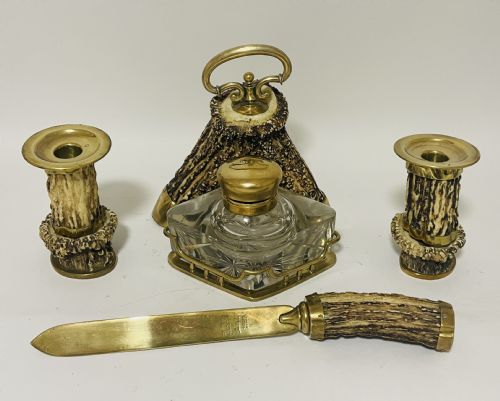
Makers and designers of the period adapted the basic handle candlestick into various stylistic movements, including French Rococo Revival and the Aesthetic Movement. Certain pieces arrive as pairs or sets, while others feature fitted trays or desk sets mounted on antler.
Materials and construction methods
Metalworking techniques dominate the evidence, utilising cast brass, beaten copper, and silver plating over base metals to create durable candle holders. Founders cast brass components in moulds before finishing them by hand, while copper elements demonstrate the jointing and hammering typical of the Arts and Crafts period.
Ceramic and enamel components introduce colour and texture to the metal framework, seen in green Hispano-Moresque glazed ceramics from Spain and porcelain-enamelled brass holders. Wood and antler appear as natural mounts, anchoring metal sockets and trays in desk accessories.
Antique Handle Candlestick Retail Price Guide 2026
Typical asking prices for handle candlestick among the pieces listed under this phrase on Sellingantiques today, from the lower quarter to the upper quarter. They describe what is for sale here now, not the wider market.
Some Victorian brass candle holders abandoned metal entirely for the base, mounting their sockets securely onto an unexpected polished antler.
Distinctions in quality and execution
Quality in these pieces rests upon the crispness of the casting, the weight of the metal, and the integrity of the joins between the handle and the drip pan. Heavier gauge brass and thick silver plating indicate superior manufacture compared to thin, utilitarian pressings.
Design attribution elevates certain pieces, such as works associated with specific designers like Dr Christopher Dresser, where artistic vision guides the combination of brass and copper. Finishes also distinguish the range, from simple polished surfaces to detailed enamel work and specialised ceramic glazes.
Dr Christopher Dresser
The Antique Handle Candlestick Glossary
- Chamberstick
- A short portable candlestick fitted with a handle and a wide drip pan, designed for carrying around a house at night.
- Drip pan
- The shallow saucer or tray surrounding the base of the nozzle that catches melted wax.
- Arts and Crafts
- A design movement emphasising handcraftsmanship, simple forms, and visible construction methods, prominent in late nineteenth and early twentieth-century metalwork.
- Silver plate
- A thin layer of silver applied to a base metal such as copper or brass to give the appearance of solid silver.
- Trefoil
- A three-lobed decorative shape often seen in the tray design of Victorian silver candlesticks.
Antique Handle Candlestick: Frequently Asked Questions
What is a chamberstick?
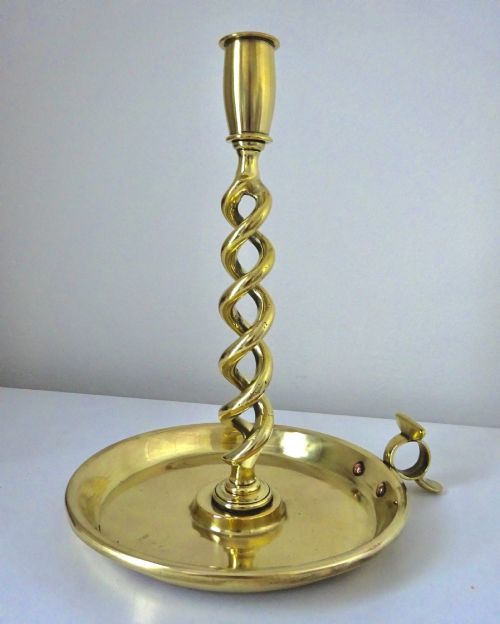
A chamberstick is a specific type of portable candlestick featuring a short stem, a wide drip tray, and a loop handle. This design allowed people to carry a lit candle safely through unlit hallways and chambers before the introduction of electric lighting.
The handle provided a secure finger grip, while the broad saucer below caught any falling wax, protecting fingers and clothing during transit.
How do I date a brass candlestick?
Dating involves examining the manufacturing techniques, stylistic cues, and material combinations present in the piece. Eighteenth-century examples often show heavier cast construction and simpler profiles, while Victorian and Edwardian pieces frequently incorporate mixed metals or revival styles.
Maker marks, hallmarks on silver-plated versions, and distinct aesthetic movements like Arts and Crafts also narrow down the production era.
Were these used for lighting rooms?
These pieces served primarily as portable task lighting rather than permanent room illumination. Their main purpose was transportable light for navigating dark stairs and bedrooms, or for close work at a desk.
Many incorporate fitted trays designed to hold a small snuffer or matchbox alongside the candle socket.
How should I clean antique brass?
Maintenance requires gentle cleaning to preserve the natural patina accumulated over the centuries. Aggressive polishing removes the aged surface that collectors value, so simple dusting and occasional wiping with a soft, dry cloth usually suffice.
Harsh chemical cleaners strip away historical character and can damage softer materials like enamel or porcelain mounted on the metal.