
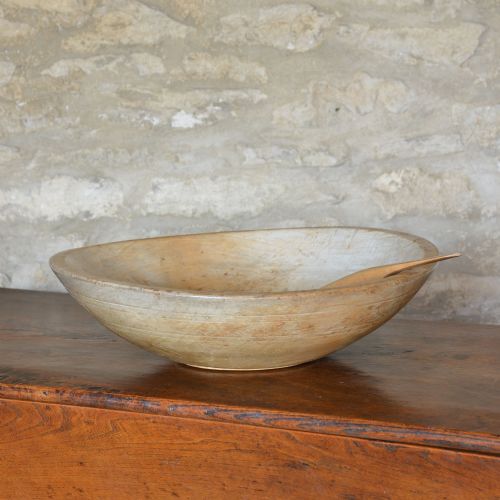
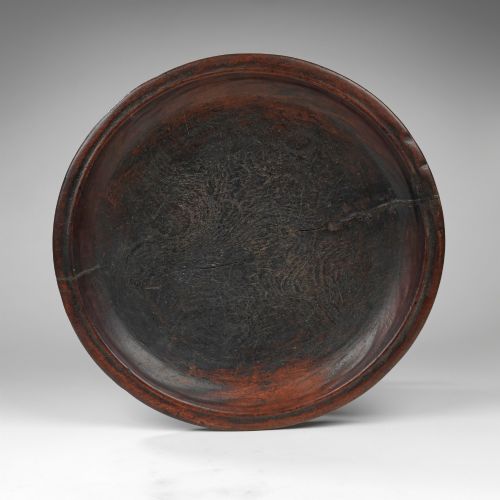
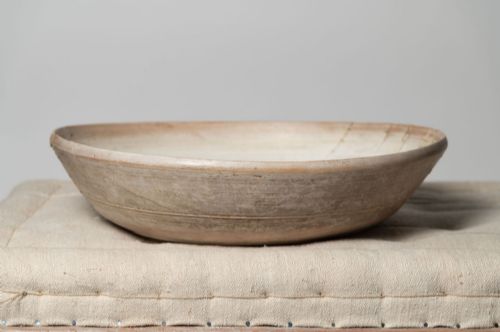
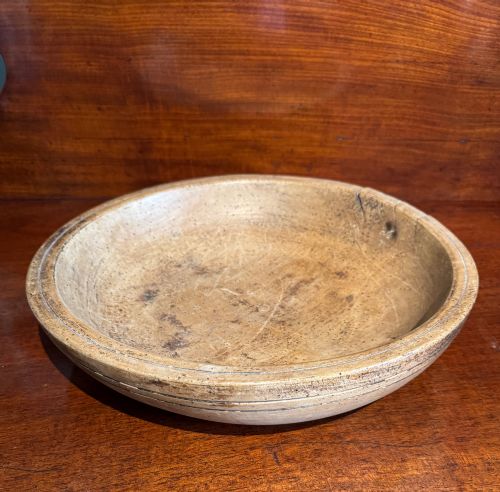



Antique Hand Turned Bowl
An antique hand turned bowl brings tactile warmth to a room, offering honest craftsmanship shaped from timber on a lathe.
Antique Hand Turned Bowl
When you search for an antique hand turned bowl, you encounter utility items originally fashioned for domestic and dairy work. The pieces appearing here span the Georgian era through to the late nineteenth century, created for practical tasks rather than mere display.
You are most likely to meet dairy bowls fashioned from pale sycamore, alongside kitchen vessels in beech and ash. These items carry the marks of everyday use, connecting modern interiors directly to historical rural domesticity.
Materials and construction
Turners shaped these vessels on a lathe using native hardwoods such as sycamore, ash, beech, and mahogany. Sycamore remained the preferred choice for dairy work because the timber imparts no taste or colour to milk and cream.
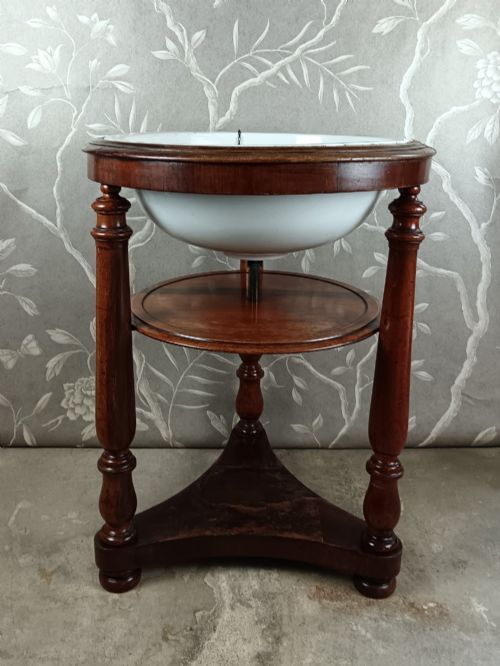
Makers selected timber for its grain and stability, turning green wood and allowing it to warp naturally as it dried. Some utility forms also incorporated brass fittings or ceramic elements alongside the turned wooden bodies.
The listings here draw heavily on nineteenth-century sycamore, showcasing how dairy farming shaped vernacular domestic woodworking across England, Wales, and Sweden.
Judging quality
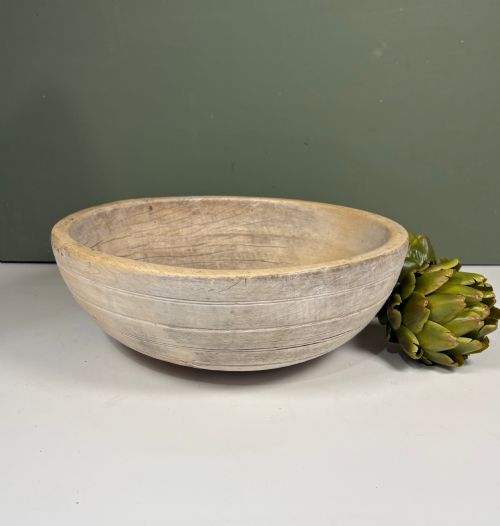
Quality rests in the balance of the turning and the integrity of the surviving timber. A superior vessel shows confident wall thickness that remains even without heavy spots or clumsy repairs.
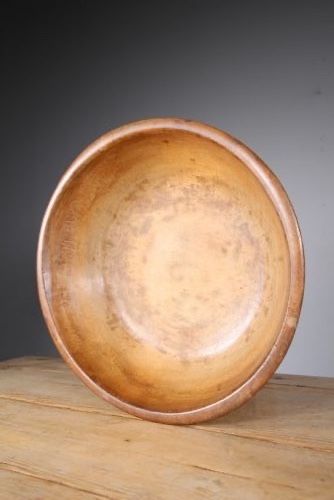
The depth of the surface patina dictates visual success, where decades of scrubbing and handling have burnished the wood. Dry or heavily bleached surfaces lack the tactile richness found in examples preserved through continuous use.
The Antique Hand Turned Bowl Glossary
- Dairy bowl
- A large shallow vessel used historically for setting milk to rise so the cream could be skimmed. These pieces typically feature wide flat bases and steep side walls.
- Sycamore
- A dense white hardwood favoured by turners for domestic kitchenware and dairy utensils. It resists splitting and absorbs minimal moisture during heavy use.
- Patina
- The surface sheen and colour acquired by wood over generations of handling, cleaning, and exposure to light. This quality cannot be replicated artificially.
- Treen
- Small handmade wooden household objects and utensils produced before the advent of modern plastics. The term encompasses everything from bowls and platters to spoons.
- Lathe turning
- A woodworking technique where a piece of wood rotates against a fixed cutting tool to create symmetrical hollow forms. Hand turned pieces display subtle irregularities absent in mass production.
Antique Hand Turned Bowl: Frequently Asked Questions
How were antique dairy bowls used?
These bowls served primarily in farm dairies where fresh milk was poured in to settle. The cream would rise to the surface, allowing dairy workers to skim it off easily for butter and cheese production.
Beyond the dairy, similar turned vessels held dry goods or served family meals in farmhouse kitchens. Their robust construction suited the heavy demands of daily rural labour.
What woods should I expect to find?
Sycamore dominates the selection, prized for its pale colour and clean properties in food preparation. You also encounter ash, beech, and occasionally mahogany in pieces intended for more formal spaces.
Each timber ages differently, with sycamore retaining a creamy tone and beech developing deeper golden hues. The choice of wood usually reflects the local timber available to the original rural turner.
How do I date an old turned bowl?
Dating relies on tool marks, timber choice, and the overall profile of the rim and base. Georgian examples often display distinctive tool ridges and heavier proportions compared to later Victorian pieces.
Patina and wear patterns also guide assessment, though many vernacular wooden items remained in continuous use for decades without changing form. Comparing the vessel to dated domestic artefacts provides the surest timeline.
How should I care for turned wood?
Keep wooden vessels away from direct heat sources and sudden temperature shifts to prevent the timber from splitting. Excessive moisture causes the grain to raise, so hand washing with mild soap and immediate drying is essential.
Occasional treatment with food-safe mineral oil or beeswax preserves the lustre of the wood. Avoid soaking antique treen in water at all costs.