



Antique Hallway Shelf
These pieces gather the post, keys and coats at the threshold of the house.
Antique Hallway Shelf
When you search for an antique hallway shelf, you encounter pieces designed to organise the entrance of a house, combining surfaces for small items with mirrors, pegs or low storage. The selection spans the Victorian, Edwardian and Regency periods, stretching from the early nineteenth century into the twentieth.
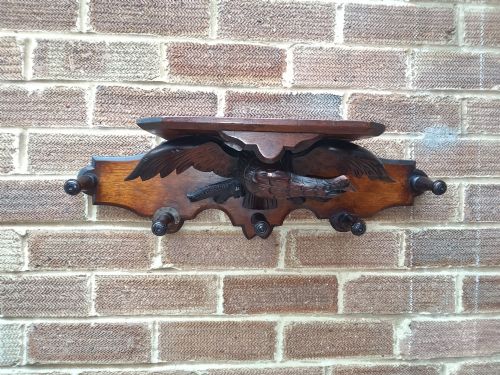
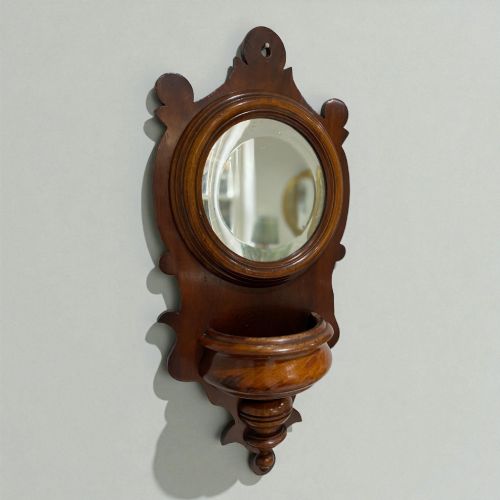
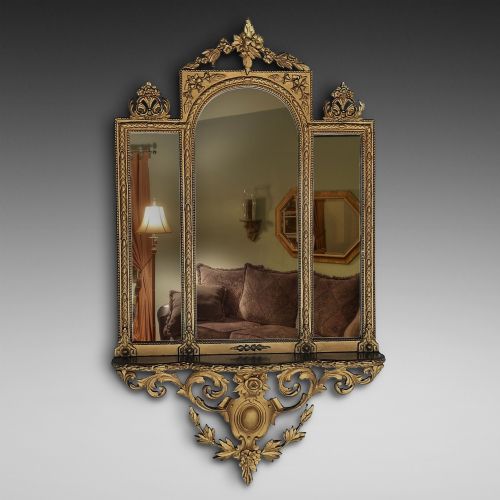
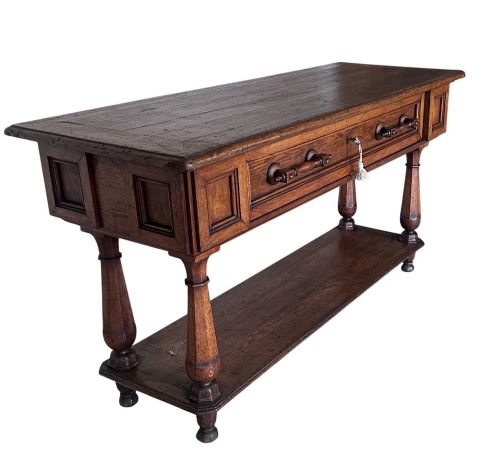
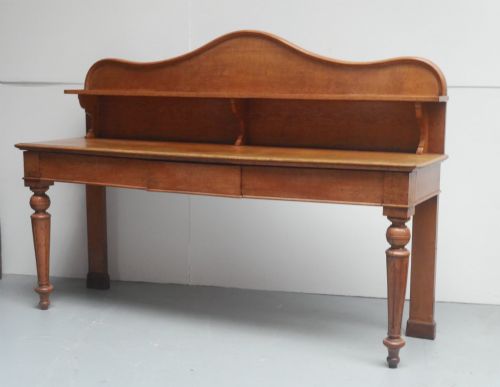
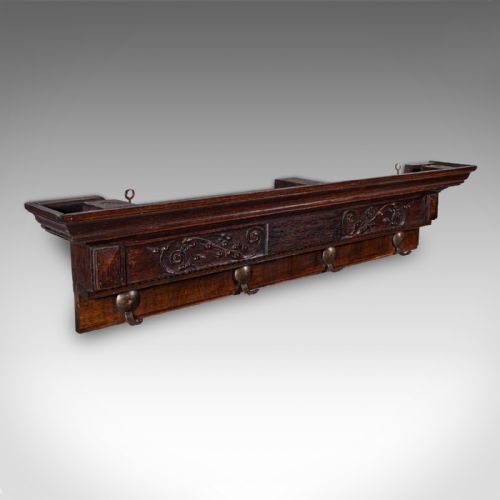
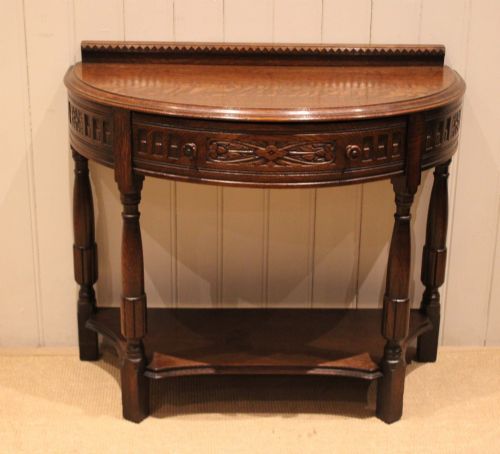
The objects take several distinct shapes rather than a single standard form. You find wall-hanging mirrors equipped with a small ledge, oak or mahogany coat racks fitted with hooks, console tables, serving tables, and compact sideboards featuring marble or wooden shelves.
Many items serve dual purposes, functioning simultaneously as a mirror and a valet, a key cabinet, or a shaving cabinet. Woods such as mahogany, oak and walnut dominate, often complemented by glass, brass and occasionally marble.
Materials and construction
Cabinetmakers built these entrance pieces using solid and veneered timbers, predominantly mahogany, oak and walnut, alongside pine for structural or secondary parts. Joinery methods relied on traditional techniques suitable for items subjected to daily domestic use in narrow spaces.
Surfaces frequently incorporate decorative elements such as boxwood stringing and fine inlay work, particularly on Edwardian and turn-of-the-century pieces. Giltwood, gesso and brass hardware add detail to mirrors and coat hooks, while select pieces feature marble insert shelves.
Antique Hallway Shelf Retail Price Guide 2026
Typical asking prices for hallway shelf among the pieces listed under this phrase on Sellingantiques today, from the lower quarter to the upper quarter. They describe what is for sale here now, not the wider market.
Several mirrors include built-in key cabinets, ensuring lost keys were an annoyance even in eighteen-eighty.
Distinctions in quality
The hierarchy among these entrance furnishings rests on timber selection, the crispness of carved or inlaid detail, and the integrity of the original hardware. Finer examples display carefully figured mahogany or quarter-sawn oak, coupled with precise joinery and well-preserved mirror glass.
Makers working at a higher level integrated practical requirements with balanced proportions, as seen in combined mirrors, drawers and shelves that maintain a slender profile. Lesser pieces show simpler construction, plainer secondary timbers, or replaced fittings that alter the original character of the object.
Gillows
The Antique Hallway Shelf Glossary
- Pier mirror
- A tall mirror designed to hang on the narrow wall between windows, frequently adapted for entrance halls with an integrated shelf or console beneath.
- Chiffonier
- A low cabinet with shelves or a mirror on top, originating in the Regency and Victorian periods and often placed in reception areas.
- Whatnot
- A piece of furniture consisting of a set of open shelves for displaying small objects, sometimes combined with a mirror and a drawer.
- Demi lune table
- A half-circle table designed to stand flat against a hallway wall, saving space while providing a useful surface.
- Pot board dresser base
- A sideboard or low dresser featuring an open lower shelf traditionally used to store pots or large dishes.
Antique Hallway Shelf: Frequently Asked Questions
What is an antique last look mirror?
A last look mirror is a small wall-hanging glass equipped with a narrow shelf, placed near the front door so residents could check their appearance before leaving.
These pieces date predominantly from the Edwardian era and often feature hooks for coats or keys alongside the mirror plate.
How do I use a hall stand in a modern hallway?
A hall stand provides practical vertical storage for narrow spaces, offering hooks for outerwear and surfaces for everyday items like keys and post.
Freestanding versions with marble shelves or umbrella wells anchor an entrance hall, while wall-hanging variations save floor space.
How do I distinguish Edwardian hall furniture from Victorian pieces?
Victorian hall furniture typically employs heavier proportions, darker mahogany or walnut timbers, and more robust carving, reflecting mid-nineteenth-century taste.
Edwardian pieces tend to be lighter in scale, frequently incorporating satinwood or boxwood inlay and simpler geometric lines influenced by the turn of the century.
What woods were commonly used for hallway furniture?
Cabinetmakers selected durable hardwoods capable of withstanding heavy daily use in busy entrance areas. Mahogany, oak and walnut appear most frequently across the nineteenth and early twentieth centuries.
Secondary timbers like pine occur in concealed sections or practical utility pieces such as shoe racks.