


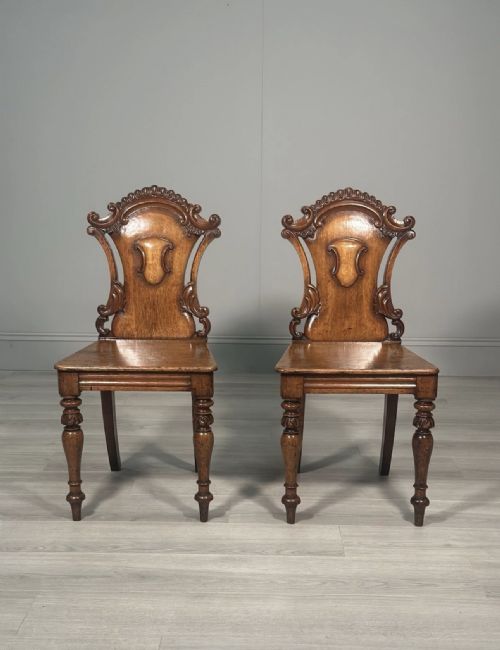


Antique Hallway Chair Pair
An antique hallway chair pair brings architectural presence and formal design straight from the entrance passage into everyday interior spaces.
Antique Hallway Chair Pair
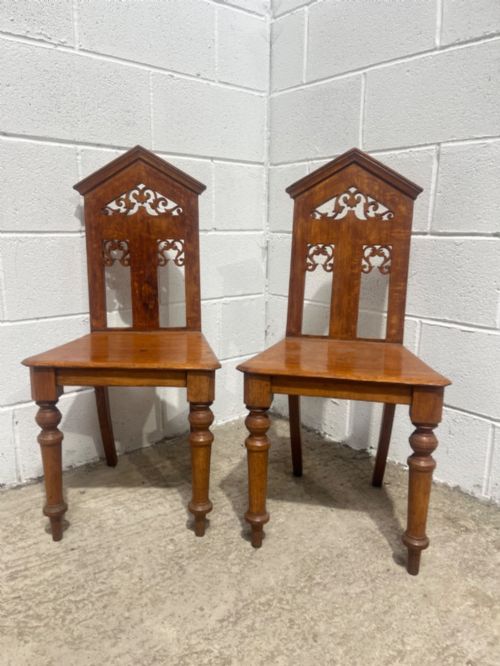
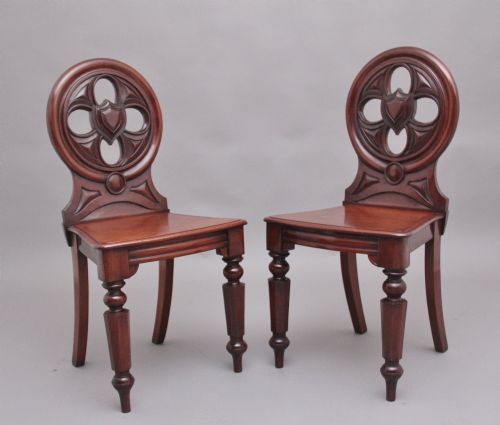
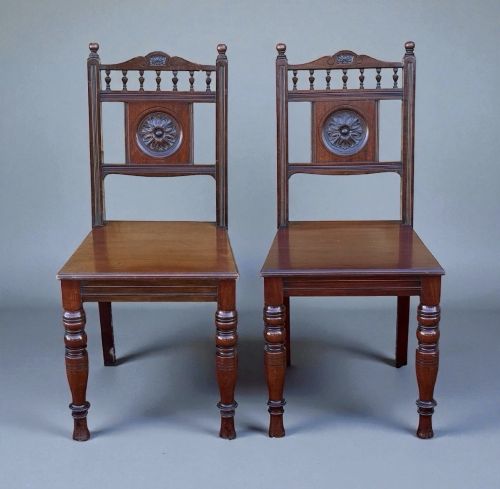
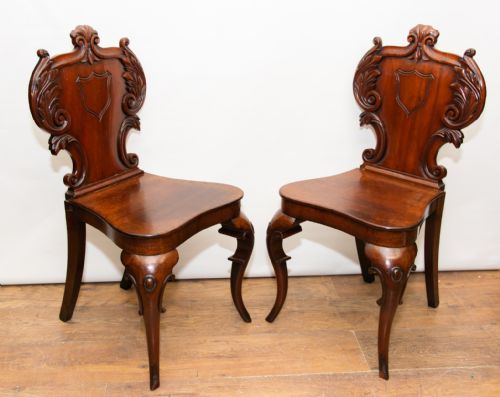
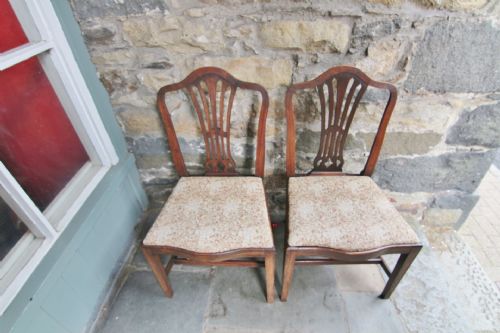
An antique hallway chair pair consists of matching seats designed specifically for placement in entrance halls, corridors and landings. These pieces primarily function as architectural furniture rather than casual lounging seats, often featuring rigid upright proportions and solid timber construction. The most common examples appearing on this page belong to the nineteenth century, spanning Victorian and Regency periods.
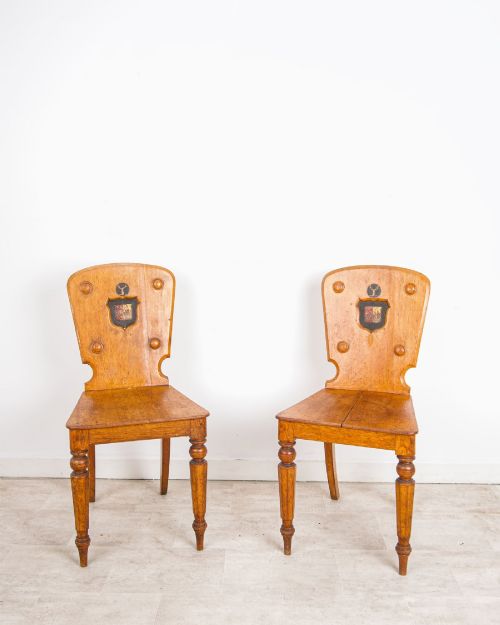
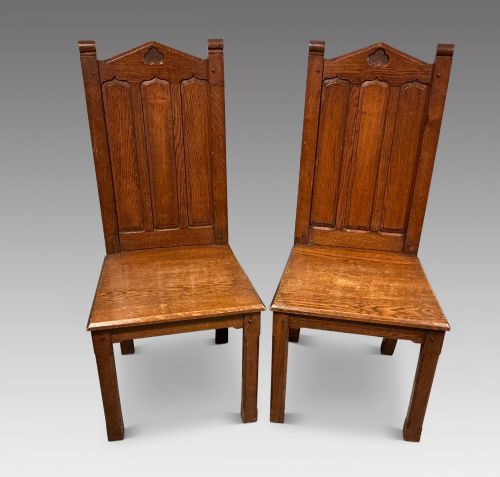
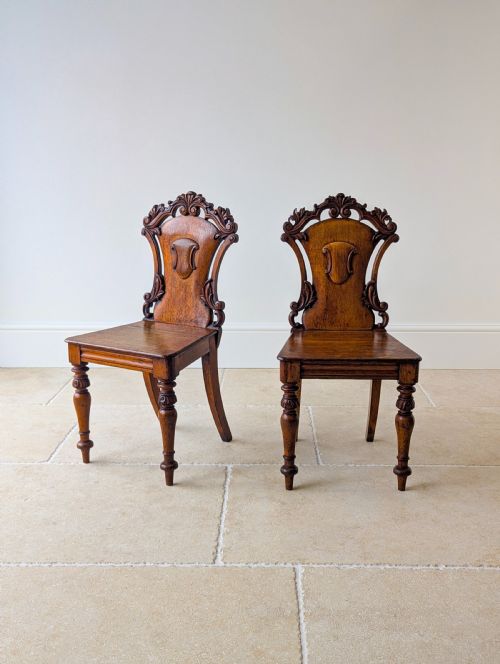
The physical forms include traditional hall chairs with solid carved wood seats, heraldic shield backs and side chair variations. Makers often incorporated shell motifs, cabriole legs and Gothic Revival details into the frames. Buyers encounter these matching sets originating from English, Scottish and Italian workshops across various decades of the 1800s.
Distinctions in craftsmanship and design
The hierarchy of quality rests primarily on the depth and precision of the carved decoration on the backrests and legs. Pieces featuring crisp heraldic shields, unusual structural forms or attributed maker designs stand distinctly above plain, utilitarian counterparts.
Selection of timber grade and the integrity of the joinery further separate ordinary production from superior examples. A cohesive pair displays matching grain patterns and symmetrical carving that reflects thoughtful workshop coordination from the outset.
Current listings feature oak and mahogany predominantly, spanning the Regency and Victorian eras with various Gothic Revival details.
Gillows
The Antique Hallway Chair Pair Glossary
- Hall Chair
- A rigid, upright wooden seat designed for entryways and corridors rather than prolonged sitting. These items typically feature solid wood seats and decorative backrests.
- Shield Back
- A chair back shaped like a heraldic shield, frequently carved with crests or family emblems. This design became popular during the Regency and Victorian eras.
- Gothic Revival
- An architectural and decorative style drawing inspiration from medieval design. Pieces in this tradition incorporate pointed arches and heavy carved tracery.
- Cabriole Leg
- A furniture leg that curves outward and then tapers inward, mimicking animal legs. This form appears on various Victorian side and hall chairs.
- Window Seat
- A long bench or double chair designed to fit within a window recess. These forms occasionally appear alongside standard hall chair pairs in nineteenth century inventories.
Antique Hallway Chair Pair: Frequently Asked Questions
What is an antique hallway chair pair?
An antique hallway chair pair is a matching set of two rigid wooden seats built for entrance passages during past centuries. They served both as decorative statements and practical resting places for visitors.
These pieces typically feature upright backs and solid wood seats designed to discourage slouching. Their formal appearance set the tone for the rest of the home upon entry.
How were antique hall chairs used?
Antique hall chairs were placed in grand hallways, vestibules and corridors to provide brief seating for callers waiting to be announced. They spent most of their time stationed against walls rather than gathered around tables.
Servants and visitors used them while waiting, but their primary purpose was aesthetic display. The bold carvings and coats of arms advertised the lineage or taste of the homeowner.
How do I live with hall chairs?
Living with hall chairs involves placing them in spaces where their upright profile and decorative backs can be fully appreciated. They work well in narrow hallways, landings or as accent pieces in larger living rooms.
Because these chairs are firm and unpadded, they suit brief seating rather than hours of relaxation. Pairing them with a small console table creates a balanced focal point in an entryway.
How do I tell Victorian from Regency chairs?
Regency hall chairs generally display classical restraint, clean lines and Regency motifs such as reeding and neoclassical curves. Victorian examples often lean towards heavier proportions and elaborate Gothic Revival or Aesthetic Movement ornamentation.
Examining the wood carving and overall silhouette helps clarify the period. Victorian pieces frequently incorporate more robust shields and deep relief carving compared to earlier Regency designs.