



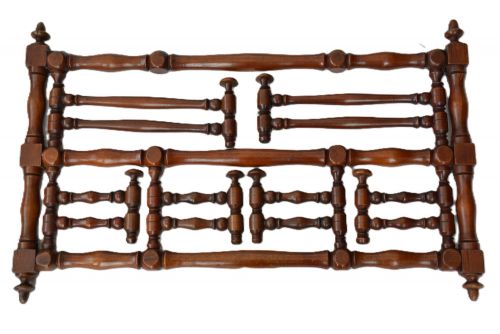

Antique Hall Hook
An antique hall hook provides practical hanging space for coats and hats while establishing a welcoming atmosphere in an entranceway.
Antique Hall Hook
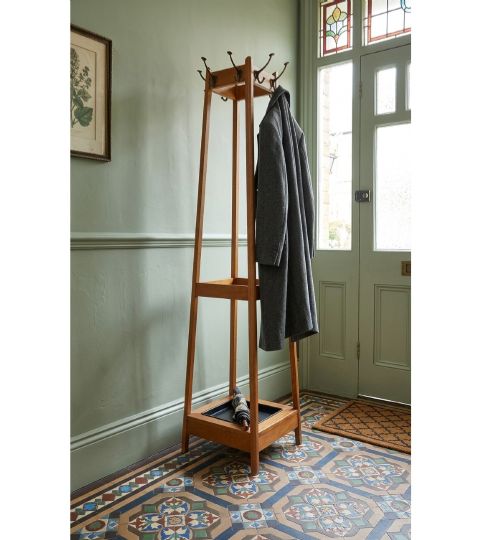
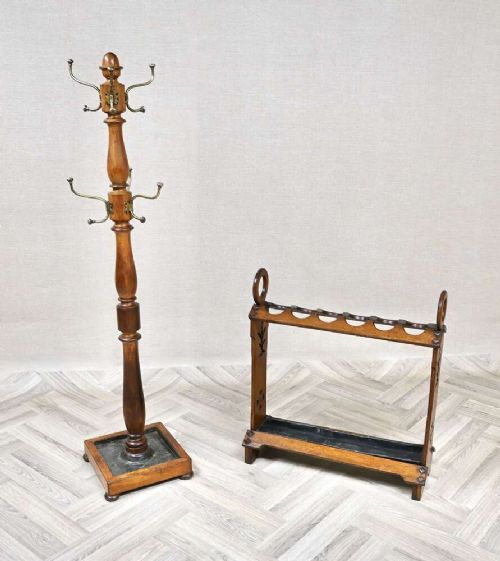
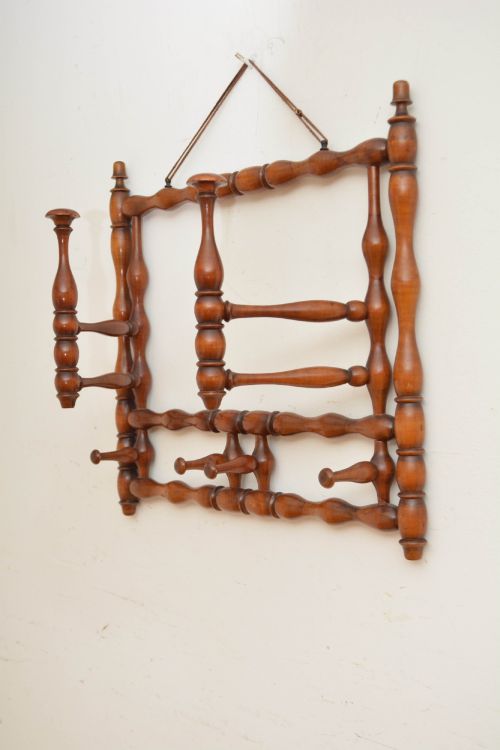
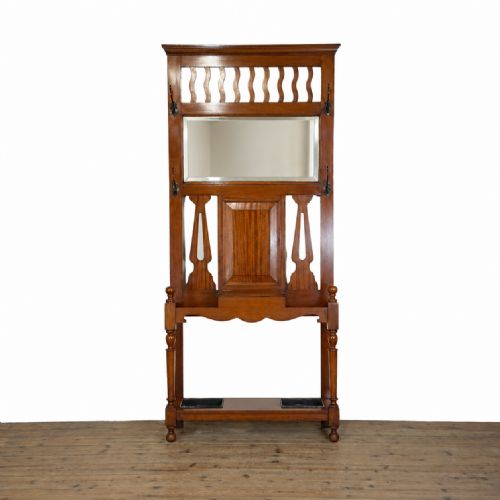
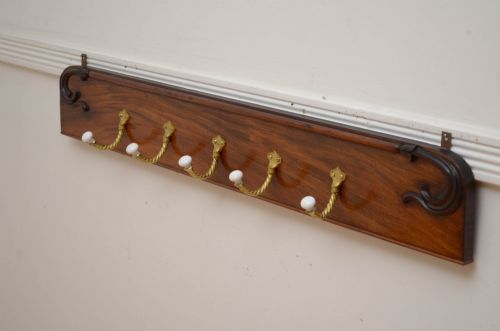
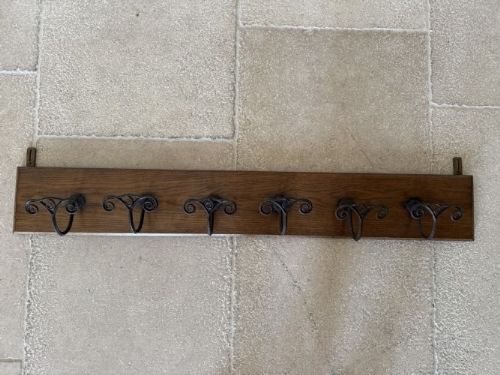
An antique hall hook serves as a functional piece of entranceway furniture, appearing either as an individual wall-mounted hook, a linear coat rack, or part of a larger hall stand. Pieces span the nineteenth and early twentieth centuries, encompassing Victorian, Edwardian, Arts and Crafts, and Art Deco styles.
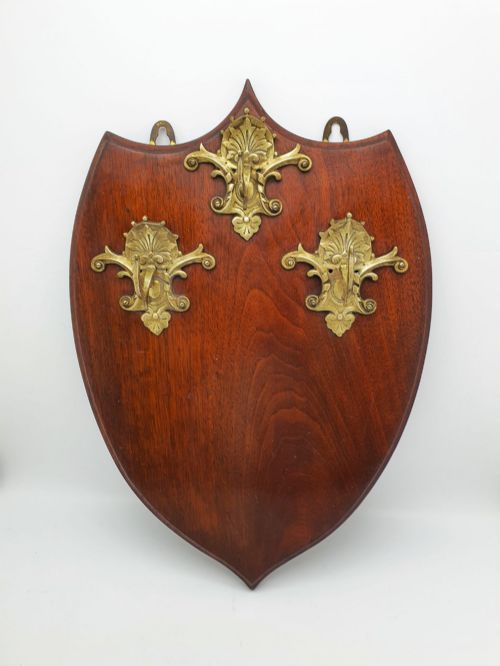
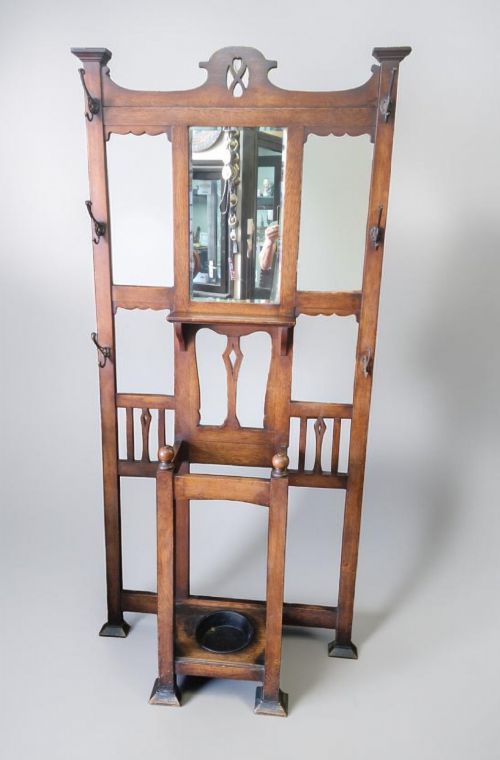
Wall-mounted brass and wood rails dominate the selection, alongside substantial oak and mahogany hall stands that incorporate umbrella holders and bevelled mirrors. These items reflect the domestic routines of period hallways, where coats, hats, and sticks required an orderly place near the front door.
The materials and forms vary from simple bentwood designs to elaborate carved walnut and bronze assemblies. Buyers encounter both compact wall hooks for narrow corridors and large freestanding furniture pieces intended for spacious entrance halls.
Materials and construction
Cabinetmakers utilised hardwoods such as oak, mahogany, and walnut to build robust backboards and frames capable of withstanding heavy daily use. These woods were often polished, carved, or ebonised to suit prevailing interior aesthetics.
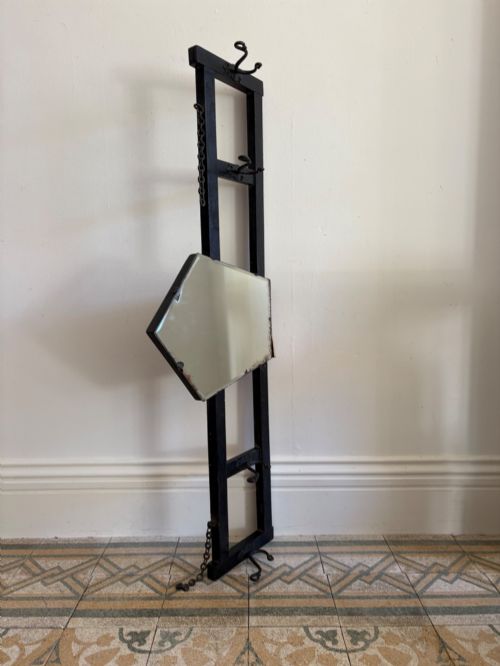
Metal components, including brass, bronze, and wrought iron, form the structural hooks and hanging rails. Ceramic elements occasionally appear as decorative inserts or hook tips, while integrated mirror plates feature deep bevelled edges fixed into timber frames.
Antique Hall Hook Retail Price Guide 2026
Typical asking prices for hall hook among the pieces listed under this phrase on Sellingantiques today, from the lower quarter to the upper quarter. They describe what is for sale here now, not the wider market.
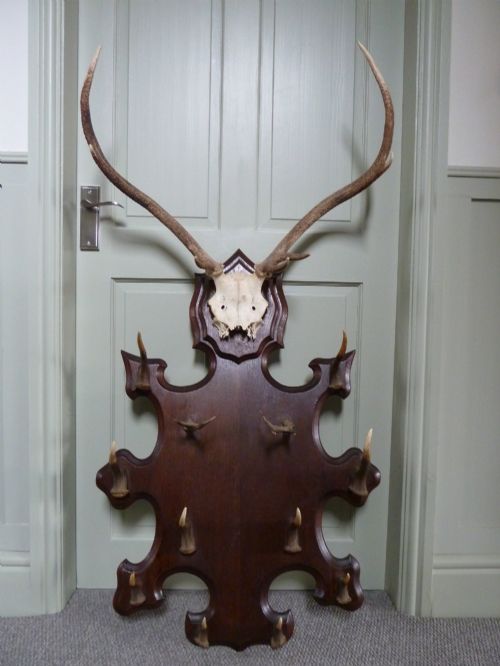
Stags' horns and horseshoe frames offered Victorian households a rustic way to hang their riding coats.
Defining craftsmanship and distinction
Quality rests in the substantial weight of the brass or bronze hardware and the integrity of the timber framing. Superior examples feature cast metal hooks securely fixed to dense hardwoods, whereas simpler items rely on lighter woods and pressed sheet metal.
Jas. Shoolbred
The Antique Hall Hook Glossary
- Hall stand
- A freestanding piece of hallway furniture combining coat hooks, a mirror, and umbrella stands. These multifunctional units were central to Victorian and Edwardian entranceways.
- Bentwood
- Wood heated with steam and bent into curved forms. This technique produced lightweight yet strong coat racks and hooks during the nineteenth century.
- Aesthetic Movement
- A late nineteenth-century design style focusing on visual beauty rather than narrative or moral function. Pieces from this movement often feature ebonised wood and polished brass.
- Bevelled plate
- A mirror glass with angled edges that create a framed, prismatic border. This feature indicates higher quality glass production in period mirrors.
Antique Hall Hook: Frequently Asked Questions
How do I mount a heavy coat rack safely?
Heavy wooden coat racks require secure fixing into wall studs or solid masonry using appropriate screws and wall anchors. The substantial weight of oak and mahogany, combined with the downward pull of wet garments, demands robust wall support.
Distributing the load evenly across multiple fixing points prevents the rack from pulling away from the plaster over time. Ensuring the wall brackets or screw holes are properly aligned with internal structural supports is essential.
What is the difference between a hall tree and a hall stand?
A hall stand typically incorporates a vertical wooden backboard, a mirror, and lower compartments for umbrellas and walking sticks. These pieces are designed to sit flush against a hallway wall.
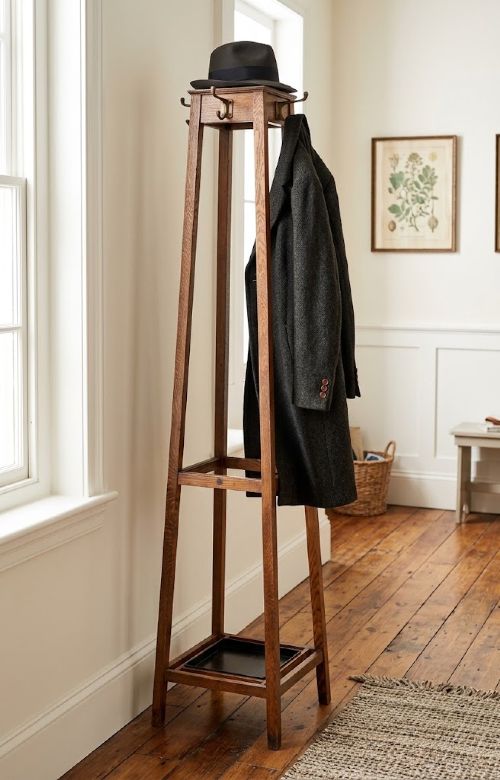
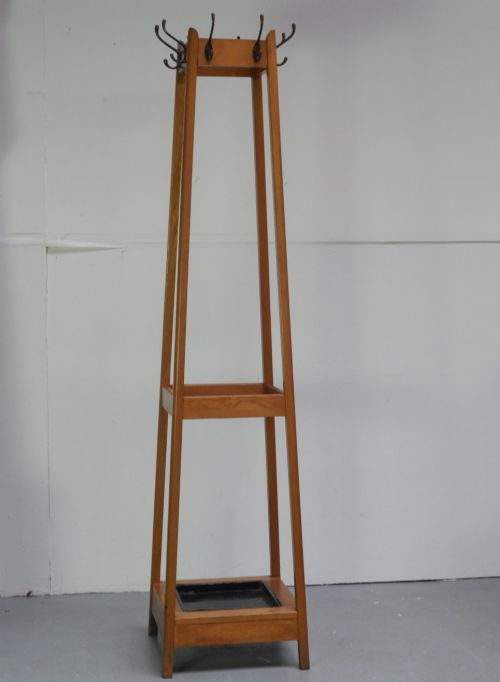
A hall tree often refers to a freestanding vertical post with radiating arms at the top for hats and coats. Both terms describe nineteenth and early twentieth-century entrance furniture designed for cloakroom organisation.
How should I clean antique brass hooks?
Antique brass hooks benefit from gentle dusting with a soft cloth to preserve their aged appearance. Aggressive metal polishes can strip away centuries of accumulated patination and diminish the character of the piece.
Applying a microcrystalline wax can protect the metal surface from moisture without altering its colour. Maintaining the original finish preserves both the historical integrity and the visual depth of the metalwork.
How do I identify an Edwardian hall hook?
Edwardian hall hooks and stands often feature lighter oak or walnut timbers compared to the darker, heavier ebonised woods of the Victorian era. The designs tend to reflect simpler geometric lines influenced by the Arts and Crafts movement.
Hardware from this period frequently utilises polished brass or copper with restrained decorative motifs. These pieces date from the early twentieth century and suit both traditional and contemporary interiors.