

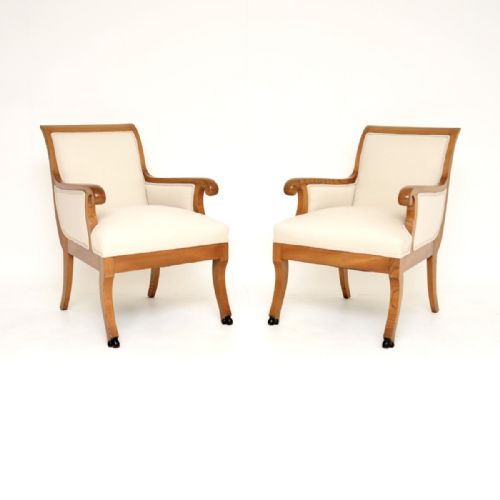


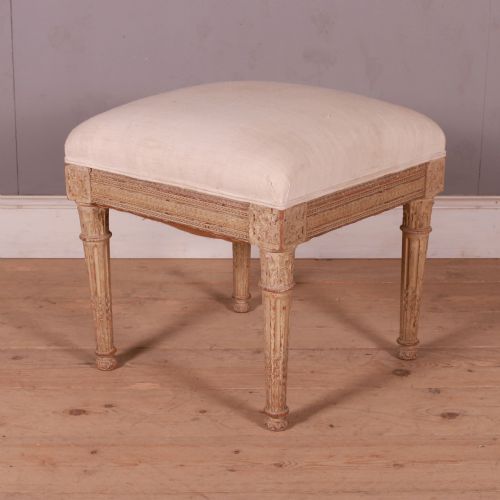
Antique Gustavian Seating
Antique gustavian seating brings northern light and restrained neoclassical line into a room through pale painted frames and tailored linen.
Antique Gustavian Seating
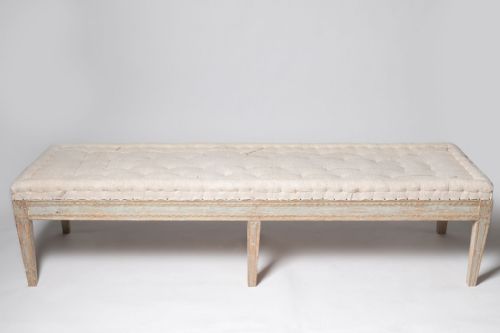
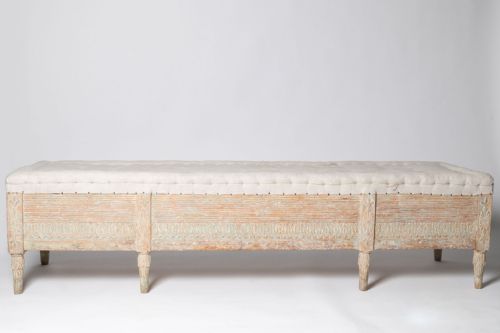
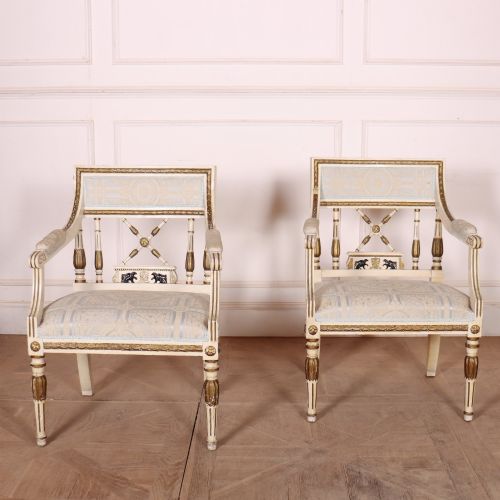
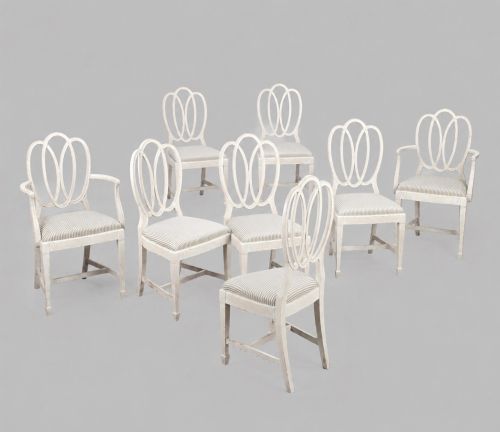
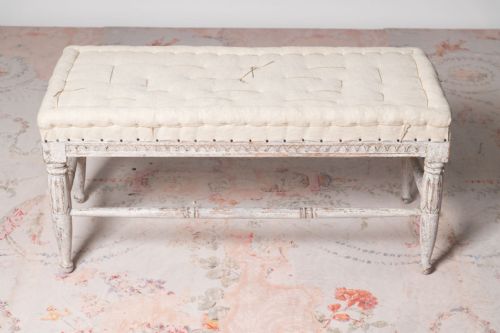
When you search for antique gustavian seating, you encounter forms developed in Sweden during the late eighteenth century under French influence, alongside later nineteenth and twentieth century revivals. The selection spans dining chairs, armchairs, benches, highchairs, settles, sofas, and settees.
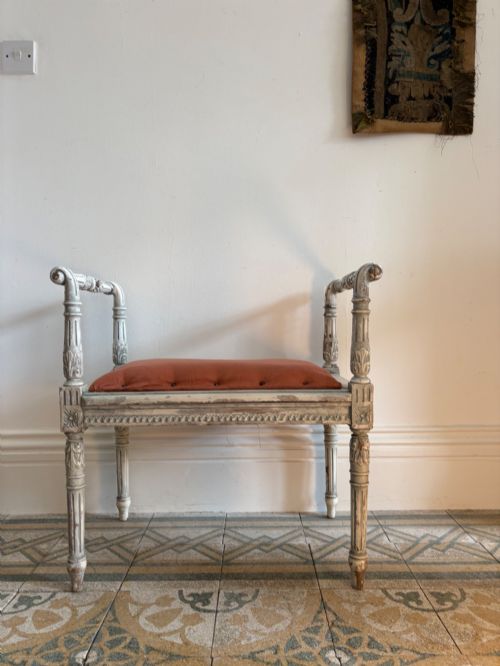
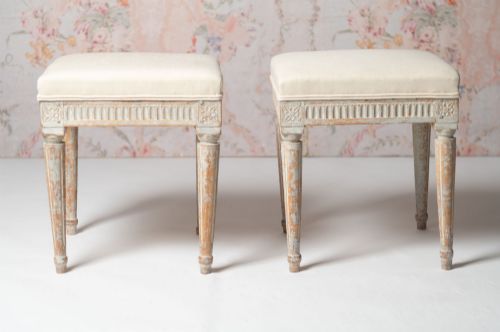
The version you are most likely to meet on this page is the painted wooden stool or armchair originating from Sweden, often dating to the nineteenth century or the eighteenth century. These pieces combine simple Scandinavian country utility with sophisticated neoclassical restraint.
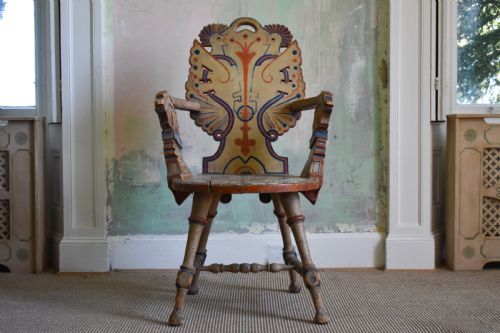
Makers adapted classical motifs such as fluted legs and carved rosettes into scaled-down domestic furniture suitable for pale Nordic interiors. Surviving examples display varying adherence to strict neoclassical design, ranging from formal giltwood settees to rustic folk art armchairs.
Markers of distinction
The distinction between ordinary and exceptional pieces rests upon the crispness of the hand-carved neoclassical detailing and the integrity of the original paint surfaces. Chairs retaining authentic early paint layers command greater attention than those with heavy modern overpainting.
Proportion and structural harmony also separate standard seating from finer examples, particularly in the graceful sweep of an armchair's arm or the balanced turning of a stool's legs. The refinement of the timber selection beneath the paint further elevates certain benches and settees.
Antique Gustavian Seating Retail Price Guide 2026
Typical asking prices for gustavian seating among the pieces listed under this phrase on Sellingantiques today, from the lower quarter to the upper quarter. They describe what is for sale here now, not the wider market.
Listings feature pine, elm, and giltwood frames finished in paint and linen across the eighteenth and nineteenth centuries.
The Antique Gustavian Seating Glossary
- Gustavian
- The Swedish neoclassical style spanning the late eighteenth century, characterised by restrained symmetry, fluted columns, and pale painted finishes. It draws inspiration from Louis XVI design adapted to northern tastes.
- Settle
- A wooden bench featuring high backs, solid arms, and often a storage compartment beneath the seat. These pieces provided draught-proof seating in traditional Swedish interiors.
- Giltwood
- Timber treated with a thin layer of gold leaf applied over a prepared gesso ground. This luxurious finish appears on formal empire settees.
- Neoclassical
- A style reviving classical Greek and Roman architectural forms through straight lines, symmetry, and classical motifs like urns and swags. It forms the foundation of gustavian design.
Antique Gustavian Seating: Frequently Asked Questions
How do I identify true gustavian style?
Authentic pieces exhibit restrained neoclassical proportions, fluted legs, and pale painted wood surfaces rather than heavy dark varnishes.
Look for subtle hand-carved rosettes and linear framing that reflect eighteenth-century Swedish interpretations of French court furniture.
Where were these pieces used?
These seats belonged in the parlours, dining rooms, and halls of Swedish manor houses and rural homesteads alike.
Lighter frames allowed chairs and small stools to be moved easily around the room to catch the daylight.
How do I care for painted wood?
Protect fragile painted finishes by dusting gently with a dry, soft cloth and avoiding harsh chemical cleaning products.
Keep the timber away from direct heat sources and excessive moisture to prevent the historic paint from flaking.
What is a settle bench?
A settle is a high-backed wooden bench designed to block cold draughts in traditional northern European domestic spaces.
Many examples feature solid pine construction and integrated box seating beneath the lift-up bench top.