

Antique Green Stool
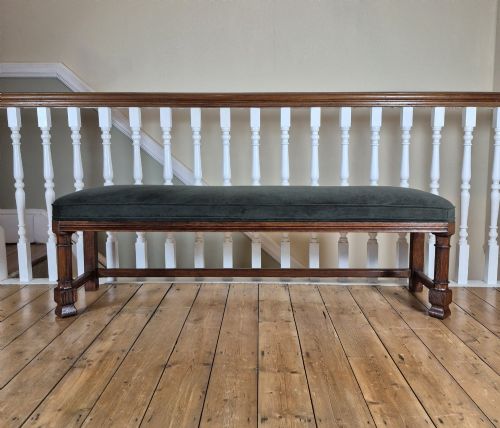
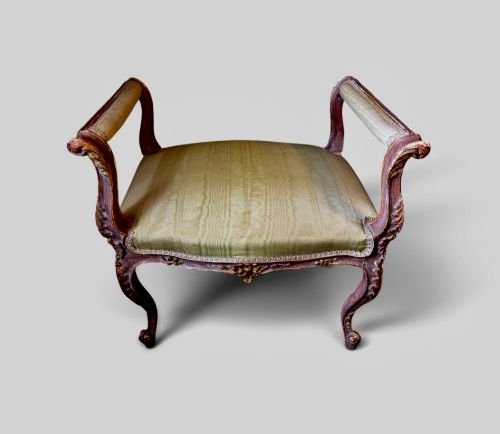
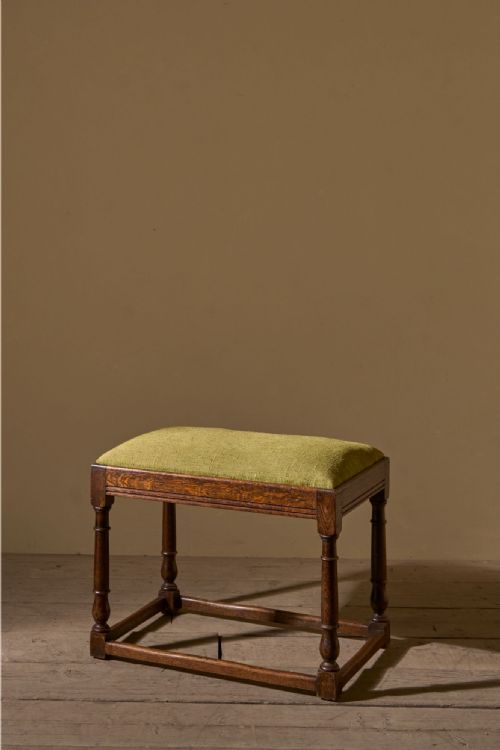
An antique green stool brings a distinct splash of historic colour and character to a room through original paintwork or rich upholstery.
Antique Green Stool
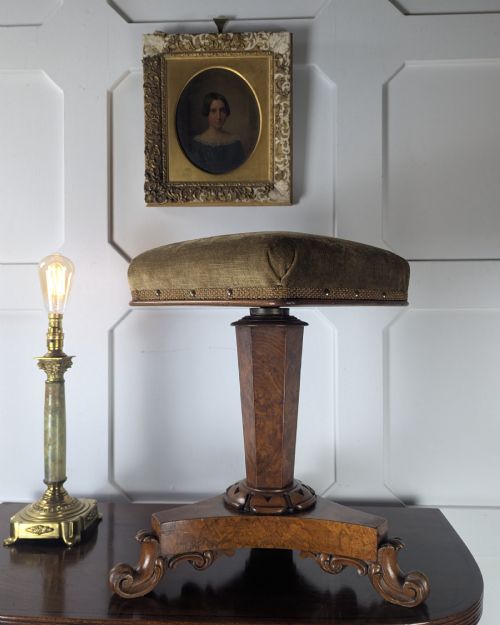
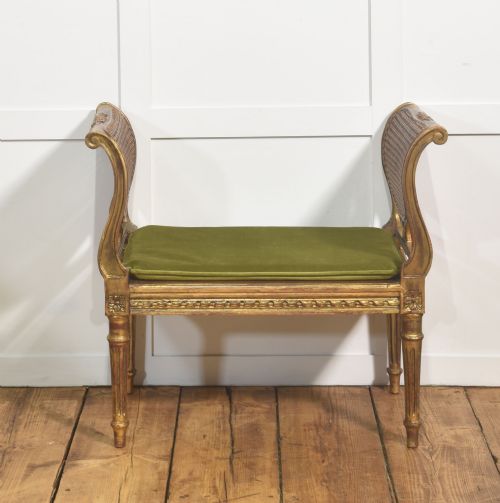
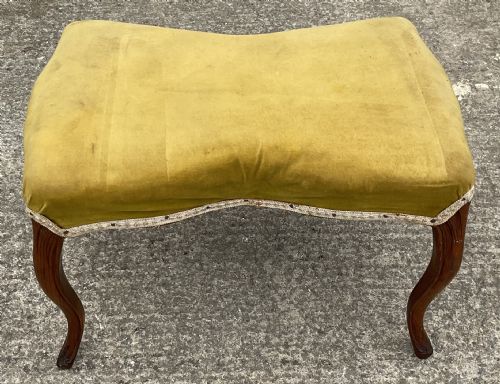
An antique green stool covers a diverse range of low seating forms, from simple milking stools coated in original green paint to formal upholstered footstools and piano stools. When searching for this phrase, buyers encounter everything from humble rustic timber seats to refined Regency and Victorian parlour furniture.
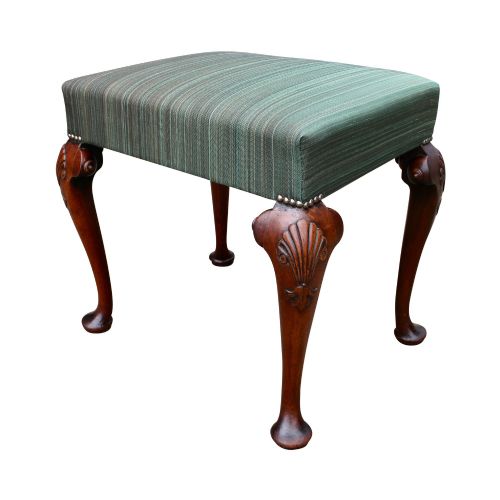
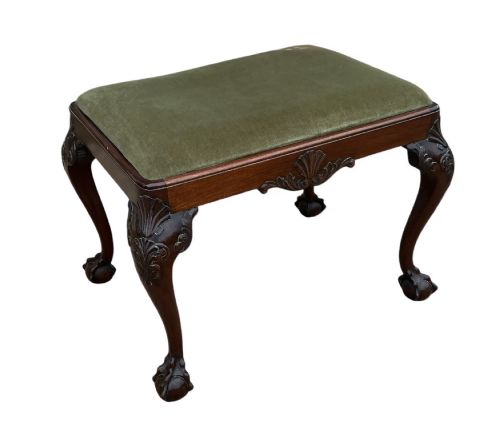
The green finish on these pieces typically appears either as surviving historic surface paint on vernacular wooden frames or through velvet, leather, linen, and cloth upholstery. Pieces span the nineteenth and early twentieth centuries, drawing on traditional styles such as Queen Anne, Chippendale, and Gothic Revival.
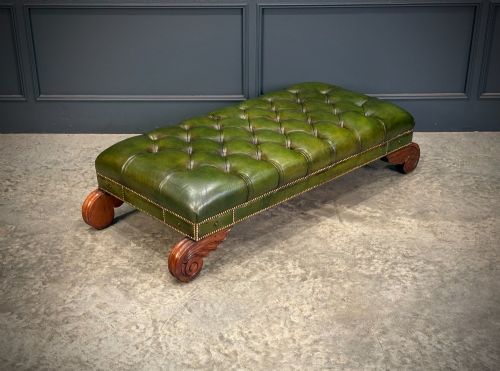
Footstools, window seats, and piano stools dominate the selections, alongside occasional milking stools and dressing table benches. The most frequently met versions combine walnut or mahogany frames with green textile coverings or retain traces of aged green pigment on elm, oak, and beech structures.
How they were made
Makers constructed these frames from hard timbers including mahogany, walnut, oak, and rosewood, often employing traditional joinery such as mortise and tenon. Carved details, spiral turnings, and fluted legs appear on formal seating, while simpler rustic examples utilise basic turned or shaped supports.
Upholstered variants rely on traditional stuffing materials secured beneath fabrics like velvet, leather, needlework, and heavy linen. Painted surfaces on vernacular milking stools and benches consist of layered historic oil paints that show natural wear over decades of use.
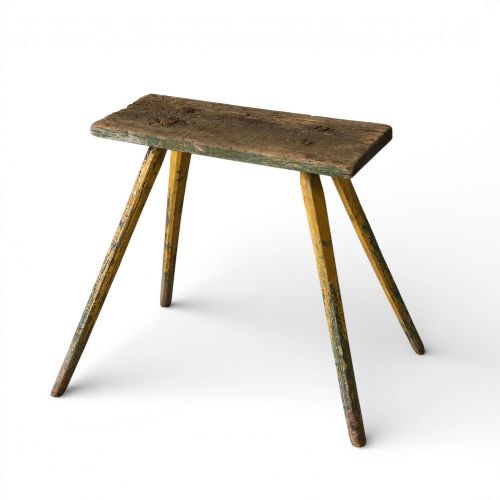
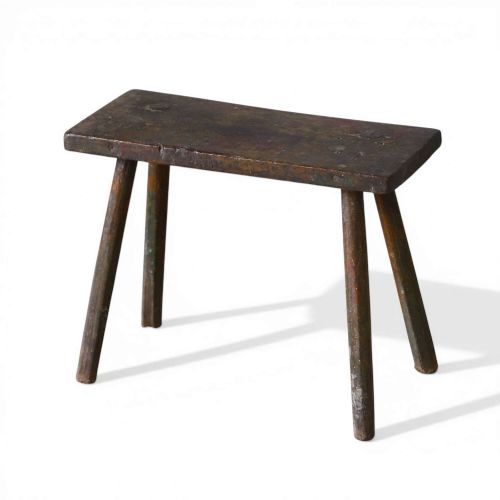
A rustic milking stool retains centuries of dairy splashes beneath its worn green coat.
What varies in quality
Quality rests in the crispness of the timber carving and the structural integrity of the frame joints. Superior examples display well-proportioned lines, balanced proportions, and high-grade cabinet woods rather than utilitarian construction.
The integrity of the surface finish dictates value in painted pieces, where untouched original green paint holds more interest than later overpainting. For upholstered forms, the choice of covering materials and the execution of traditional padding separate standard utility seating from refined parlour pieces.
The Antique Green Stool Glossary
- Gout stool
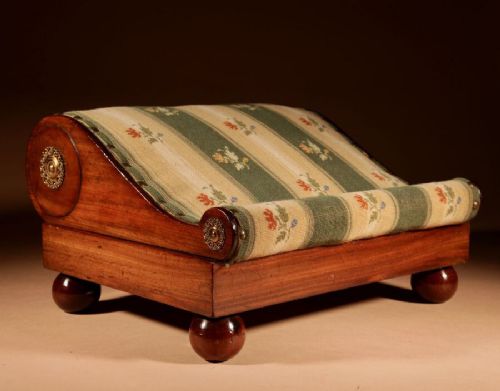
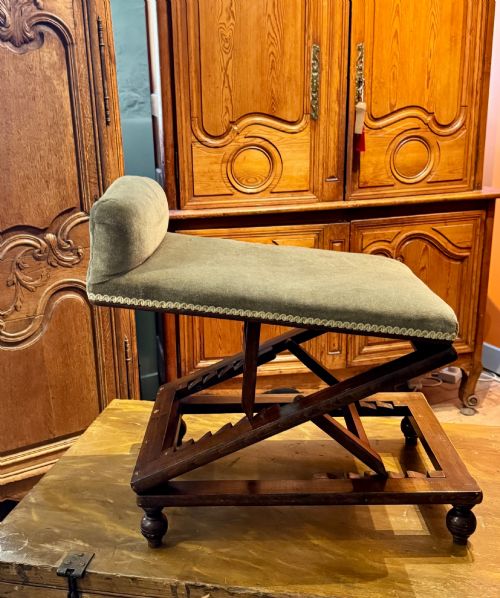
- A specialised metamorphic footstool featuring an adjustable inclined panel designed to support a foot affected by gout. These nineteenth-century examples often utilise stained beech or mahogany.
- Piano stool
- An adjustable seat designed for keyboard players, frequently featuring a swivel mechanism or a screw thread to alter the height. They appear in walnut, mahogany, and ebonised finishes.
- Milking stool
- A simple, three-legged or four-legged vernacular seat used by agricultural workers. These functional items frequently survive with remnants of original green paint.
- Window seat
- An elongated stool or low bench designed to sit within a window recess. They often incorporate decorative carved wooden frames and upholstered top surfaces in materials like leather or silk.
- Joint stool
- A sturdy wooden stool constructed using mortise and tenon joinery held together by wooden pegs. Early examples date from the oak period and display rigid rectangular proportions.
Antique Green Stool: Frequently Asked Questions
How do I clean original green paint?
Original painted surfaces require gentle dusting with a dry microfibre cloth to remove loose debris without damaging the pigment. Avoid liquid cleaners and harsh chemical solvents that might strip historic layers.
Wax polishing can help preserve exposed timber areas, but painted sections should remain untreated unless assessed by a professional conservator.
Can I reupholster an antique footstool?
Reupholstering is common for pieces with worn or damaged fabric, provided the structural frame remains sound. Traditional materials such as horsehair and webbing should be retained where possible to maintain authenticity.
Choosing green leather, velvet, or linen helps preserve the visual theme of the piece while ensuring modern domestic comfort and usability.
How do I identify a Regency stool?
Regency seating typically exhibits classical influences, featuring sabre legs, fluted supports, or scroll ends inspired by ancient Greek and Roman designs. Mahogany and rosewood are the primary woods used during this era.
Buttoned leather upholstery and bold green colour schemes frequently accompany these formal nineteenth-century frames.