



Antique Gold Spoons
Antique gold spoons are principally silver-gilt flatware items that bring rich gilt surfaces to the table.
Antique Gold Spoons
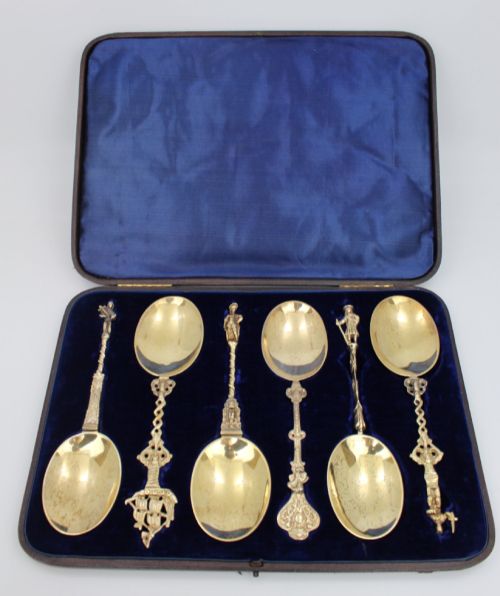
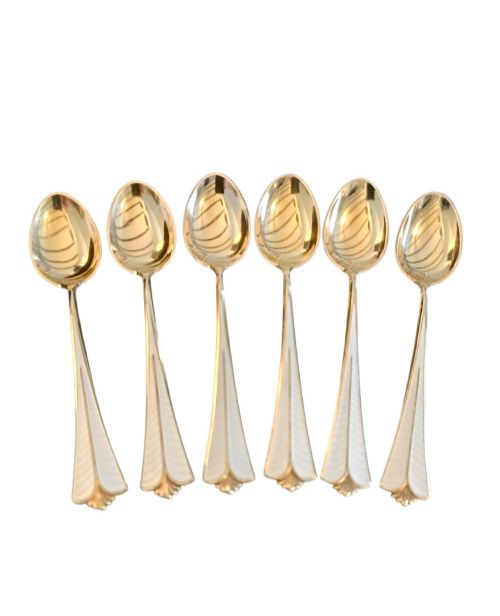
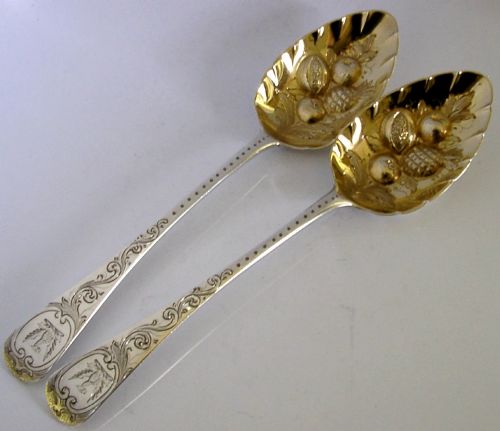
Antique gold spoons comprise silver-gilt items designed for serving, sifting, or dining. These pieces appear as cased sets, single serving pieces, and smaller teaspoons forged across the Georgian, Victorian, and later periods.
The varieties met on this page range from solid silver gilt baptism spoons to delicate cased Apostle spoons and enamelled tea services. Makers employed silver gilt finishes to achieve a rich gold appearance on sterling silver and solid silver bases.
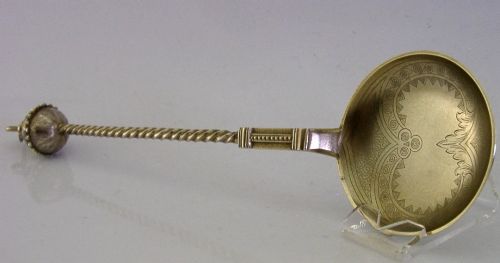
The broader selection includes serving spoons, sifter spoons, and coffee spoons spanning styles from Arts & Crafts to Georgian and Victorian designs. Buyers encounter both single statement pieces and complete cased sets originating from English and continental workshops.
How they were made
Makers utilised sterling silver and solid silver as the primary base metals for these spoons, applying heavy gold gilt washes known as silver-gilt. Certain pieces incorporate detailed enamel work alongside the silver-gilt structure to add contrasting colour and depth.
Craftsmen shaped the bowls and stems through traditional forging and casting methods, often finishing surfaces with hand-engraved crests or applied cast motifs. Cased presentation sets feature fitted wooden boxes lined with velvet or fabric to protect the delicate gilt and enamel work.
Antique Gold Spoons Retail Price Guide 2026
Typical asking prices for gold spoons among the pieces listed under this phrase on Sellingantiques today, from the lower quarter to the upper quarter. They describe what is for sale here now, not the wider market.
Listings feature silver-gilt and sterling silver items alongside enamel finishes spanning the Georgian, Victorian, and mid-twentieth-century periods.
What varies in quality
The depth and preservation of the gold gilt wash dictate much of the visual character across these examples, with untouched surfaces retaining a rich warmth. Maker marks and clear hallmarks stamped into the silver add verifiable provenance and distinguish master workshops from standard production.
The crispness of cast details on Apostle figures or engraved family crests separates standard utility flatware from pieces commissioned with artistic ambition. Complete original presentation cases add notable substance to cased sets of spoons.
Deakin & Francis·David Andersen·Harrods London
The Antique Gold Spoons Glossary
- Silver-gilt
- Sterling silver or solid silver that has been coated with a thin layer of pure gold. This technique provides the rich appearance of solid gold while maintaining structural strength.
- Apostle spoon
- A spoon featuring the figure of an Apostle cast on the terminal of the handle. These traditional presentation pieces often appear in matched cased sets.
- Sifter spoon
- A flatware piece characterised by a pierced or perforated bowl designed for dusting sugar over food. These spoons frequently feature decorative parcel-gilt finishes.
- Hallmark
- A series of official marks stamped onto precious metals indicating the standard of purity, the assay office, and the year of manufacture. These stamps allow collectors to date pieces accurately.
- Caddy spoon
- A short-handled spoon specifically designed for measuring loose tea leaves from a caddy. They often showcase decorative gilt bowls and enamelled handles.
Antique Gold Spoons: Frequently Asked Questions
What are silver-gilt spoons?
Silver-gilt spoons are solid silver or sterling silver items coated in a layer of gold. They offer the luxurious visual warmth of gold while utilising silver as the structural base metal.
This method was widely utilised across the Georgian and Victorian eras for decorative flatware, dessert services, and presentation pieces.
How do I care for antique gilt spoons?
These pieces require gentle handling to preserve the delicate gold wash over the silver base. Avoid abrasive cleaning pastes and modern chemical dips that can strip the gilt surface.
Store cased sets in their original fitted boxes away from direct sunlight and damp conditions to protect both the metal and any fabric linings.
Are cased spoon sets original?
Many sets remain in their fitted presentation boxes bearing retailer stamps or maker details from the period of production. Examining the interior velvet or fabric lining helps determine if the case corresponds to the spoons.
Fitted boxes protect the fragile parcel-gilt and enamelled surfaces from friction and tarnishing over decades of storage.
How do I identify the date of a spoon?
Official hallmarks stamped into the silver stem provide the most reliable evidence for dating a piece. These small punches indicate the assay office, the metal standard, and a specific date letter.
Stylistic markers such as the shift from Georgian engraving to Arts & Crafts or Edwardian forms also guide the collector in placing the piece within a decade.