


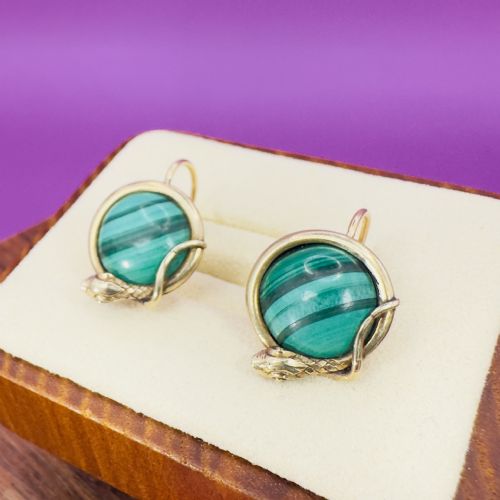


Antique Gold Serpent Jewellery
These antique gold serpent jewellery pieces capture the Victorians' fascination with coiled reptiles, offering tangible history in rings, bangles, and necklaces.
Antique Gold Serpent Jewellery
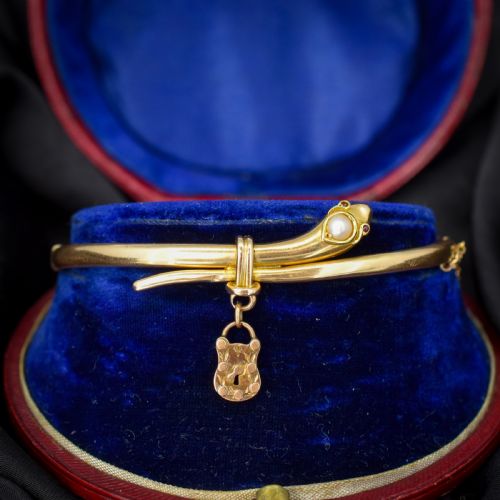
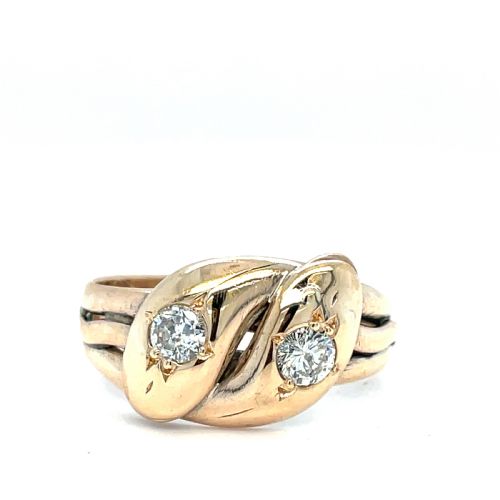
When you search for antique gold serpent jewellery, you encounter rings, bangles, and necklaces shaped as coiled snakes from the Victorian and Edwardian eras. These items draw heavily on symbolism, representing eternal love and wisdom through sinuous forms.
Materials and construction methods
Goldsmiths worked with 9ct, 15ct, and 18ct gold, alongside 18K yellow gold, casting or hand-fabricating the segmented bodies of the reptiles. Many pieces incorporate chased scale work to give a tactile texture along the band or bracelet.
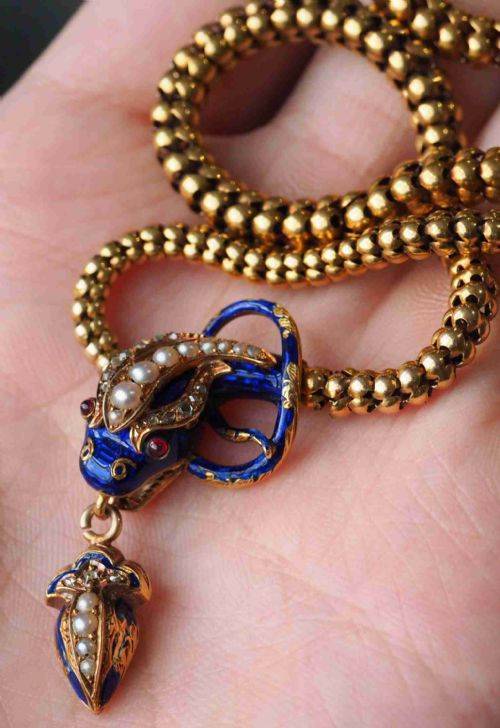
Gemstones such as old-cut diamonds, rose-cut diamonds, rubies, sapphires, garnets, and pearls form the eyes or adorn the heads. Enamel and malachite occasionally add colour and contrast to the metalwork.
Antique Gold Serpent Jewellery Retail Price Guide 2026
Typical asking prices for gold serpent jewellery among the pieces listed under this phrase on Sellingantiques today, from the lower quarter to the upper quarter. They describe what is for sale here now, not the wider market.
Listings span the Georgian period, the Victorian and Edwardian eras, through to the 1960s.
Judging the quality of serpent pieces
The quality and match of the set gemstones in the eyes and crown also dictate the grade of the piece. Well-chosen diamonds or natural rubies secured in robust claw or flush settings indicate a higher standard of manufacture.
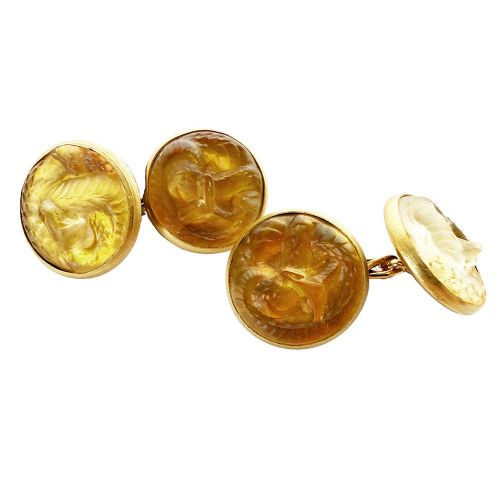
R Lalique
The Antique Gold Serpent Jewellery Glossary
- Ouroboros
- A circular motif depicting a serpent swallowing its own tail. This ancient symbol represents eternity and the cyclical nature of life.
- Old-cut diamond
- A hand-faceted diamond shape common in nineteenth-century jewellery. These stones possess smaller tables and open culets compared to modern brilliants.
- Rose-cut diamond
- A gemstone cut with a domed top and a flat base, featuring triangular facets. It yields a soft, subtle gleam under candlelight.
- Hallmark
- An official stamp struck into precious metals indicating the purity, assay office, and year of manufacture. British pieces frequently display these crucial diagnostic marks.
- Bangle
- A rigid bracelet that slips over the hand or opens via a hinge and clasp. Serpent bangles wrap the wrist with the head resting against the tail.
Antique Gold Serpent Jewellery: Frequently Asked Questions
What do snake rings mean?
Victorian snake rings symbolised eternal love and commitment, famously popularised by Queen Victoria's engagement ring. The coiled reptile signified an unbroken bond between partners.
Beyond romance, the serpent carried connotations of wisdom and rebirth. These sentiments made the motif a mainstream choice for gifts throughout the nineteenth century.
How do I date a gold snake ring?
Dating relies heavily on British hallmarks stamped inside the band, which reveal the assay office and year of creation. Stylistic cues, such as the cut of the diamonds and the gold purity, also narrow down the period.
Parks of the nineteenth century typically featured 18ct or 15ct gold with rose-cut stones, while later Edwardian examples often incorporated platinum-topped settings or specific hallmark date letters.
Are serpent bangles comfortable to wear?
Flexible wrap-around bangles and rigid hinged designs fit comfortably against the wrist when sized correctly. The smooth tapering tail and flat underbelly ensure the metal rests flat without catching on clothing.
Heavier gem-set versions sit securely due to their balanced weight distribution. Most designs accommodate daily wear if handled with reasonable care.
What gold purities should I expect?
British pieces from this category commonly utilise 9ct, 15ct, and 18ct yellow gold. Continental European examples frequently employ 18K gold standards.
The specific gold purity often reflects the era of manufacture and regional hallmarking laws. Lower purities like 9ct became more prevalent towards the end of the Victorian period and into the twentieth century.