



Antique Gold Cluster Bracelet
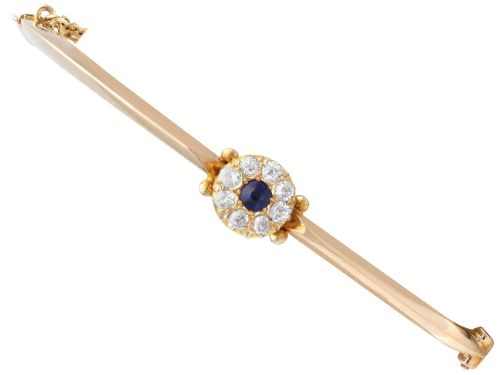
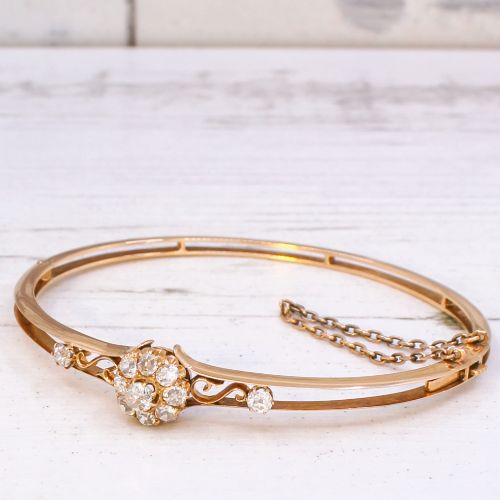
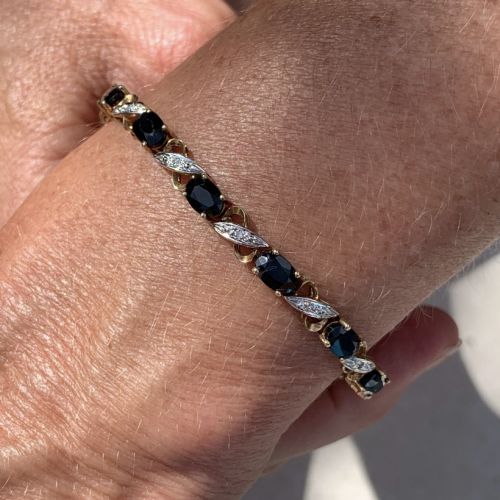
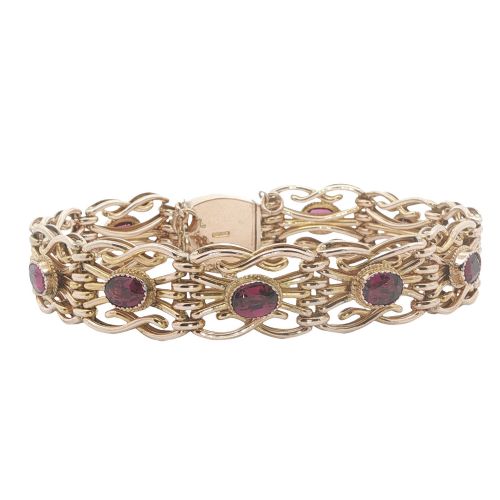
These antique gold cluster bracelets and bangles deliver period sparkle with sapphire, diamond, garnet and emerald set in yellow and rose gold.
Antique Gold Cluster Bracelet
An antique gold cluster bracelet brings together central gemstone clusters mounted on flexible band links or rigid bangle hoops. You meet these pieces most frequently in Victorian and Edwardian iterations dating from the nineteenth and early twentieth centuries.
The selections span distinct configurations, pairing gold with silver settings for the stones, alongside occasional charm configurations on split rings. The cluster formations showcase sapphires, diamonds, aquramarines, garnets, and emeralds set in yellow and rose gold.
Origins trace through nineteenth-century workshops into the Edwardian era, encompassing both delicate link bracelets and hinged bangles. Each format displays the characteristic cluster arrangement where a central stone is ringed by smaller gems.
Materials and construction
Maker workshops utilised fifteen-carat and nine-carat yellow and rose gold alongside eighteen-carat gold and platinum alloys. These metals form the structural bands and bezels, often backed or topped with silver to brighten the stone settings.
Gems including old cut diamonds, sapphires, almandine garnets, and natural saltwater pearls are secured within hand-worked mountings. The construction relies on traditional cluster grouping, mounting central stones directly amid concentric borders of smaller gems.
Antique Gold Cluster Bracelet Retail Price Guide 2026
Typical asking prices for gold cluster bracelet among the pieces listed under this phrase on Sellingantiques today, from the lower quarter to the upper quarter. They describe what is for sale here now, not the wider market.
Materials recorded across the inventory include fifteen-carat yellow gold, nine-carat rose gold, eighteen-carat gold, and platinum.
Assessing quality
Distinction across pieces rests on the weight and purity of the gold alongside the size and clarity of the set gemstones. Heavier fifteen-carat and eighteen-carat metalwork carries greater presence than lighter nine-carat alternatives.
The arrangement and match of stones dictate visual harmony, with old cut diamonds and coloured gems showing variation in carat weight and proportion. Superior examples balance substantial gemstone carat totals with robust structural mountings.
The Antique Gold Cluster Bracelet Glossary
- Cluster bracelet
- A wrist ornament featuring one or more grouped arrangements of gemstones set closely together. This design places a dominant central stone surrounded by a ring of smaller accent gems.
- Old cut diamond
- A vintage diamond faceting style characterised by a high crown, small table, and open culet. These stones were hand-cut to capture candlelight before the standardisation of modern brilliant cuts.
- Bangle
- A rigid solid or hinged circular bracelet that slips over the hand or fastens with a clasp. The pieces in this category often feature a cluster focal point mounted centrally on the hoop.
- Almandine garnet
- A deep red variety of garnet mineral utilised widely in nineteenth-century jewellery. These stones provide rich dark red tones within Victorian cluster designs.
- Split ring
- A circular metal connector formed from two overlapping coils, resembling a miniature key ring. This mechanism secures charms and pendants safely to a bracelet link.
Antique Gold Cluster Bracelet: Frequently Asked Questions
What is an antique gold cluster bracelet?
An antique gold cluster bracelet is a historic wrist ornament featuring gemstone groupings set in yellow or rose gold. These pieces date from the Victorian and Edwardian eras.
The design centres on a primary stone surrounded by smaller gems, mounted either on a flexible link chain or a rigid bangle hoop.
How do I date an antique bracelet?
Dating relies on examining the metal purity marks, gemstone cuts, and overall construction techniques. Victorian and Edwardian examples show distinct stylistic choices.
Old cut diamonds and specific gold standards like fifteen-carat typically point towards late nineteenth or early twentieth-century manufacturing periods.
Are these bracelets suitable for daily wear?
Historic jewellery requires careful handling due to age, delicate gemstone settings, and antique clasps. Regular checks help protect the integrity of the gold links and settings.
Many collectors reserve these pieces for special occasions to preserve the antique silver backings and delicate pearl or emerald components.
What stones appear in these clusters?
The cluster arrangements incorporate diamonds, sapphires, aquramarines, garnets, pearls, and emeralds. Old cut diamonds and almandine garnets appear frequently in the nineteenth-century selections.
Coloured gemstones are often paired with contrasting metal settings, such as silver over gold, to enhance their visual depth.