






Antique Glass Whisky Bottle
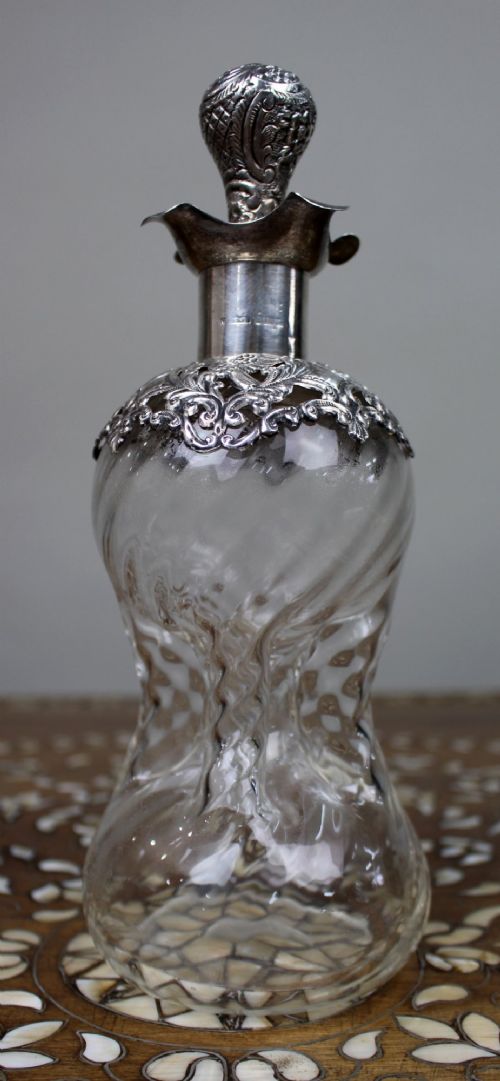
An antique glass whisky bottle holds the spirit of late nineteenth and early twentieth century hospitality, combining heavy lead crystal with secure silver mounts.
Antique Glass Whisky Bottle
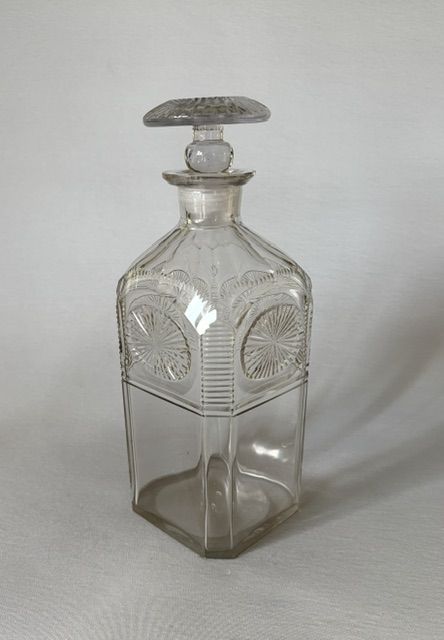
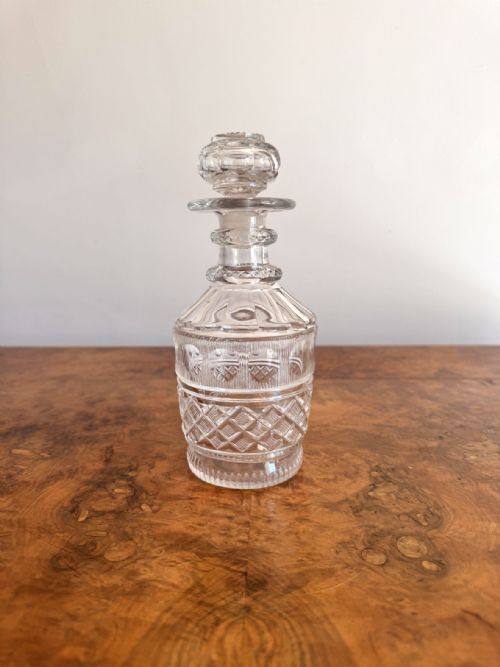
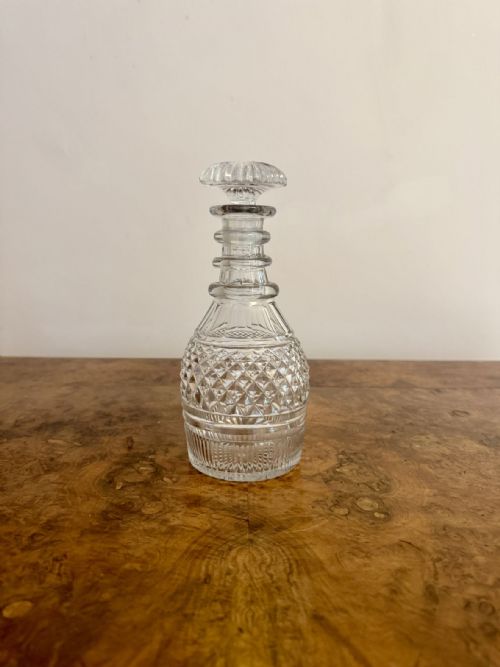
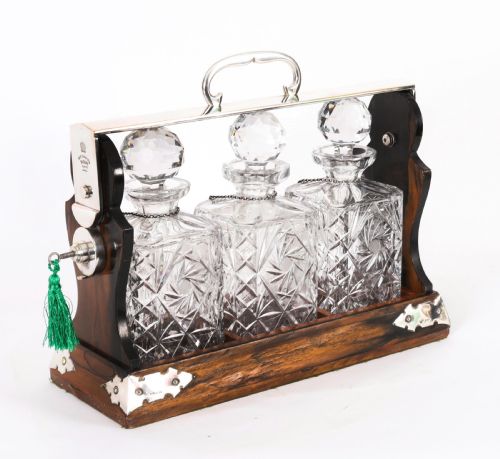
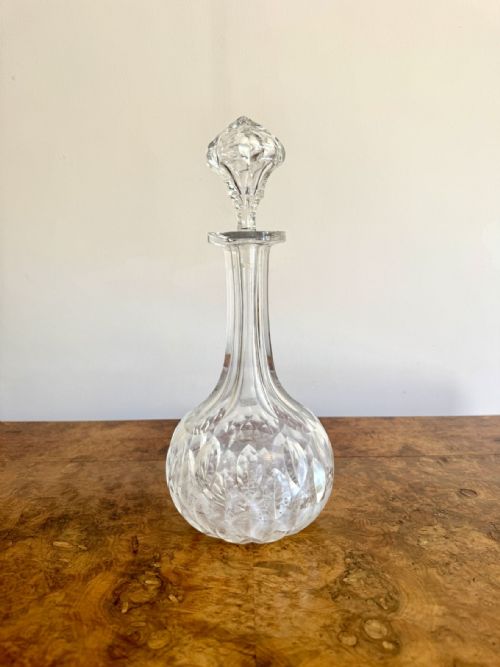
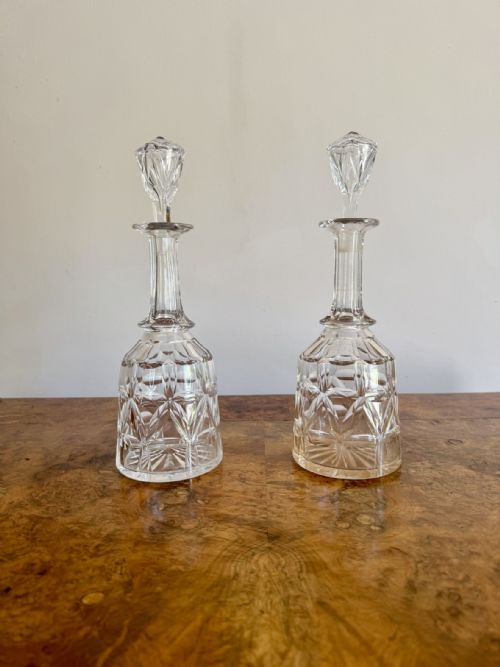
An antique glass whisky bottle typically takes the form of a heavy cut crystal decanter, a fitted tantalus, or a smaller noggin designed for the sideboard. These vessels span the Victorian, Edwardian, and George V periods, reflecting the formal dining habits of the nineteenth and early twentieth centuries.
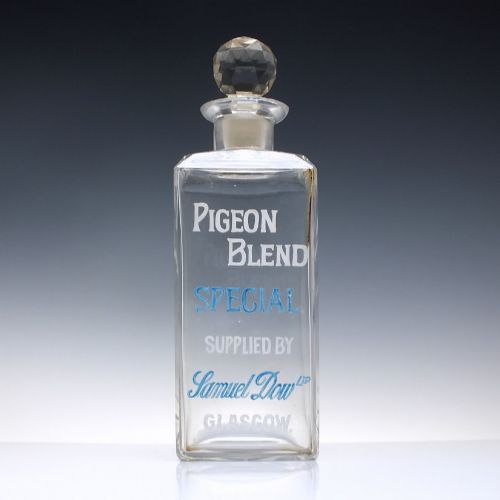
The buyer most frequently encounters Edwardian cut glass examples alongside Victorian oak-framed tantalus sets holding two or three bottles. Scottish regional variations appear with enamelled lettering for blends like Pigeon Blend or Cattos, while Bristol blue glass represents earlier Georgian production.
Completions such as matching silver labels, collars, and tots accompany many pieces, demonstrating how spirits were served in domestic settings. Oak, coromandel, and satinwood appear frequently in the frames and locking mechanisms designed to secure the contents.
Materials and Technique
Makers utilised heavy lead crystal and standard glass, shaped through blowing and deep mechanical or hand cutting to refract light across the sideboard. Facets, flutes, and bell shapes dominate the body of each bottle, requiring considerable skill from the glasscutter.
Mounts and collars rely on sterling silver or silver plate, often bearing clear hallmarked dates from Birmingham or London workshops. Oak, brass, and coromandel form the structural frames of tantalus sets, secured with working locks and keys.
Antique Glass Whisky Bottle Retail Price Guide 2026
Typical asking prices for glass whisky bottle among the pieces listed under this phrase on Sellingantiques today, from the lower quarter to the upper quarter. They describe what is for sale here now, not the wider market.
Certain Scottish bottles feature hand-enamelled regional town names alongside obscure historical whisky blends from the nineteenth century.
Judging Quality
Superior examples display crisp, deep cutting on heavy lead crystal that feels substantial in the hand, paired with fully hallmarked sterling silver collars rather than basic plated metal. The clarity of the glass and the precision of the facet joints dictate the tier of craftsmanship.
Enamelled lettering or engraved spirit titles executed by recognised makers like James Powell elevate a piece above standard utility decanters. The integration of robust timber frames with operational locking mechanisms and matched keys separates simpler bottles from high-end tantalus sets.
Betjemann’s·James Powell
The Antique Glass Whisky Bottle Glossary
- Tantalus
- A locked wooden frame holding decanters securely so they cannot be removed without a key. This invention kept expensive spirits safe from servants while on display.
- Noggin
- A small spirit bottle or jug, usually fitted with a silver mount and a matching label. These hold a single generous measure for immediate pouring.
- Mell decanter
- A specific tapered bottle shape popular in the early nineteenth century. This form provides a stable, low centre of gravity.
- Optically blown
- Glass formed in a ribbed mould that creates subtle parallel lines within the metal. It adds texture and visual depth to the surface.
- Hallmark
- Official stamps struck into silver mounts indicating the assay office, standard of metal, and year of manufacture. These marks provide precise dating.
Antique Glass Whisky Bottle: Frequently Asked Questions
What is a tantalus?
A tantalus is a locked wooden cabinet frame that holds spirit decanters in place with a metal bar across their stoppers. This mechanism prevented unauthorised access to the whisky while keeping the bottles proudly on display.
Most surviving examples utilise oak frames with brass or silver-plated mounts, often housing two or three cut glass bottles.
How do I date a silver mounted bottle?
Dating relies primarily on the silver hallmarks stamped onto the collar, mount, or stopper rim. These small punches reveal the specific assay office and year letter for the metalwork.
Stylistic clues such as Edwardian star cutting or Victorian oak framing support the hallmarked date.
Are these bottles safe for modern whisky?
These vessels were manufactured to store and serve alcoholic spirits safely, and lead crystal decanters remain usable today. Modern guidance suggests not leaving high-proof alcohol in antique lead crystal for extended periods.
Hand washing with warm water preserves the clarity of the glass and protects the antique silver mounts.
What distinguishes a noggin from a decanter?
A noggin is significantly smaller than a standard decanter, usually holding a single serving or small quantity of spirit. They frequently feature a spout and a fitted silver label identifying the contents.
Decanters are larger vessels meant to hold an entire bottle of whisky for the dining table or sideboard.