

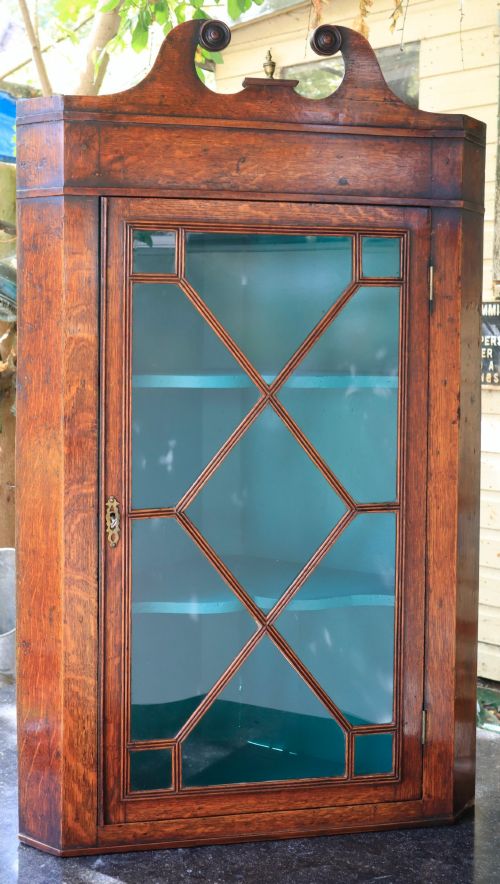


Antique Glass Wall Cupboard
An antique glass wall cupboard displays prized possessions within a compact hanging frame, bringing period character directly to the room.
Antique Glass Wall Cupboard
The antique glass wall cupboard comprises hanging display cabinets, corner units, and glazed storage forms designed to preserve floor space. These pieces serve primarily to exhibit glassware, small collections, and daily household items.
Georgian and Victorian examples dominate the selection, spanning styles from Queen Anne and George III to Edwardian and Arts and Crafts. Walnut, mahogany, and oak form the structural core of these wall-mounted pieces.
Corner variations and bow front designs appear frequently among the listings, alongside flat wall-hanging vitrines. Many retain original glazing bars and internal shelving suited for intimate domestic displays.
Materials and construction methods
Cabinet makers utilised dense hardwoods including mahogany, oak, and walnut, frequently incorporating satinwood inlay and brass hardware for structural and decorative accent. Timber selection dictated both the weight and the longevity of each wall-mounted cabinet.
Glazing techniques involve leaded or putty-fixed glass panes held by intricate wooden muntins and frames. Joinery relied on traditional mortise and tenon methods to ensure stability when hanging loaded cupboards from domestic walls.
Antique Glass Wall Cupboard Retail Price Guide 2026
Typical asking prices for glass wall cupboard among the pieces listed under this phrase on Sellingantiques today, from the lower quarter to the upper quarter. They describe what is for sale here now, not the wider market.
Some workaday cupboards bear later hand-painted advertising for chocolate and bread, turning kitchen storage into historical billboards.
Assessing quality in hanging cabinets
Superior examples demonstrate refined timber selection and precise cabinetmaking, evident in tight joints and balanced proportions across bow fronts and serpentine shapes. Finer pieces often feature decorative satinwood stringing, brass escutcheons, and uncompromised original glass panes.
The integration of functional elements, such as working locks with matching keys, internal lining, and structurally sound hanging brackets, elevates the standard of construction. Quality rests upon the preservation of original surfaces and honest timber ageing rather than later modifications.
The Antique Glass Wall Cupboard Glossary
- Bow front
- A convex curved cabinet facade that projects outward to increase internal volume and visual presence. This shape appears regularly on Georgian and Regency hanging pieces.
- Glazing
- The fitting of glass panes into wooden frames or doors using muntins to divide the light. Surviving early glass often displays distinct ripples and bubbles.
- Vitrine
- A glass-fronted cabinet specifically designed for displaying precious objects or collections. These pieces prioritize maximum visibility through large glazed panels.
- Escutcheon
- A protective plate surrounding a keyhole, usually fashioned from brass. It guards the surrounding wood from wear caused by repeated key use.
- Muntin
- A narrow strip of wood holding panes of glass within a sash or door. These divisions create the geometric grid patterns seen on period glazed doors.
Antique Glass Wall Cupboard: Frequently Asked Questions
How do I hang a heavy antique wall cupboard safely?
Secure the cabinet directly into wall studs using heavy-duty brackets rated for the combined weight of the hardwood and its contents.
Verify that internal hanging points and backboards remain structurally sound before loading glassware inside.
What is the difference between a corner cabinet and a wall cabinet?
Corner cabinets feature an angled back designed to fit snugly into room junctions, while standard wall cabinets have flat rears for flat surfaces.
Both types utilise wall-hanging mechanisms to save valuable floor space.
How can I tell a Georgian glass cupboard from a Victorian one?
Georgian pieces often display simpler architectural lines, smaller individual glass panes divided by fine muntins, and dense mahogany or oak.
Victorian and Edwardian versions frequently introduce richer inlays, darker walnut finishes, and varied revival styles.
Were these cupboards used for drinks originally?
Some period cabinets feature locking doors and internal drawer setups suited for securing wines, spirits, and glassware.
Most served general display and storage purposes across domestic dining rooms, hallways, and living quarters.