









Antique Glass Trinket Jar
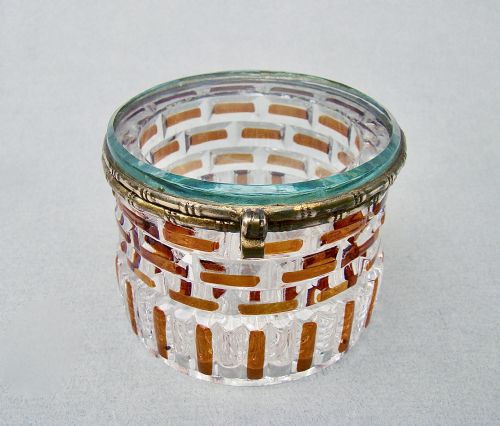
When you search for an antique glass trinket jar, you are looking at vanity and dressing table accessories shaped by Victorian, Edwardian and Art Deco hands to hold small treasures.
Antique Glass Trinket Jar
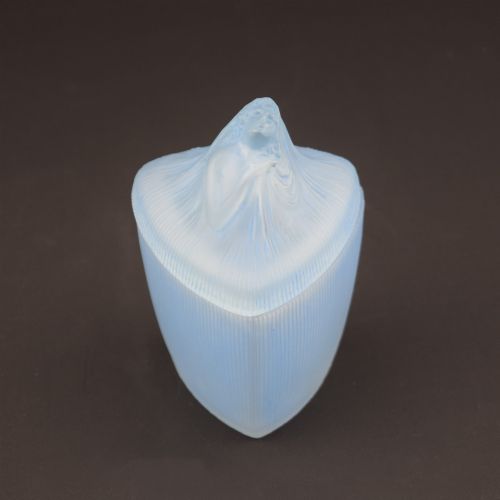
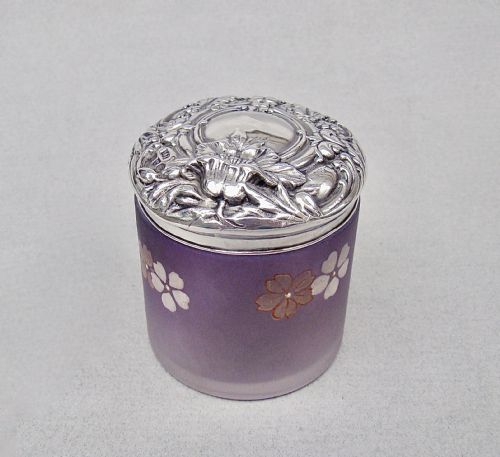
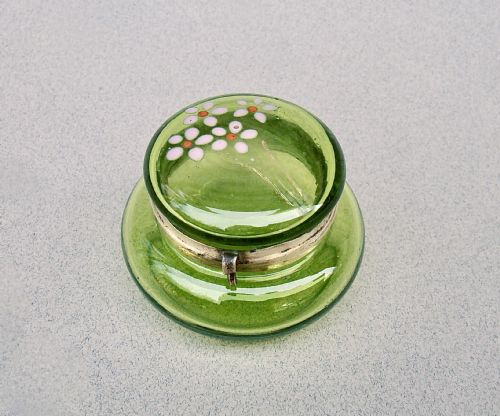
An antique glass trinket jar sits on a dressing table or vanity, serving as a lidded container for powder, rouge, pins, and small personal valuables. These vessels appear in forms such as circular powder boxes, heart-shaped dishes, and tall vanity jars.
The pieces on this page span the nineteenth century into the twentieth century, covering periods from Georgian and Victorian times through to Edwardian and Art Deco designs. You will encounter English, French, and German examples made from moulded, cut, or coloured glass.
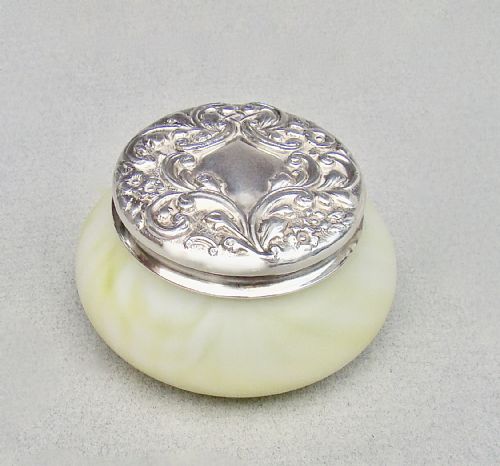
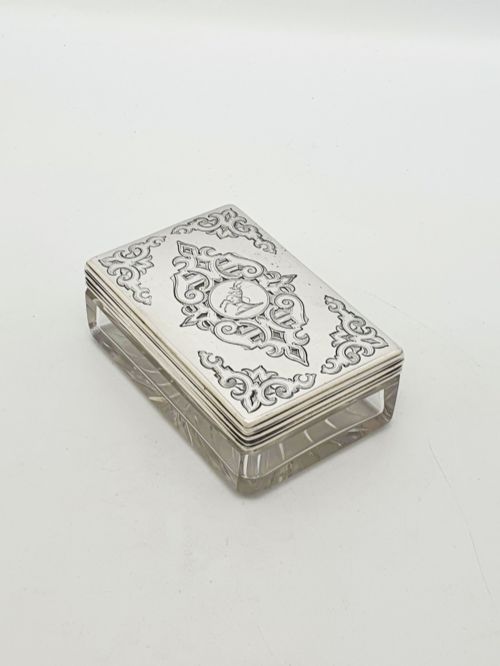
Many of these jars combine glass bodies with fitted metal mounts, most commonly sterling silver lids. Some pieces feature hand-painted porcelain plaques, intricate enamel work, or tortoiseshell insets set into the silver covers.
Materials and construction
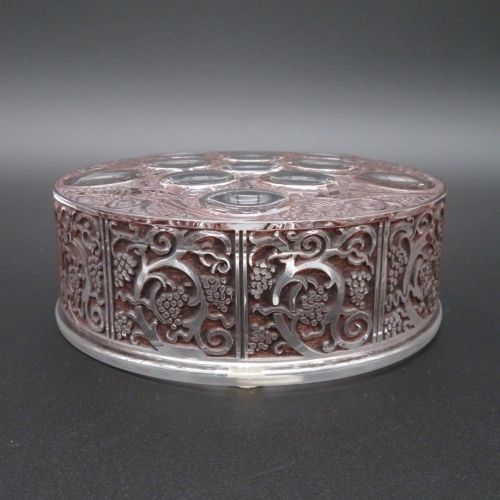
Makers formed the glass bodies of these jars using cutting, moulding, and pressing techniques, producing clear crystal, frosted surfaces, or rich colours like cranberry, amber, green, and Bristol blue. Studios such as Baccarat and Clichy supplied specialised glass, whilst Kralik and Lalique contributed distinct artistic treatments.
Silversmiths constructed matching lids and mounts from sterling silver, silver gilt, and brass, often adding guilloché enamel or painted decoration. Makers stamped hallmarks onto the silver components to record the town, year of assay, and maker's mark.
Antique Glass Trinket Jar Retail Price Guide 2026
Typical asking prices for glass trinket jar among the pieces listed under this phrase on Sellingantiques today, from the lower quarter to the upper quarter. They describe what is for sale here now, not the wider market.
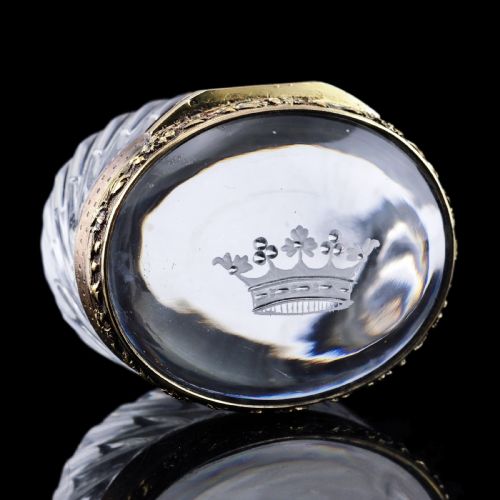
Early sailing presentations and royal coronet motifs occasionally hide inside these vanity sets, proving that even powder pots harbour competitive streaks.
Qualities of craftsmanship
The distinction between standard and superior pieces rests on the precision of the glass cutting and the weight of the crystal. Heavy, deep-cut crystal bodies with sharp facets contrast with lighter, plain moulded glass containers.
Artistic collaboration elevates certain examples, particularly where renowned glasshouses pair with skilled silversmith firms or where lids feature detailed guilloché enamel and hand-painted porcelain plaques rather than plain metal.
A. J. Pepper & Co·Henry Clifford Davis·A. Bromet & Co·Posen of Frankfurt and Berlin·Hasset & Harper
The Antique Glass Trinket Jar Glossary
- Guilloché enamel
- Enamel decorated with intricate geometric patterns machine-engraved into the underlying metal. This technique appears frequently on Art Deco silver lids.
- Sterling silver
- An alloy containing ninety-two point five percent silver by mass, used extensively for the hinged or lift-off lids on these jars. Hallmarks on the silver date the metal mount.
- Cut crystal
- High-clarity glass containing lead oxide, faceted by grinding and polishing to catch the light. It forms the heavy, brilliant bodies of many Edwardian and Victorian boxes.
- Frosted glass
- Glass treated to produce a matte, non-translucent surface, often used in Art Nouveau and Art Deco designs to highlight moulded sculptural details.
- Rouge pot
- A small lidded container specifically designed to hold cosmetic rouge. These items frequently feature colourful glass bases paired with decorative silver mounts.
Antique Glass Trinket Jar: Frequently Asked Questions
What were antique glass trinket jars used for?
These jars served practical functions on dressing tables, holding cosmetics such as face powder and rouge alongside personal items like hairpins and rings. They kept small daily accessories organised and protected from dust.
In wealthier households, matching sets coordinated the dressing table surface, combining lidded jars, powder boxes, and trays into a unified display of personal grooming items.
How do I date a silver-lidded glass jar?
Dating relies primarily on the hallmarks stamped onto the silver mount or lid, which indicate the assay office, standard of metal, and specific year of production. Stylistic markers also help, as heavy floral engraving points to the Victorian era whilst geometric patterns suggest Art Deco.
The shape and colour of the glass offer additional clues, with rich cranberry and green glass strongly associated with nineteenth-century production and frosted finishes aligning with early twentieth-century design.
Are the glass and the silver lid always original to each other?
Most surviving pieces retain their original matched components, particularly when the silver collar is securely cemented to the glass neck by the maker. Hallmarks on the silver match the expected period of the glass body.
Because lids and bases were made as single units by silversmiths and glasshouses working in tandem, collectors look for a snug fit between the collar and the vessel.
How should I clean an antique glass trinket jar?
Clean the glass body using warm water and mild soap, drying it thoroughly with a soft cloth to preserve the clarity of the cut facets. Avoid submerging parts where the silver mount is cemented directly to the glass.
Polish the silver lid gently with a specialised microfibre cloth, keeping cleaning compounds away from any enamel panels, tortoiseshell insets, or painted porcelain plaques.