




Antique Glass Spheres
Antique glass spheres encompass decorative balls, paperweights, and lighting components that bring curious optical forms and rich period colour to a room.
Antique Glass Spheres
When you search for antique glass spheres, you encounter a varied assortment of items ranging from solid decorative weights and witch balls to globes incorporated into lighting and mirrors. These objects span several distinct eras, notably the nineteenth century and the art deco period.
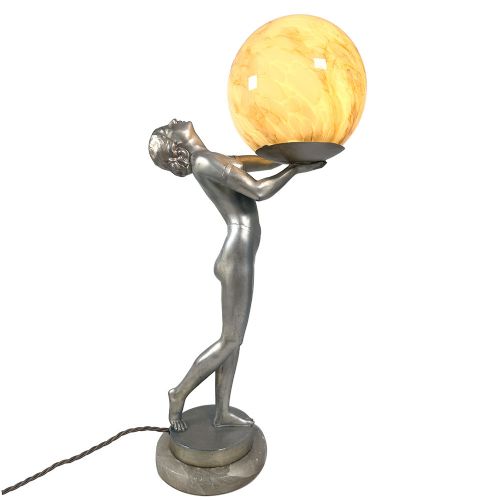
The versions you meet most frequently on this page include art deco table lamps featuring figural spelter supports holding glass spheres, alongside traditional hanging witch balls and solid paperweights. Each form utilises the spherical shape to catch light and distort reflections in domestic interiors.
Origins represented in the current selection include English, Italian, and general European workshops spanning the regency era, the Victorian epoch, and mid-century modern designs. The selection demonstrates how makers across different decades adapted the basic spherical form for illumination, desk accessories, and window protection.
How they were made
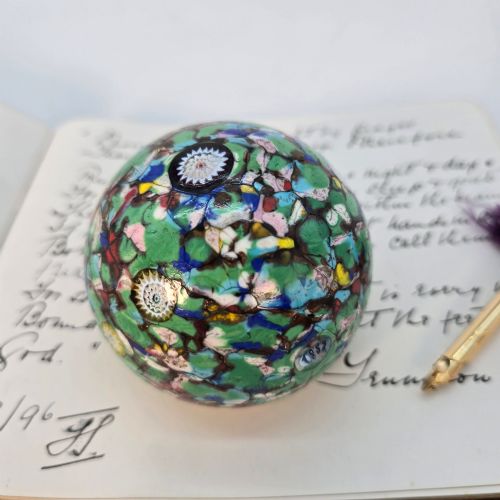
Makers shaped molten glass through traditional blowing and moulding techniques, often embedding coloured canes to create intricate interior patterns as seen in multi-layered paperweights. Clear glass and murano glass serve as the primary mediums for these spherical bodies.
Many pieces combine glass spheres with supporting metals such as brass, chrome, or spelter, frequently mounted upon bases of onyx or marble. Enamel details occasionally embellish the surface of decorative spheres and witch balls to add contrasting colour.
Antique Glass Spheres Retail Price Guide 2026
Typical asking prices for glass spheres among the pieces listed under this phrase on Sellingantiques today, from the lower quarter to the upper quarter. They describe what is for sale here now, not the wider market.
The listings feature glass spheres spanning the regency era, the Victorian period, and nineteen-thirty art deco designs, incorporating materials like marble, spelter, and onyx.
What varies in quality
Quality rests in the clarity and weight of the glass body, alongside the crispness of internal motifs in paperweights and witch balls. Finer examples display smooth, balanced forms without excessive bubbles unless intentionally introduced as an artistic effect.
The supporting metalwork and secondary materials dictate overall craftsmanship, with finely chased brass or solid onyx bases elevating the standard of lamps and candelabras. Better pieces maintain structural integrity where the glass sphere meets its mount.
The Antique Glass Spheres Glossary
- Witch ball
- A hollow glass sphere traditionally hung in windows to ward off evil spirits and negative energy. These items often feature colourful internal strings or cracked-ice glass finishes.
- Paperweight
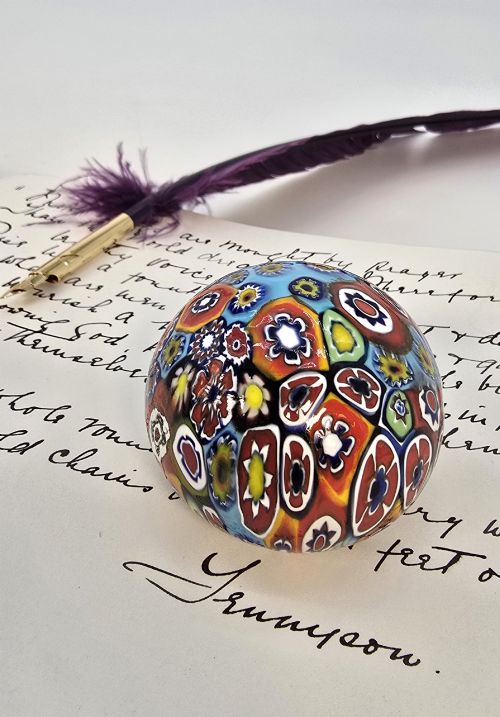
- A small solid glass sphere designed to hold down loose documents on a desk. They frequently incorporate millefiori patterns made from sliced glass canes.
- Murano glass
- Glass produced on the Venetian island of Murano, known for distinct colour saturation and specialist manufacturing techniques. Items from this origin often show notable artistic flair.
- Spelter
- A zinc alloy commonly used as a substitute for bronze in decorative figures and lamp bases. It provides a sturdy armature for mounting heavy glass spheres.
- Millefiori
- A glasswork technique involving multi-coloured canes sliced crosswise to reveal floral patterns. This method appears frequently in decorative spherical paperweights.
Antique Glass Spheres: Frequently Asked Questions
What is a witch ball?
A witch ball is a hollow glass sphere historically hung in windows or near doors to entrap evil spirits and protect households from misfortune. Their reflective surfaces were believed to attract wandering negative energies.
Today, these spheres function primarily as decorative objects that catch natural light. Collectors appreciate them for their vibrant internal glass threads and historical association with domestic folk customs.
How do I date an art deco lamp?
Art deco lamps featuring glass spheres typically date from around nineteen-thirty and incorporate materials like chrome, spelter, and onyx. Their geometric styling and figural bases offer clear visual markers of the period.
Examining the wiring methods and construction fixings helps confirm the age of the piece. Authentic examples display period manufacturing techniques rather than modern reproductions.
Where should I place a glass paperweight?
Glass paperweights look best displayed on desks, mantelpieces, or tabletops where direct light can pass through the material. Strong illumination highlights the internal millefiori patterns and coloured glass layers.
Positioning them away from high-traffic edges prevents accidental drops, as solid glass spheres are vulnerable to impact. Placing them near a window allows daylight to activate the interior colours.