



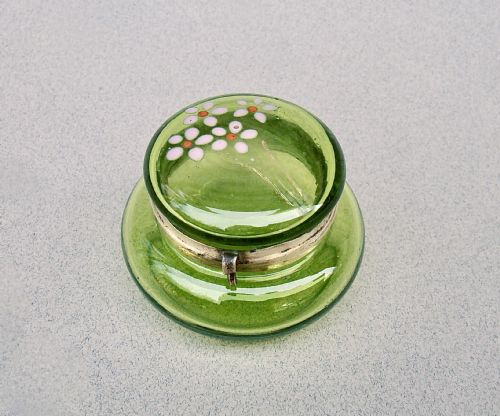


Antique Glass Dresser Jar
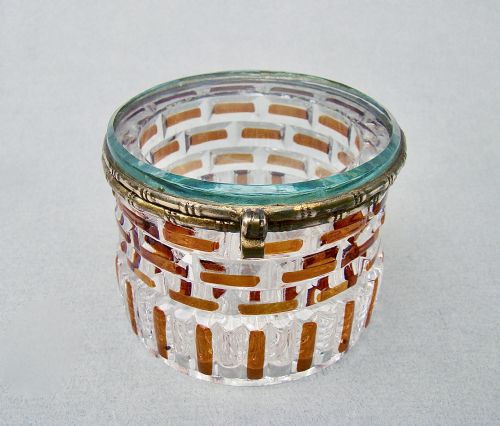
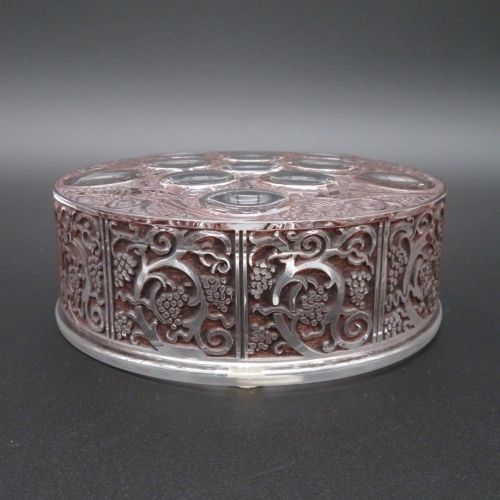
An antique glass dresser jar sits on the dressing table to hold small treasures, combining heavy metal mounts with coloured and clear glass.
Antique Glass Dresser Jar
When you search for an antique glass dresser jar, you are looking at small containers designed for the dressing table, vanity or bedside. These pieces date from the Victorian and Edwardian eras through to the Art Deco period, spanning the late nineteenth century and the early decades of the twentieth.
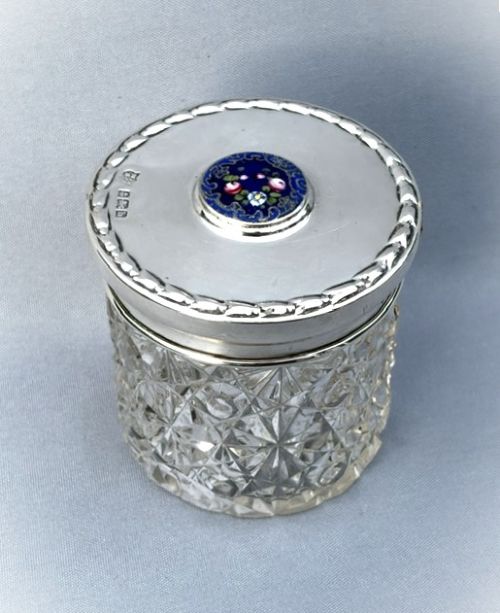
The most common versions met here include trinket boxes, powder boxes and dressing table jars with lidded designs. Many examples combine glass bodies with metal mounts, sterling silver collars or enamelled tops.
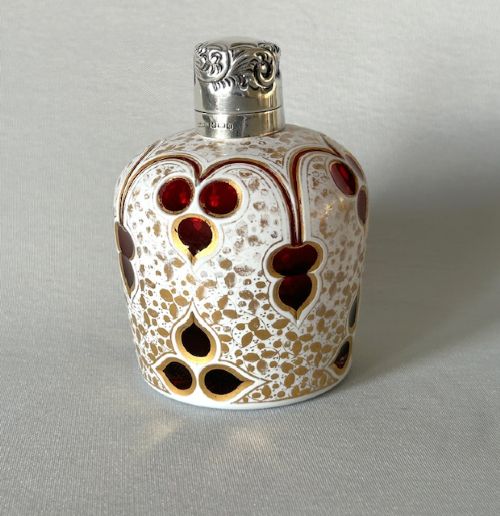
Origins represented in this selection include English and French workshops, alongside Bohemian and other continental makers. Forms range from simple cut crystal boxes to vibrant coloured glass decorated with enamel work.
How they were made
The bodies of these dresser jars utilise glass, cut glass, lead crystal and coloured varieties such as Bristol blue and amber. Techniques include mould-blowing and deep cutting, creating faceted surfaces that catch the light.
Metal components involve brass, silver and sterling silver, often formed into secure mounts and hinged lids. Enamel is frequently applied to the metal tops or directly onto the glass to introduce colour and pattern.
Antique Glass Dresser Jar Retail Price Guide 2026
Typical asking prices for glass dresser jar among the pieces listed under this phrase on Sellingantiques today, from the lower quarter to the upper quarter. They describe what is for sale here now, not the wider market.
Some nineteenth-century dresser jars doubled as secret hiding spots for the elaborate hairpins of the Victorian era.
What varies in quality
Quality in these dresser jars is largely determined by the weight of the glass and the precision of the cutting or moulding. Heavy lead crystal with sharp, deep facets sits at the higher end of the range, offering a solid feel and clear refraction.
The integration of the metal mount also distinguishes finer pieces, where silver or brass fits the glass edge snugly without excess solder or movement. Hand-applied enamel work showing intricate detail and smooth surfaces indicates superior craftsmanship.
Baccarat·Lalique·W.M.F.
The Antique Glass Dresser Jar Glossary
- Lead crystal
- A type of glass containing metallic oxide that increases weight, brilliance and clarity. This material allows for deeper and sharper cutting.
- Enamel
- A decorative fused glass coating applied to metal or glass surfaces. It provides smooth colour and opaque decoration.
- Sterling silver
- A silver alloy containing a high proportion of pure silver, commonly used for the rims, collars and lids of better quality dresser jars.
- Bristol blue
- A deep cobalt blue glass historically produced in English manufacturing centres. It remains distinctive for its rich tone.
- Cut glass
- Glass decorated by grinding facets and patterns into the surface using rotating wheels. This technique enhances sparkle and texture.
Antique Glass Dresser Jar: Frequently Asked Questions
What were antique glass dresser jars used for?
These jars held small personal items such as face powder, hairpins, rings and other daily trinkets on a dressing table. They kept vanity surfaces tidy while displaying decorative materials.
Many pieces formed part of larger matching dressing table sets that included brushes, trays and scent bottles for daily grooming routines.
How do I date an antique dresser jar?
Dating relies on stylistic clues, materials and mounting techniques found across Victorian, Edwardian and Art Deco examples. Heavy floral embossing points towards the nineteenth century, while geometric lines suggest the nineteen-twenties.
Maker marks stamped onto silver mounts or moulded into the crystal base also help narrow down the period of production.
Are coloured glass jars harder to find than clear ones?
Coloured glass examples in shades like amber, green and blue appear less frequently than standard clear crystal. Specific hues often relate to particular regional production centres, such as Bohemian glassworks or French ateliers.
These coloured pieces bring vibrant tones to a collection and highlight the variety of nineteenth and twentieth-century glass chemistry.
How should I clean my dresser jar?
Gentle cleaning with warm soapy water and a soft cloth protects both the glass and any delicate enamel or silver components. Harsh abrasives must be avoided to prevent scratching the surface.
Metal mounts require specific care to avoid moisture buildup around the hinges and to maintain the natural finish of the silver or brass.