
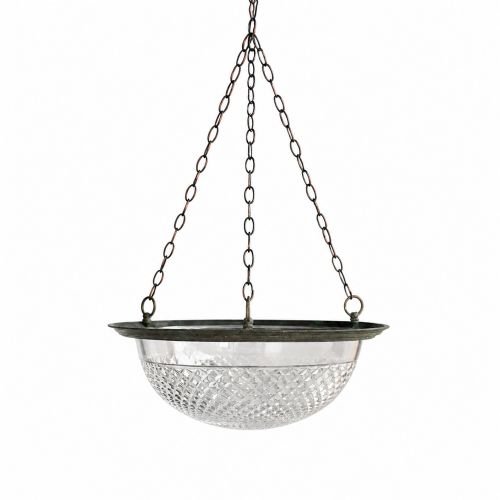


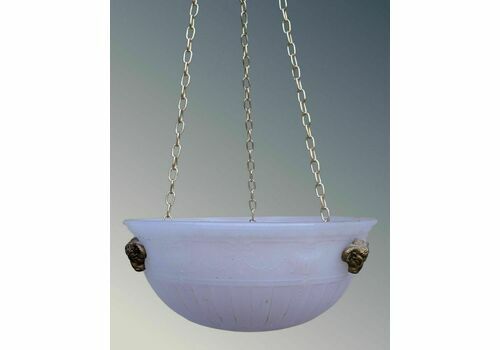


Antique Glass Ceiling Dish
These antique glass ceiling dish fittings, often known as plafonniers or bowl lights, bring focused illumination and decorative presence to a room.
Antique Glass Ceiling Dish
When you search for an antique glass ceiling dish, you are looking at bowl-shaped hanging lights designed to mount flush or suspend closely beneath the ceiling. These fixtures distribute light downward and outward through decorative glass forms.
The versions you meet on this page span the nineteenth and early twentieth centuries, including Victorian, Edwardian, and Art Deco periods. They appear in styles such as Arts and Crafts, French Neoclassical, and French Beaux-Arts.
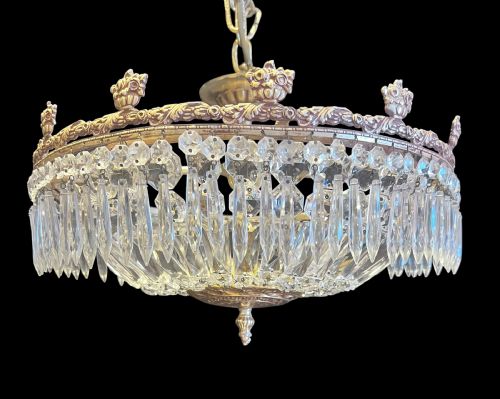
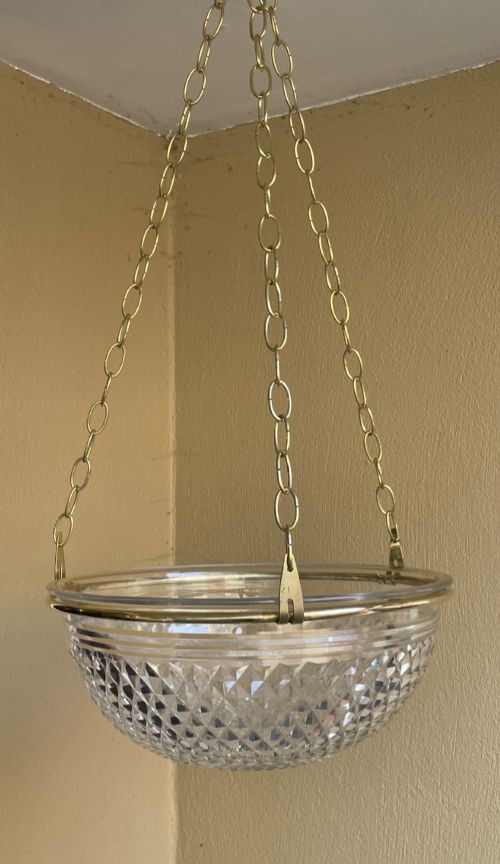
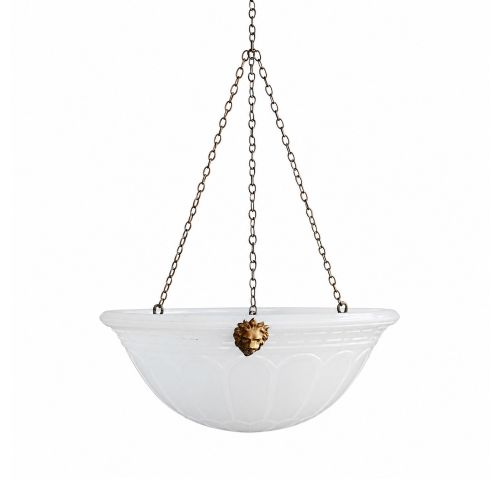
Formations range from simple opaline and moonstone dishes to heavy cut crystal bowls mounted in brass, bronze, or silver-plated frames. English and French workshops produced these pieces for domestic interiors requiring graceful overhead lighting.
How They Were Made
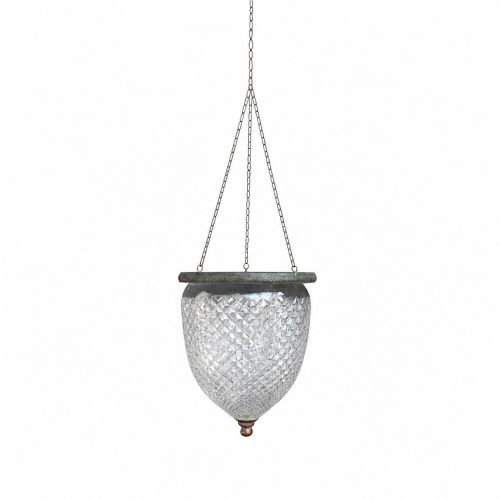
Maker workshops combined heavy moulded or blown glass bowls with cast metal mounts in brass, bronze, or ormolu. Glass techniques included cutting, frosting, and opalescent finishing to soften the electric or gas illumination within.
Metal components often featured detailed cast ornamentation, such as ram heads or patinated brass frames, secured to the ceiling with chains or direct ceiling mounts. Crystal elements were hand-cut and fitted into supportive metal baskets or bands.
Look closely at the metal mounts to find cast ram heads staring down silently from the ceiling.
What Varies in Quality
The distinction between tiers rests on the depth of hand-cutting in the crystal and the weight of the bronze or brass framework. Finer examples display crisp facets in the glass and substantial metal casting rather than thin pressed components.
Design integration separates standard utility pieces from ambitious decorative works, seen in specialised glass types like moonstone or opaline paired with specific period motifs like ram heads or Arts and Crafts bowls.
The Antique Glass Ceiling Dish Glossary
- Plafonnier
- A ceiling-mounted lighting fixture, typically taking the form of a glass bowl or dish held in a metal frame. These direct light downward into the space.
- Opaline glass
- An opaque or translucent pale glass developed during the nineteenth century. It diffuses light softly without complete transparency.
- Moonstone glass
- A milky, semi-translucent glass variety that mimics the soft appearance of the moon. It creates a diffused glow when illuminated.
- Ormolu
- Gilding technique using finely ground gold-mercury amalgam applied to bronze. It provides a rich, durable golden finish on period mounts.
- Cut glass
- Glass decorated by grinding facets or patterns into the surface using wheels. This technique enhances the sparkle of light passing through the material.
Antique Glass Ceiling Dish: Frequently Asked Questions
How do these ceiling dishes hang?
These fixtures typically suspend from chains attached to a ceiling rose or mount directly against the plaster. The glass bowl sits securely within a metal ring or basket supported by the hanging hardware.
Heavier items require proper ceiling joist anchorage to support the combined weight of the glass bowl and metal frame safely.
What rooms suit an antique glass dish light?
Pendant dish lights work well in hallways, bedrooms, and dining spaces where lower ceilings benefit from a compact overhead source. Their downward projection focuses illumination where it is most needed.
Choosing the right scale ensures the fixture complements the room dimensions without dominating the ceiling space.
How do I identify the period of a dish light?
Dating relies on stylistic clues found in the metalwork mounts and the manufacturing characteristics of the glass. Victorian and Edwardian pieces often feature intricate brass or bronze frames, while Art Deco examples favor opaline glass and geometric forms.
Examining the casting quality and fastening methods helps distinguish nineteenth-century examples from later twentieth-century productions.
Can modern bulbs be used in these fixtures?
Most antique fixtures accommodate modern LED or standard bulbs provided the internal wiring has been updated to current safety standards. A qualified electrician should check the lampholders and wiring before installation.
Selecting lower wattage bulbs helps protect antique glass and metal components from excessive heat accumulation.