

Antique Gilt Urns
When seeking antique gilt urns, buyers encounter decorative vessels and lamps shaped by Regency, Victorian and Neoclassical tastes.
Antique Gilt Urns
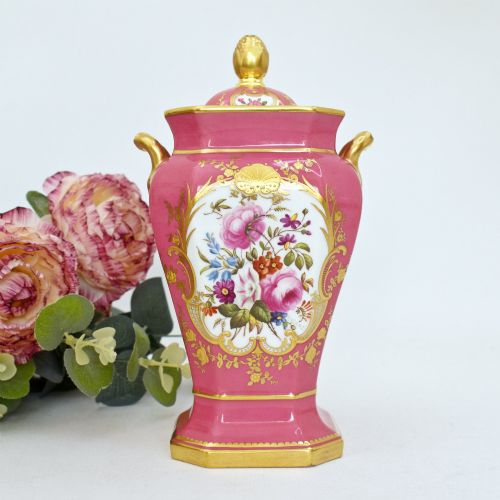
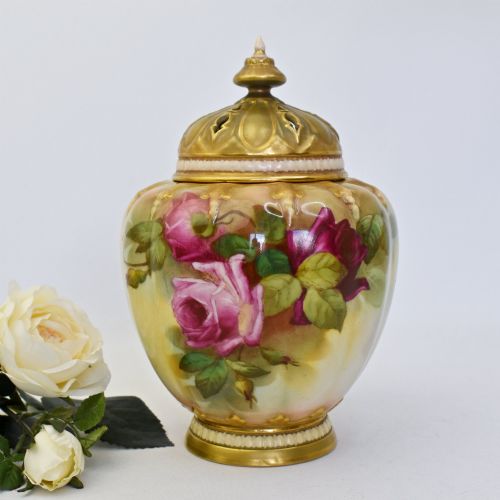
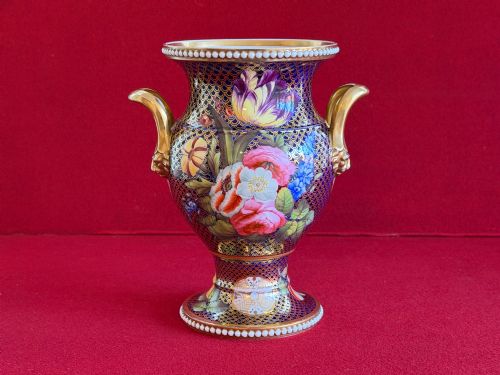
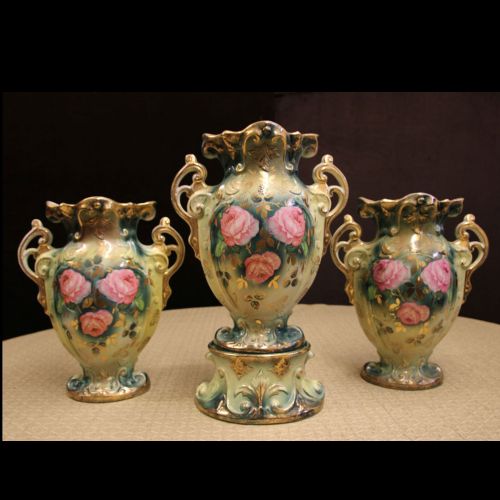
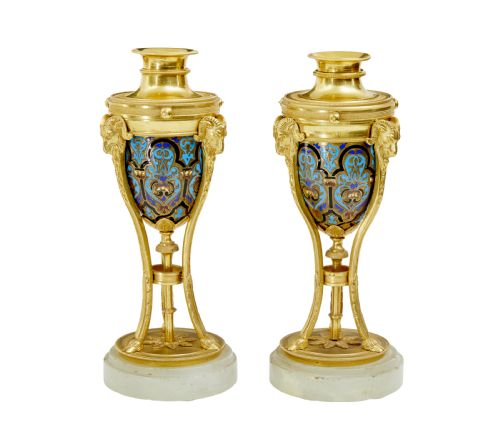
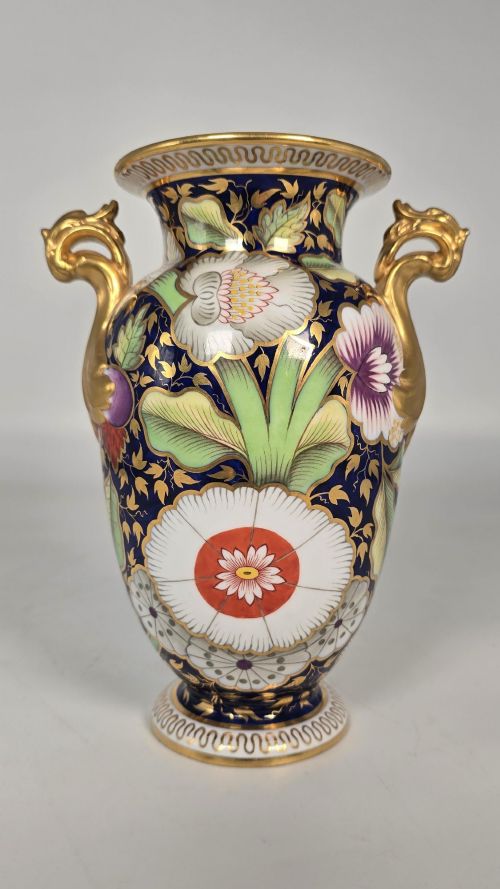
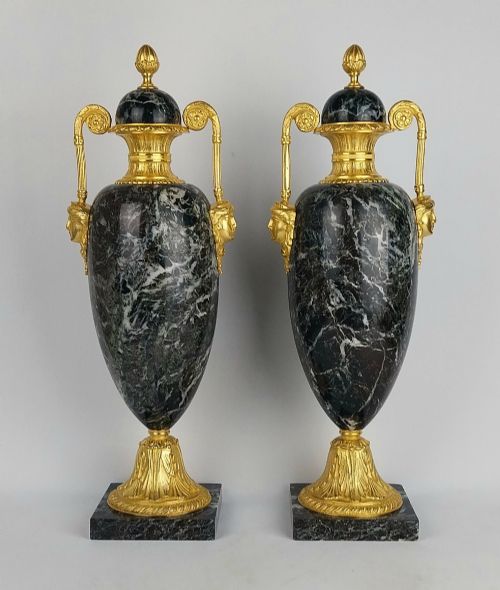
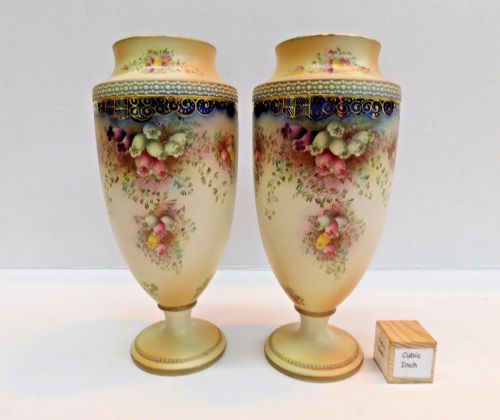
Antique gilt urns encompass porcelain vases, campana shapes, and metal mounted vessels originating from nineteenth century European and British workshops. Regency and Victorian examples often combine hand painted ceramic bodies with gilt bronze, ormolu, or gold leaf finishes.
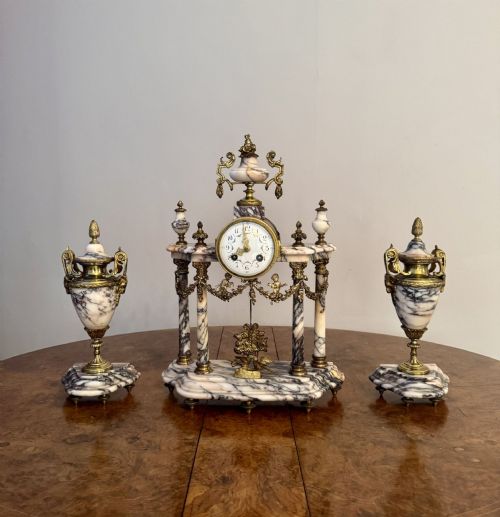
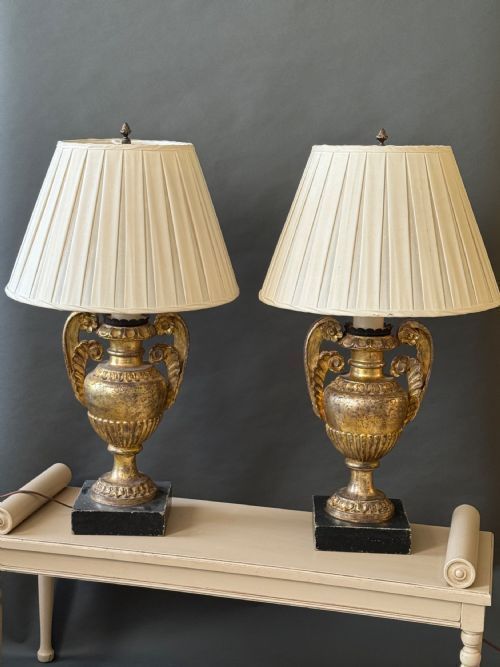
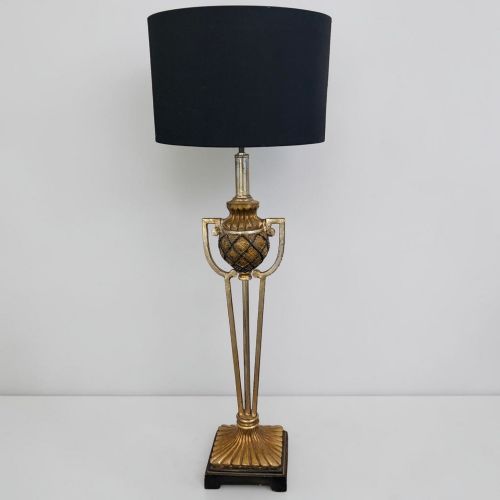
Many surviving pieces function as garnitures, mantel clocks, table lamps, and decorative centerpieces rather than standalone vessels. French and English factories dominate the selection, frequently utilising classical motifs such as putti, masks, and floral garlands.
Materials and construction
Makers shaped these objects using hardpaste and softpaste porcelain, carved wood, marble, and cast metals including brass and bronze. Gilt decoration was applied through fire gilding, gold leaf, or surface gilding on painted ceramic panels.
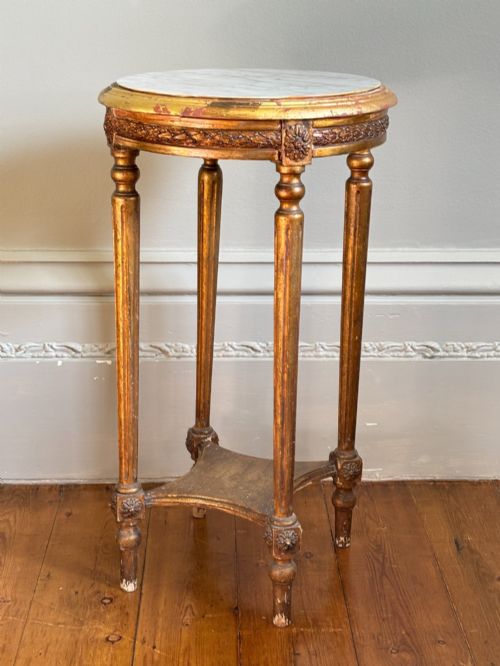
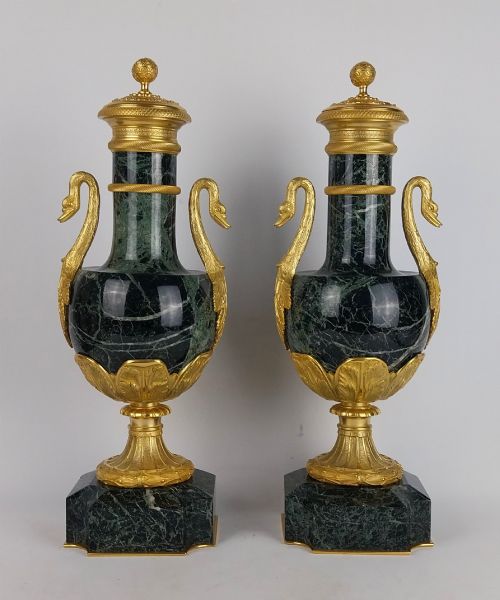
Mounts and handles were cast separately and secured with pins or screws to ceramic or stone bodies. Artisans combined turned timber, carved pine, and patinated metals to achieve the desired structural weight and neoclassical silhouette.
Antique Gilt Urns Retail Price Guide 2026
Typical asking prices for gilt urns among the pieces listed under this phrase on Sellingantiques today, from the lower quarter to the upper quarter. They describe what is for sale here now, not the wider market.
Bacchus and cherubs frequently peer from the handles, ensuring your mantelpiece stays cheerfully chaotic.
Judging the execution
Quality rests in the crispness of the bronze chasing, the precision of the hand painting on porcelain, and the harmony of the overall proportions. Finer works display controlled brushwork in floral or figural scenes and tight joints in the metal mounts.
Secondary examples show mechanical finishing in the metalwork and simpler transfer printed or loosely painted decoration on the ceramic bodies. The depth and integrity of the original gilding distinguish superior workshop output from standard commercial production.
Flight Barr and Barr·Royal Crown Derby·Japy Freres·Jean Baptiste Delettrez·Takasaka Toemon·Maruni Kobe
The Antique Gilt Urns Glossary
- Ormolu
- Finely ground high carat gold applied to a bronze base using a mercury amalgam technique, producing a deep yellow metallic lustre. This finish appears widely on nineteenth century French mounts.
- Garniture
- A matching set of three or more decorative vases or urns designed to sit symmetrically on a mantelpiece or sideboard. These sets often comprise a central taller urn flanked by two smaller vessels.
- Campana
- A vase shaped like an inverted bell with an everted rim and a pedestal foot, derived from ancient Roman pottery forms. Regency and Victorian makers produced numerous porcelain and bronze variations of this silhouette.
- Pâte-sur-pâte
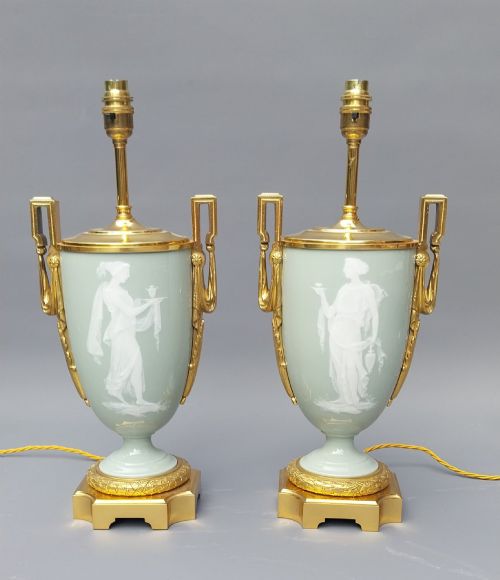
- A ceramic decorating technique where wet white porcelain slip is built up in successive layers on a coloured clay ground to create a low relief cameo effect. This method requires considerable skill from the painter.
Antique Gilt Urns: Frequently Asked Questions
What periods do these pieces date from?
The available selection spans the eighteenth, nineteenth, and early twentieth centuries, with a heavy concentration of Regency and Victorian examples.
Craftsmen from this era drew heavily on classical Greek and Roman motifs, adapting ancient vessel shapes for contemporary domestic interiors.
How were these urns originally used?
Most functioned as formal interior ornaments, often displayed on mantelpieces, pedestals, or as matching garniture sets.
Some examples were subsequently adapted into table lamps during later periods while retaining their original ceramic or bronze bodies.
Are the metal mounts genuine bronze?
Many nineteenth century French pieces utilise gilt bronze or ormolu, while other items incorporate cast brass or gilt metal alloys.
Closer inspection of the weight, chasing detail, and underlying metal colour reveals the specific alloy used by the workshop.
How should I clean gilded surfaces?
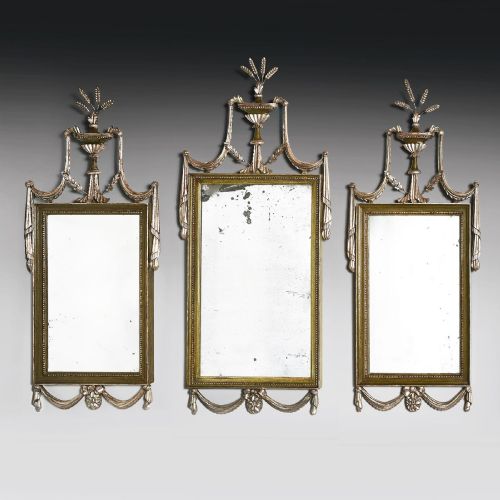
Gilded wood, bronze, and leaf finishes require gentle dusting with a soft, dry brush to prevent abrasion.
Moisture and commercial cleaning agents can strip delicate gold leaf or damage the underlying gesso and paint layers.