




Antique Gilt Flatware
Antique gilt flatware brings rich gold-washed surfaces to the table, offering practical serving utensils and ornate spoons shaped across centuries of silversmithing.
Antique Gilt Flatware
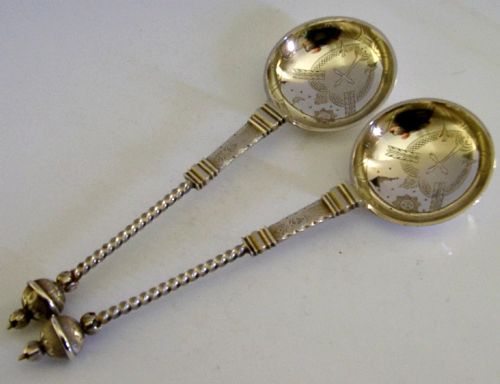
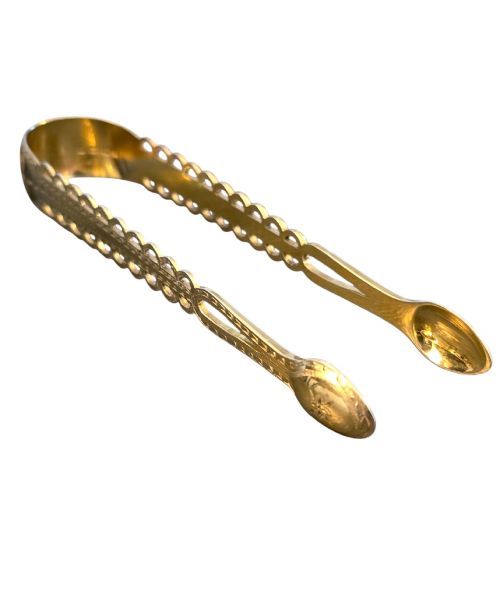
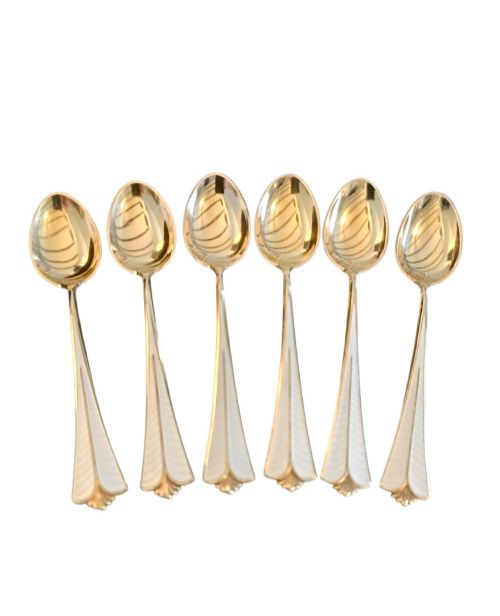
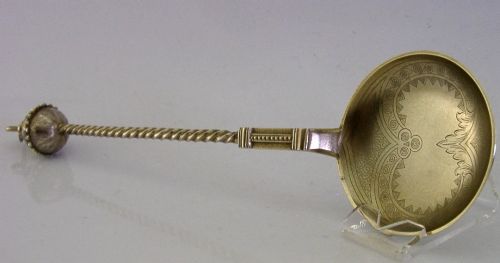
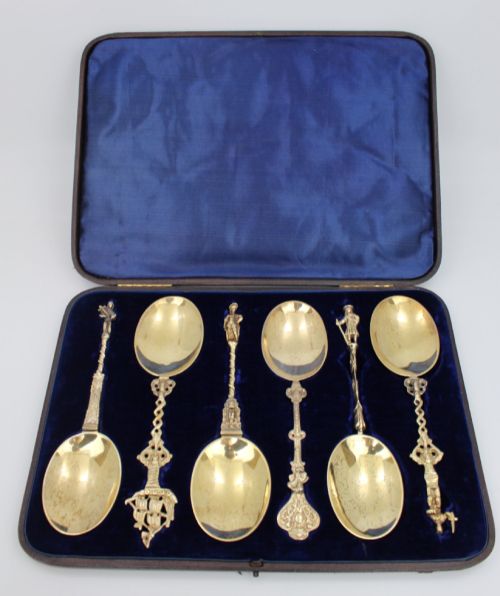
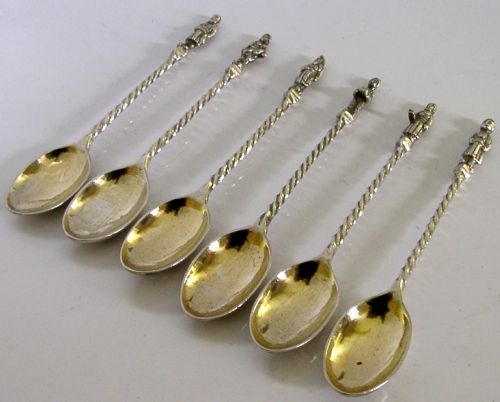
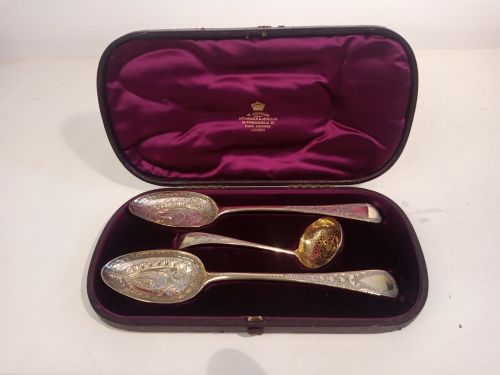
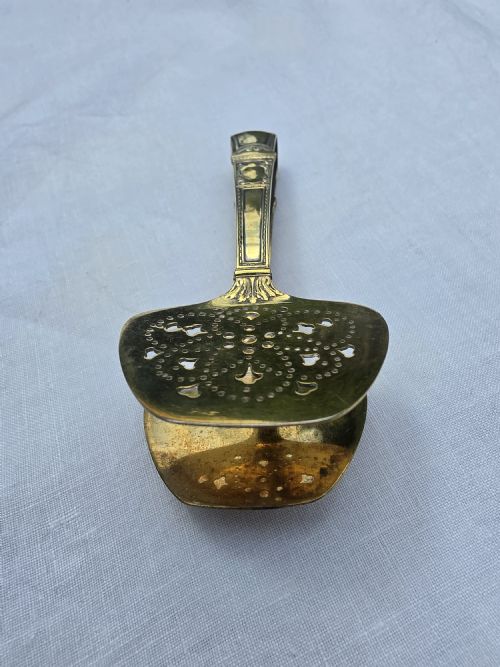
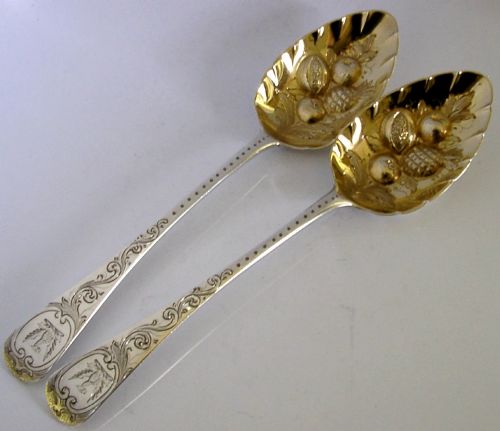
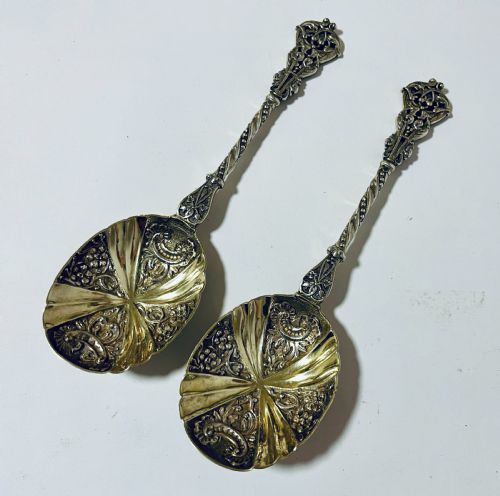
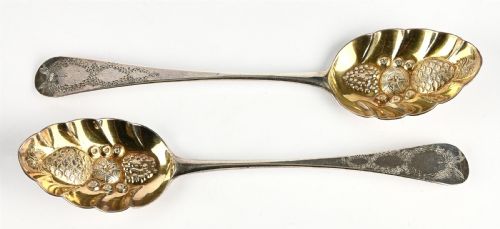
Antique gilt flatware encompasses spoons, sugar tongs, and serving utensils finished with a layer of gold over silver. You will frequently encounter Georgian and Victorian berry spoons, cased apostle spoons, and decorative serving pieces on this page.
The selection ranges from early George III table pieces to later Edwardian and Ottoman designs. Many items survive in fitted boxes, preserving their original velvet and silk linings alongside the metalwork.
How antique gilt flatware was made
Makers relied on sterling silver or solid silver as a base before applying a gold wash, often termed silver-gilt, through methods like fire gilding or electroplating in later Victorian examples. Enamel, niello, and hand-cut glass handles also appear on specific pieces from Russian and English workshops.
Ornate decoration on these utensils relied on repoussé work, chasing, and detailed cloisonné enamel. Craftspeople shaped handles and bowls by hand or cast them in sections before finishing the surface with meticulous gilding.
Antique Gilt Flatware Retail Price Guide 2026
Typical asking prices for gilt flatware among the pieces listed under this phrase on Sellingantiques today, from the lower quarter to the upper quarter. They describe what is for sale here now, not the wider market.
Some Victorian spoons were born plain in the Georgian era before being chased with festive berries decades later by enterprising Victorians.
What varies in quality
Quality rests in the crispness of the chased or repoussé detail on the bowl and the depth of the surviving gold wash across the silver base. Pieces that retain their full gilt layer and sharp crest engravings stand apart from heavily worn examples.
The reputation of the maker and the integrity of any associated fitted presentation case influence the standing of a piece. Comprehensive sets and signed maker's marks elevate the stature of individual flatware items.
George William Adams·Deakin & Francis·Tiffany & Company·Peter & Anne Bateman·William Chawner II·Vasily Agafonov
The Antique Gilt Flatware Glossary
- Silver-gilt
- Sterling or solid silver coated with a thin layer of gold. This technique protects the underlying silver from tarnishing while providing a rich golden appearance.
- Berry spoon
- A large serving spoon, typically Georgian or Victorian, featuring fruit-chased bowls and elaborate handle decoration. They were often repurposed later for serving fruit.
- Niello
- A black metallic alloy used to fill engraved designs on silver. It creates striking contrasting patterns, commonly seen on Russian spoons.
- Cloisonné
- An enamel technique where thin metal wires form raised partitions to hold coloured glass pastes. These compartments are fired to produce vibrant decorative surfaces on handles and bowls.
Antique Gilt Flatware: Frequently Asked Questions
What is silver-gilt flatware?
Silver-gilt flatware consists of solid or sterling silver items that have been coated with a layer of gold. This process enhances the visual warmth of the utensil and protects the silver beneath from rapid tarnishing.
The gold wash is applied through various historical methods, resulting in a rich surface that distinguishes these pieces from standard silver tableware.
Were berry spoons used for eating?
Berry spoons were primarily designed for serving fruit and berries rather than for individual dining. Their large, deep bowls and ornate chased designs made them ideal for formal sideboard presentation.
Over time, many of these pieces found new life on the dining table as general serving utensils for desserts and side dishes.
How can I date my gilt spoons?
Dating gilt spoons involves examining the hallmarks stamped into the metal, which typically indicate the assay office, the year of production, and the maker's mark. Stylistic clues like Victorian chasing or Edwardian forms also help narrow the period.
Fitted presentation cases and specific regional marks, such as those from Ottoman or Russian workshops, provide further evidence of origin and date.