



Antique Gilt Brass Sticks
Antique gilt brass sticks bring warm metallic lustre and period presence to a room, ranging from grand French candelabras to Regency chamber sticks.
Antique Gilt Brass Sticks
When you search for antique gilt brass sticks, you encounter a diverse collection of lighting devices and walking supports spanning the nineteenth century. These objects combine utilitarian function with decorative ambition, taking forms from simple chamber sticks to elaborate pairs of candelabras.
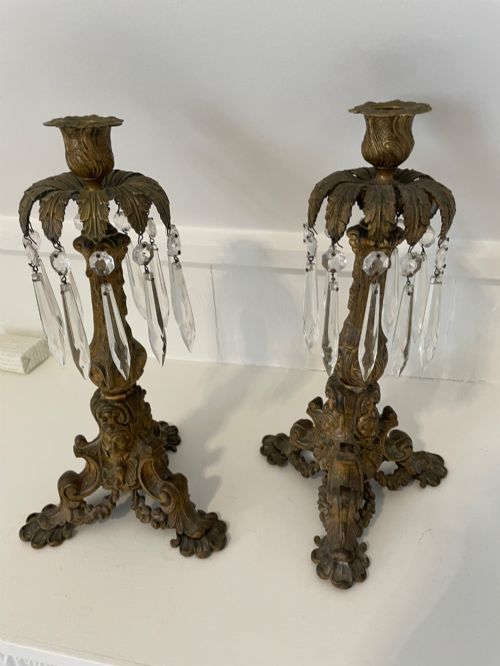
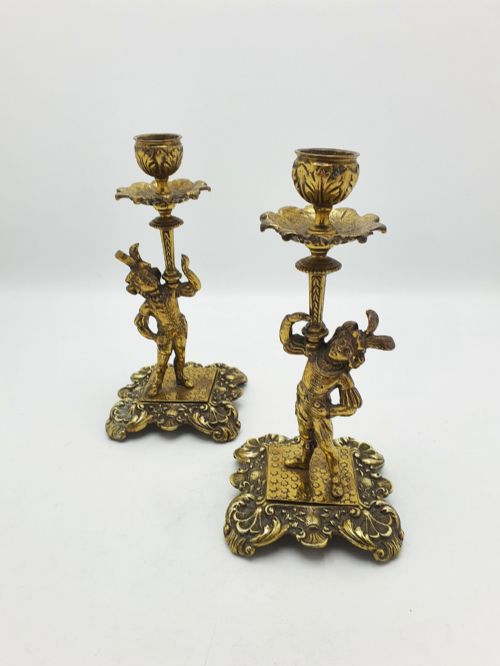
The nineteenth century dominates the selection, drawing on Regency, Victorian, and French revival aesthetics. You will frequently find pairs designed for mantelpieces or tables, incorporating classical motifs or figural elements like dancing cherubs.
Beyond domestic lighting, the category extends to walking sticks and canes featuring gilt metal mounts and porcelain sections. These varied items share a reliance on metalwork and decorative surface treatment.
How they were made
The construction of these pieces relies heavily on cast brass, bronze, and ormolu, often enhanced with fire gilding or gold plating. Makers utilised detailed moulding techniques to produce raised ornamentation, scrollwork, and figural details.
Many items incorporate contrasting elements such as Sevres porcelain panels, glass lustre drops, marble bases, and wooden shafts. These mixed materials were joined mechanically or with adhesives typical of nineteenth-century workshop practices.
Antique Gilt Brass Sticks Retail Price Guide 2026
Typical asking prices for gilt brass sticks among the pieces listed under this phrase on Sellingantiques today, from the lower quarter to the upper quarter. They describe what is for sale here now, not the wider market.
Dancing cherubs occasionally support the candle sockets, bringing a touch of theatrical joy to nineteenth-century domestic illumination.
What varies in quality
The crispness of the cast decoration and the depth of the gilding set the standard for these metal objects. Superior examples display sharply defined chasing and finishing work on the brass or bronze surfaces.
Integration of secondary materials like porcelain and marble indicates higher ambition in manufacture. Pairs that maintain uniform colour and complete original components stand apart from heavily altered or mismatched items.
The Antique Gilt Brass Sticks Glossary
- Ormolu
- A gilded bronze or brass finish applied to decorative metalwork. This technique imparts a rich gold appearance to nineteenth-century candlesticks and mounts.
- Candelabra
- A branched lighting fixture designed to hold multiple candles. These pieces often feature neoclassical or rococo revival styling.
- Chamber stick
- A low candlestick fitted with a handle and a shallow pan to catch melting wax. They were originally carried through dark rooms in nineteenth-century homes.
- Grand Tour
- A term describing souvenirs acquired by wealthy travellers in Europe during the nineteenth century. These items frequently include classical bronze and gilt metal candlesticks.
- Sevres
- A type of fine French porcelain often incorporated into the shafts of walking sticks and decorative objects. It adds painted colour and ceramic texture to the metal design.
Antique Gilt Brass Sticks: Frequently Asked Questions
How do I date a brass candlestick?
Dating relies on stylistic clues such as Regency neoclassical lines, Victorian Gothic revival motifs, or French rococo curves. Construction marks, wear patterns, and the method of assembly also provide chronological indicators.
Comparing the casting quality and materials against known nineteenth-century examples helps narrow the period of manufacture.
Were walking sticks used as weapons?
Some walking sticks incorporate concealed sword blades beneath decorative gilt metal handles. These pieces combined gentlemanly fashion with personal defence.
Standard walking canes served primarily as accessories of status and aids for walking during the nineteenth century.
How should I clean gilt brass?
Gilt surfaces require gentle dusting with a soft cloth to remove surface grime without damaging the thin layer of gold or ormolu. Avoid abrasive polishes that strip away the historic metallic finish.
Preserving the natural patina maintains both the appearance and the historical integrity of the object.