


Antique Gemstone Link Bracelet
An antique gemstone link bracelet brings together coloured stones and precious metal in a wrist ornament built to last.
Antique Gemstone Link Bracelet
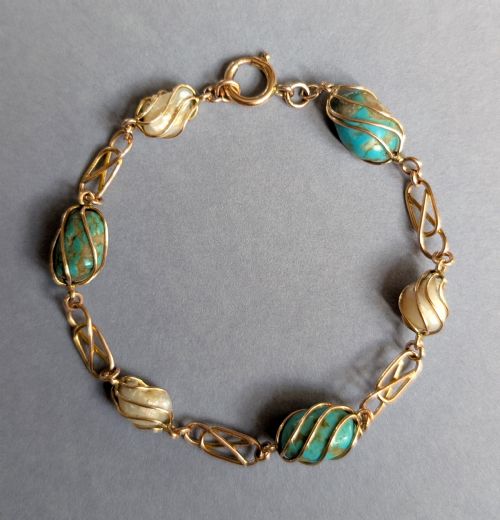
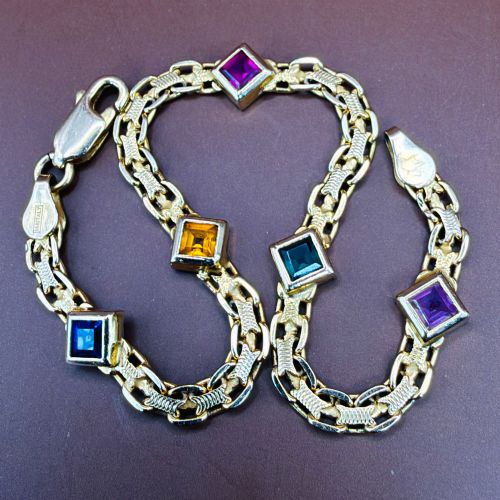
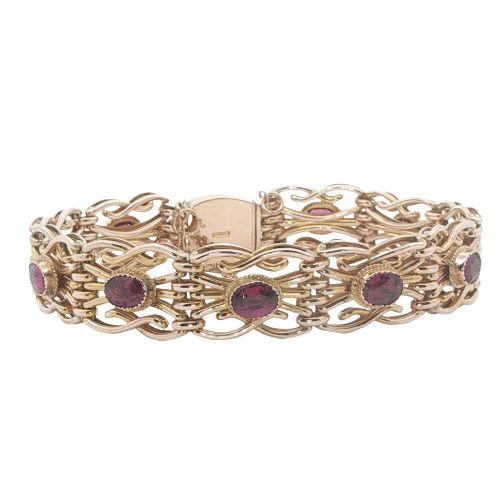
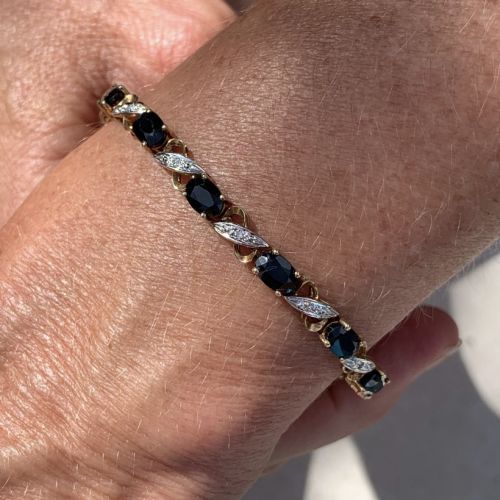
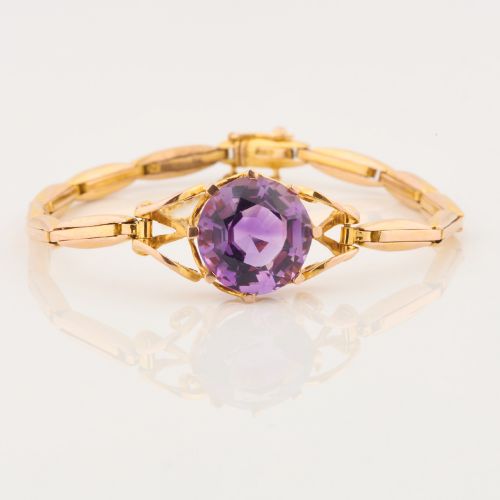
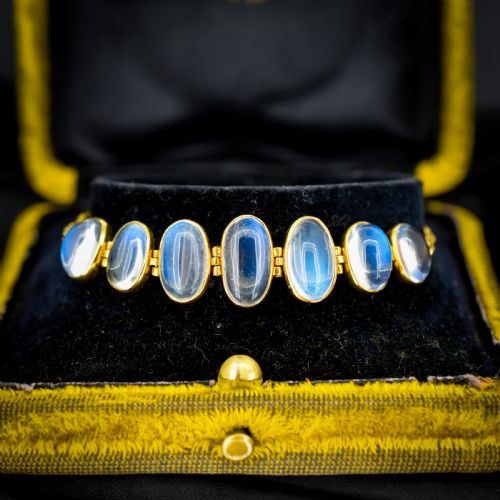
An antique gemstone link bracelet comprises a series of connected metal segments inset with stones such as sapphire, diamond, aquamarine, pearl, chrysoberyl, amethyst, and moonstone. These pieces originate from distinct historical periods including the Victorian era, the Edwardian period, and around nineteen-ten.
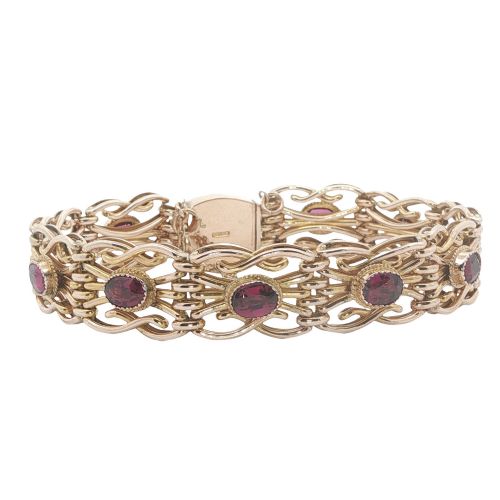
The layout of these bracelets relies on individual sections joined securely, often incorporating traditional motifs like the lovers knot alongside stones held in collet or claw settings. Such designs represent the prevalent jewellery styles of their respective periods, ranging from late Victorian work to early twentieth-century creations.
Buyers encountering this selection will find variations in metal purity, including fifteen-carat gold and nine-carat rose gold, alongside diverse stone combinations. Each example showcases the distinct aesthetic preferences of the maker working within the Victorian and Edwardian epochs.
How they were made
Craftsmen shaped these bracelets using gold, notably nine-carat rose gold and fifteen-carat gold, forming individual links by hand or with early mechanical assistance. Stones including diamond, sapphire, aquamarine, chrysoberyl, amethyst, and pearl were then meticulously cut and fitted into the metal framework.
Specialised techniques secured each gem, utilising delicate claws, bezels, and split pearl settings that required steady precision. Artisans also constructed intricate motifs like lovers knots from pliable gold wire, soldering the components together to ensure flexibility along the wrist.
Antique Gemstone Link Bracelet Retail Price Guide 2026
Typical asking prices for gemstone link bracelet among the pieces listed under this phrase on Sellingantiques today, from the lower quarter to the upper quarter. They describe what is for sale here now, not the wider market.
Secret knots and split pearls whisper tales of Edwardian romance straight to your wrist.
What varies in quality
The calibre of an antique gemstone link bracelet rests upon the selection and matching of its stones, where well-saturated sapphires, clear aquamarines, and vibrant amethysts elevate a piece. Superior examples display stones free from heavy inclusions, complemented by crisp faceting that maximises light return.
Structural integrity and metalwork finesse also define the upper tier, distinguishing solid fifteen-carat gold links and robust settings from lighter nine-carat alternatives. A higher standard of execution is evident in the seamless articulation of the links and the clean finishing of decorative elements like lovers knots.
The Antique Gemstone Link Bracelet Glossary
- Link bracelet
- A wrist ornament constructed from a series of connected segments or modules. These components allow the piece to drape comfortably around the wrist.
- Rose gold
- A gold alloy containing copper that imparts a distinct reddish or pinkish hue. This metal tone was particularly popular in Victorian and Edwardian jewellery.
- Lovers knot
- A decorative jewellery motif formed by intertwining two strands of metal to symbolise affection and connection. It frequently appears in Edwardian designs.
- Split pearl
- A small pearl cut in half and glued onto a flat backing or set directly into metal. This technique was widely used in Victorian and Edwardian cluster work.
- Chrysoberyl
- A hard, durable mineral prized for its yellowish-green colour. It appears in select Victorian gemstone pieces.
Antique Gemstone Link Bracelet: Frequently Asked Questions
How do I care for my bracelet?
Clean these pieces gently with a soft cloth and avoid harsh chemical dips that might damage softer stones like pearls or amethysts.
Store the bracelet flat in a lined box to prevent the links from scratching or tangling with other jewellery.
Are these bracelets suitable for daily wear?
While durable, antique pieces benefit from mindful handling during everyday activities to protect delicate stone settings and older gold links.
Taking the bracelet off before swimming, gardening, or heavy lifting helps preserve the integrity of the original craftsmanship.
How can I tell the period?
Examine the metal purity marks, stone cuts, and overall stylistic motifs to help determine whether a piece belongs to the Victorian or Edwardian eras.
Lighter rose gold constructions and lovers knot details often point towards Edwardian aesthetics, whereas heavier gemstone arrangements frequently align with Victorian manufacturing.