

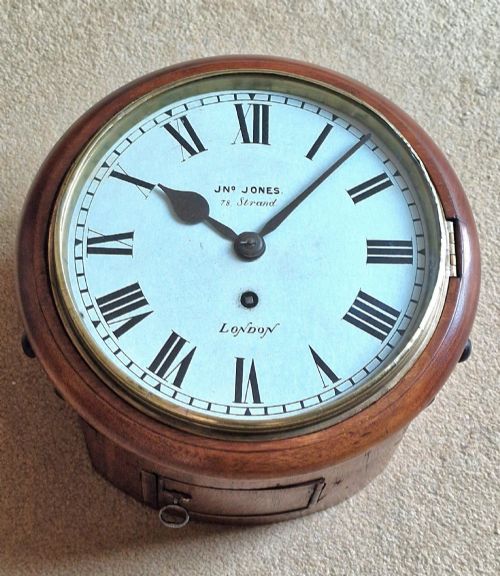


Antique Fusee Timekeeper
An antique fusee timekeeper holds a constant, steady drive that rewards the eye with mechanical honesty.
Antique Fusee Timekeeper
An antique fusee timekeeper is a mechanical clock or watch that utilises a conical pulley to equalise the declining power of a mainspring as it unwinds. When you search for an antique fusee timekeeper, you find wall clocks, mantel clocks, library clocks, and pocket watches driven by this clever mechanism.
The most common versions on this page are circular dial wall clocks and drop-dial wall clocks housed in mahogany cases. These pieces date across the Georgian, Victorian, and Edwardian periods, reflecting their long history in British commercial, domestic, and maritime spaces.
How they were made
Clockmakers constructed these movements using brass for the plates and wheels, pairing them with heavy iron or steel components for strength. Cases relied on solid mahogany, ebonised wood, and occasionally satinwood inlay, built to protect the intricate gearing within.
Faces feature painted enamel or silvered metal dials, often protected by heavy brass bezels fitted with thick glass. Drop-dial and bracket designs required precise cabinet-making to ensure the heavy timber frames hung true and supported the pendulum or balance wheel.
Antique Fusee Timekeeper Retail Price Guide 2026
Typical asking prices for fusee timekeeper among the pieces listed under this phrase on Sellingantiques today, from the lower quarter to the upper quarter. They describe what is for sale here now, not the wider market.
Some maritime bulkhead clocks survived decades at sea, keeping time while salt spray coated the brass bezel.
What varies in quality
The standard of an antique fusee timekeeper depends on the crispness of the movement cutting and the quality of the brass work. Finer examples display clean, unpolished wheel teeth and well-executed engraving on the backplate or dial.
Cabinet timber selection also sets pieces apart, from plain utility pine cases to deeply figured mahogany or delicate satinwood inlay. The integration of the dial with the case shows whether the maker built for everyday utility or higher domestic display.
Richard Jones of Hereford·W. Burton·J Lyndsey·J.W. Enock of Warwick·FB Adams London
The Antique Fusee Timekeeper Glossary
- Fusee
- A conical pulley with a spiral groove cut into it, designed to maintain equal torque on the gear train as the mainspring loses tension. This ensures the timekeeper maintains a consistent rate of beat.
- Drop-dial clock
- A wall clock featuring a circular dial at the top and a lower wooden trunk or box that houses the pendulum. This form became a staple of British commercial and public offices.
- Verge escapement
- An early type of mechanical escapement that regulates the motion of the clock by using a crown wheel and pallets. It produces a distinct, lively tick.
- Chain fusee
- A movement that uses a fine, flexible steel chain rather than catgut or cord to connect the fusee cone to the mainspring barrel. This provided greater durability and precision.
Antique Fusee Timekeeper: Frequently Asked Questions
Where were wall dial clocks used?
These clocks hung in railway stations, public offices, shipping rooms, and private libraries across Britain. Their clear dials allowed workers to read the time from across a busy room.
Domestic spaces also adopted them for kitchens and hallways due to their reliable timekeeping and robust construction.
How do I date a mahogany wall clock?
Examine the timber, the construction of the back box, and the style of the painted dial. Georgian and early Victorian examples often feature cast brass bezels and solid mahogany frames without excessive ornamentation.
Later Victorian and Edwardian pieces frequently show slight shifts in dial lettering and timber finishing, aligning with changing interior fashions.
Can I hang a fusee clock on any wall?
Mount the clock directly into a solid wall stud or use sturdy masonry fixings to support the weight of the timber case and movement. A secure anchor prevents vibrations from disrupting the pendulum.
Ensure the case hangs level so the anchor pallet strikes the escape wheel evenly, allowing the movement to keep a steady beat.